





Pros and Cons of Physician Loans: A Complete Guide for 2026
If you are a physician or medical professional trying to weigh the pros and cons of physician loans, you already know the tension. You have a signed employment contract and strong future earning potential, but your current balance sheet tells a different story: roughly $200,000 in median medical school debt and a resident salary hovering around $60,000. A conventional mortgage sees those numbers and hesitates. A physician loan sees them and says yes, but on terms you need to understand fully before signing. This guide walks through exactly how these loans work, what they cost, where they can go wrong, and how to decide if one fits your situation in 2026. Physician loans solve a genuine problem: they open the door to homeownership years before a conventional lender would. The trade-off is a set of financial risks that require careful math, not just optimism about your future attending salary.
Table of Contents
What Is a Physician Loan? (And How Is It Different From a Conventional Mortgage?)
Physician Loans vs. Conventional Mortgages: A Cost Comparison
Who Should Consider a Physician Loan? (And Who Should Skip It)
What Is a Physician Loan? (And How Is It Different From a Conventional Mortgage?)
A physician loan, sometimes called a doctor mortgage, is a specialized home loan product designed for medical professionals. The defining feature is that lenders underwrite based on your future earning potential rather than your current financial picture. A conventional mortgage relies heavily on your debt-to-income ratio right now, requires private mortgage insurance when you put down less than 20 percent, and wants to see a steady income history. A physician loan takes a different approach: it accepts your signed employment contract as proof of future income, treats your student debt more flexibly, and eliminates PMI entirely even with zero down.

Eligibility typically covers MD, DO, DDS, DMD, DVM, and DPM degree holders. Some lenders extend the product to pharmacists, CRNAs, and attorneys, though this varies by institution. One important limitation applies across nearly all programs: physician loans are for primary residences only. You cannot use them to buy an investment property, a vacation home, or a rental. If building a real estate portfolio is part of your long-term plan, you will need conventional financing for those purchases.
The Pros of Physician Loans
No Private Mortgage Insurance (PMI)
Private mortgage insurance is one of the least visible but most irritating costs of conventional homeownership. On a conventional loan with less than 20 percent down, PMI typically costs between 0.1 and 2 percent of the loan amount annually, or roughly $30 to $70 per month for every $100,000 borrowed. On a $400,000 loan, that translates to somewhere between $1,200 and $8,000 per year in pure insurance cost, money that protects the lender, not you. Physician loans eliminate PMI entirely, even with zero down. This is a meaningful structural advantage. The savings do not show up as a line item on your closing statement, but they reduce your effective monthly housing cost and partially offset the higher interest rate that physician loans tend to carry.
Low or Zero Down Payment
The down payment is the single biggest barrier to homeownership for early-career physicians. Saving $40,000 to $100,000 or more for a conventional 10 to 20 percent down payment is difficult when you are carrying $200,000 in student debt and earning a resident salary. Physician loans solve this directly. Many lenders offer 100 percent financing up to $1 million, and some programs extend zero-down options to $1.25 million. You can close on a home with minimal cash out of pocket, preserving your savings for moving costs, furnishing, or simply maintaining an emergency fund during the transition from training to practice.

Flexible Debt-to-Income (DTI) Underwriting
Conventional lenders calculate your debt-to-income ratio by dividing your total monthly debt payments by your gross monthly income. For a resident with $200,000 in student loans and a $60,000 salary, that math often fails even before adding a mortgage. Physician loan underwriters handle this differently. Deferred student loans with at least 12 months until repayment begins may be excluded from the DTI calculation entirely. Bank of America, for example, can remove student debt from DTI under certain conditions. And because lenders accept a signed employment contract as proof of future income, you can qualify based on your attending salary before you receive your first paycheck. This underwriting flexibility is the core reason physician loans exist.
Higher Loan Limits
Conventional conforming loans cap out at a limit that varies by county but generally falls below $800,000 in most markets. Jumbo loans require stricter underwriting and larger down payments. Physician loans routinely offer maximums of $2 million, and some lenders, including Fifth Third Bank, go as high as $2.5 million with a low down payment. For physicians practicing in high-cost coastal cities or near major medical centers where median home prices exceed $1 million, these higher limits make the difference between buying and continuing to rent.
Streamlined Qualification for Medical Professionals
The application process for a physician loan often moves faster than conventional underwriting. Credit score requirements typically fall in the 680 to 720 range, which is lower than what many jumbo conventional loans demand. Income verification is simpler when an employment contract is in hand, and some lenders close on tighter timelines because they are familiar with the physician employment cycle. The product is built around the rhythms of medical careers, which means less time explaining why your financial picture looks unusual compared to a typical salaried borrower.
The Cons of Physician Loans
Higher Interest Rates
The most frequently cited downside of physician loans is the interest rate premium. These loans typically carry rates 0.25 to 0.5 percent higher than comparable conventional mortgages. That difference sounds small, but it compounds over decades. On a $400,000, 30-year fixed-rate loan, a 0.25 percent rate increase adds roughly $20,000 in total interest over the life of the loan. On a $1 million loan, the gap widens considerably. Whether this premium is worth paying depends on how long you keep the loan and whether you refinance later. In some cases, the PMI savings from a physician loan outweigh the interest cost over a five-year horizon. In others, especially if you stay in the home for the full 30 years without refinancing, the conventional loan wins. You have to run the numbers for your specific scenario.
The Temptation to Buy Too Much House
Physician loans solve the down payment problem so effectively that they create a behavioral risk: they make it possible to buy far more house than you should. Loan limits of $2 million or more, combined with zero down, can push monthly mortgage payments into uncomfortable territory. At a 6.5 percent interest rate, a $1.5 million loan carries a principal and interest payment above $9,500 per month. Add property taxes and insurance, and the total housing cost can exceed $12,000 monthly. Even an established physician earning $240,000 or more will feel that payment. The risk is not just financial strain in the present; it is the assumption that future income is guaranteed. Career changes, disability, practice buy-in costs, or a spouse stepping back from work can all disrupt the plan. Buying at the top of your borrowing limit leaves no margin for error.
Limited to Primary Residences
Physician loans are almost universally restricted to primary residences. You cannot use them for investment properties, vacation homes, or multi-unit buildings where you do not intend to live. This limitation matters if your long-term wealth strategy includes real estate investing. A conventional loan with a down payment might allow you to buy a duplex, live in one unit, and rent the other. A physician loan generally will not. If you later want to convert your primary residence into a rental property, you may need to refinance into a conventional loan, which resets your interest rate and adds closing costs.
Fewer Lender Options and Geographic Limitations
Not every bank or credit union offers physician loans, and availability varies significantly by state. There is no single comprehensive, up-to-date directory showing which lenders operate in which states, which makes shopping around harder than it should be. You might find a lender with great terms only to discover they do not write loans in your state. If you move during the application process to a state where your chosen lender does not operate, you may need to start over with a new institution. The physician loan market is fragmented, and navigating it requires more legwork than a conventional mortgage search.
Potential for Higher Closing Costs and Fees
Some physician loan programs include origination fees or points that conventional lenders might waive, especially for borrowers with strong credit. Because fewer comparison tools exist for physician loans than for conventional mortgages, it is harder to benchmark whether the fees you are being quoted are competitive. The refinancing landscape is also thinner: most physician loan content and lender attention focuses on purchase mortgages, not on refinancing existing physician loans into conventional products later. You may need to be more proactive about finding a refinance path than you would with a conventional loan.
Physician Loans vs. Conventional Mortgages: A Cost Comparison
To make the trade-offs concrete, consider a $400,000 home purchase in 2026 with a 30-year fixed-rate loan. With a physician loan at 0 percent down, no PMI, and a 6.75 percent interest rate, your monthly principal and interest payment lands around $2,595. With a conventional loan at 10 percent down, a 6.5 percent rate, and PMI at 0.5 percent annually, your principal and interest payment is roughly $2,275, plus about $150 in PMI, for a total near $2,425. The physician loan costs about $170 more per month but requires no $40,000 down payment.
Over five years, the physician loan borrower pays roughly $10,200 more in interest and avoids $9,000 in PMI, a near wash on direct costs. The real difference is the $40,000 in cash preserved upfront. If that cash stays invested or serves as an emergency fund, the physician loan provides meaningful liquidity. If you refinance the physician loan into a conventional product after building equity, you can capture the best of both worlds: low upfront cost now, lower rate later. The breakeven math depends heavily on how long you keep the loan and what rates do in the interim. Always run current numbers with real lender quotes before deciding.
Who Should Consider a Physician Loan? (And Who Should Skip It)
Ideal Candidates
Residents and fellows with signed employment contracts but minimal savings are the textbook physician loan candidate. The product was designed for this exact moment: high future income, low current liquidity, and a need to put down roots near a training program or new practice. Early-career physicians in high-cost housing markets, including New York, San Francisco, Boston, and Los Angeles, also benefit, since saving a conventional down payment in those cities can take years even on an attending salary. Physicians carrying $200,000 or more in student debt who cannot realistically save for a down payment while servicing loans will find the zero-down feature essential. And those planning to stay in the home for at least five years give themselves time to refinance into a conventional loan later, mitigating the interest rate premium.
Situations Where a Conventional Loan May Be Better
If you have already saved 10 to 20 percent for a down payment, the conventional route often produces a lower monthly payment and less total interest. In low-cost housing markets where PMI premiums are modest, the PMI savings from a physician loan shrink relative to the rate premium. Buyers who want an investment property or second home simply cannot use a physician loan and must go conventional. And physicians with excellent credit scores above 760 may qualify for conventional rates low enough to make the physician loan premium hard to justify, even with PMI factored in.
How to Choose the Right Physician Loan Lender in 2026
Start by filtering for lenders that operate in your state. Availability is the first and most rigid constraint. Once you have a shortlist, compare interest rates, origination fees, and closing costs across at least three to five lenders. Ask specifically about credit score requirements: most lenders want 680 to 720, but some set a hard floor at 700. Inquire how each lender treats student debt in the DTI calculation. The difference between a lender that excludes deferred loans entirely and one that includes a percentage can determine whether you qualify.
Look for lenders with a track record in the physician community. White Coat Investor maintains a state-by-state list of recommended lenders, and Student Loan Planner partners with institutions like Fifth Third Bank and Bank of America that understand physician-specific underwriting. Do not overlook local credit unions and regional banks. They sometimes offer more flexible terms than national lenders and may be more willing to work with you if your situation falls outside standard parameters.
Frequently Asked Questions About Physician Loans
Are physician loans 0% down?
Yes, many programs offer 100 percent financing up to $1 million or more with no PMI required. Some lenders extend zero-down options to $1.25 million. The zero-down feature is real, but it applies to primary residences only and depends on the specific lender and loan amount.
Are physician loan interest rates higher than conventional loans?
Generally yes, by 0.25 to 0.5 percent on average. The exact premium varies by lender, your credit profile, and current market conditions. You must weigh this rate premium against the PMI savings and the value of preserving your cash for other uses.
Do physician loans require a minimum credit score?
Most lenders require a score between 680 and 720. Some set a hard minimum at 700. Physician loans are more forgiving than conventional jumbo loans, but a higher score still helps you secure a better rate.
Can you refinance a physician loan?
Yes, refinancing into a conventional loan is a common strategy once you have built equity or your income has increased enough to qualify under standard underwriting. Refinancing options for physician loans specifically are less widely discussed, so you may need to shop conventional refinance products when the time comes.
What is the maximum loan amount for a physician mortgage?
Many lenders cap physician loans at $2 million. Some programs, including Fifth Third Bank, go up to $2.5 million with a low down payment. Limits vary by lender and by the housing market where the property is located.
The Bottom Line: Do the Math Before You Commit
Physician loans solve a real problem: they let you buy a home before you have the savings or income history a conventional loan requires. For most residents and early-career physicians, that is a door worth opening. The trade-offs, including higher interest rates, the risk of overbuying, and limited property types, are manageable if you go in with clear eyes and a plan to refinance later. Run the numbers for your specific situation. Compare total five-year and thirty-year costs between physician and conventional options using real lender quotes. For most physicians in training or early in their careers, a physician loan is the right move, but only if you resist the temptation to max out your borrowing limit and buy a house that owns you instead of the other way around.
Do Physician Loans Have PMI? (No, Here’s How It Works in 2026)
If you are a medical resident, fellow, or early-career attending wondering whether physician loans require private mortgage insurance, the answer is a definitive no. Physician loans do not have PMI, even when you put zero percent down. That single fact is the primary reason these specialized mortgage products exist. But the absence of PMI is not a gift. It is a calculated trade-off. Lenders waive the insurance requirement because they view physicians as exceptionally low-risk borrowers, and they recoup that risk elsewhere, typically through a modestly higher interest rate. This article explains exactly how the no-PMI benefit works, what it costs you in practice, and how to decide whether a physician loan makes sense for your financial situation in 2026.
Table of Contents
What Is PMI and Why Do Lenders Usually Require It?
Private mortgage insurance, universally called PMI, is a policy that protects the lender, not you. When a homebuyer puts down less than 20 percent of the purchase price, the lender faces a higher risk of loss if the borrower defaults. PMI covers that gap. On a conventional loan, PMI remains in place until the borrower reaches 22 percent equity based on the original amortization schedule, though you can request cancellation once you hit 20 percent equity.

The cost of PMI is not trivial. Annual premiums typically range from 0.3 percent to 1.5 percent of the original loan amount, depending on your credit score and down payment size. On a $500,000 mortgage, that translates to $125 to $625 per month added to your housing payment. You receive no direct benefit from this expense. It simply vanishes into the lender’s risk management budget.
FHA loans take this a step further. They require a Mortgage Insurance Premium, or MIP, which includes an upfront fee at closing plus an annual premium that lasts for the life of the loan if your down payment is under 10 percent. For physicians carrying six-figure student debt, layering PMI or MIP onto an already stretched monthly budget can make homeownership feel out of reach. Physician loans eliminate that line item entirely.
Why Physician Loans Waive PMI (The Core Benefit)
Lenders do not waive PMI out of generosity. They do it because the actuarial math supports it. Physicians, even those fresh out of medical school with negative net worth, exhibit remarkably low default rates. The historical data tells a consistent story: doctors get jobs, their incomes rise rapidly, and they prioritize mortgage payments. That predictability allows lenders to underwrite physician loans using a different risk model than the one applied to the general population.
The most important underwriting difference is the use of projected income. A third-year resident earning $65,000 may carry $250,000 in student loans, a debt-to-income ratio that would disqualify them from any conventional mortgage. But a physician loan lender will evaluate that same applicant based on a signed employment contract for an attending position paying $300,000 starting in six months. WealthKeel’s 2026 guide provides a specific example of this exact scenario, illustrating how the projected income approach fundamentally changes the qualification math.
Because the lender already views the physician as a low-risk borrower despite a high DTI and minimal down payment, the PMI requirement becomes redundant. The lender’s internal risk assessment effectively replaces the third-party insurance policy. Every major physician loan provider, including DFCU Financial, Fifth Third Bank, and First Independence Bank, confirms zero-down options with zero PMI, even on loans exceeding $1.35 million. That is the core benefit: you can buy a home years earlier than you otherwise could, without burning hundreds of dollars each month on mortgage insurance.
How Physician Loans Compare to Conventional Loans (2026)
Down Payment Requirements
The down payment gap is the most visible difference between physician loans and conventional mortgages. Physician loans routinely offer 100 percent financing up to $1 million, with some lenders extending zero-down options to $1.35 million or higher. First Independence Bank, for example, offers 100 percent financing up to a $1.35 million purchase price. Fifth Third Bank goes even further, with loan amounts reaching $2.5 million at low down payment levels and no PMI.
Conventional loans backed by Fannie Mae and Freddie Mac require a minimum of 3 percent down for first-time homebuyers, but PMI is mandatory on any loan with less than 20 percent down. FHA loans require 3.5 percent down but saddle you with both upfront and annual mortgage insurance premiums. For a physician facing a $750,000 home purchase in a high-cost metro area, a conventional 3 percent down payment still means writing a $22,500 check at closing, plus paying PMI every month for years. A physician loan eliminates both burdens.
Interest Rate Trade-Off
The no-PMI benefit does come with a cost. Physician loans typically carry an interest rate premium of 0.25 to 0.75 percentage points above comparable conventional rates, according to WealthKeel’s 2026 analysis. This premium is how lenders compensate for the risk they absorb by waiving PMI and accepting zero down.
Consider a concrete example. A $500,000 physician loan at 6.5 percent carries a monthly principal and interest payment of approximately $3,160. A conventional loan at 6.0 percent with 5 percent down on the same purchase price would have a principal and interest payment of roughly $2,998 on the $475,000 financed, but then you add PMI. At a moderate 0.5 percent annual PMI rate, that adds about $198 per month. The total conventional payment lands around $3,196. The physician loan, despite the higher rate, actually costs about $36 less per month during the PMI period.
The net result is that physician loans often produce a lower monthly payment for the first five to ten years of homeownership, even with the rate premium. Once you would have reached 20 percent equity on a conventional loan and canceled PMI, the math flips. That is why refinancing eventually becomes important.
Loan Limits
Conventional conforming loan limits for 2025 sit at $806,500 for standard areas and $1,209,750 for high-cost areas. Anything above those thresholds is a jumbo loan, which carries stricter underwriting standards and often higher rates. Physician loans blow past these limits. Loan amounts of $1.5 million to $2.5 million are common, making these products essential for physicians practicing in California, New York, Massachusetts, and other markets where even a modest single-family home can exceed the conforming limit. Without a physician loan, a doctor in San Francisco might need a 20 percent down payment on a $1.8 million home, or $360,000 in cash, simply to avoid jumbo PMI requirements.
Who Qualifies for a Physician Loan? (Eligibility Breakdown)
The standard eligible professions include MD, DO, DDS, DMD, DVM, OD, and DPM. These designations cover the vast majority of practicing physicians, dentists, veterinarians, optometrists, and podiatrists. Some lenders cast a wider net. Susser Bank, as noted on White Coat Investor, extends eligibility to pharmacists and attorneys. Fifth Third Bank and several others include Certified Registered Nurse Anesthetists. Physician assistants occupy a gray area: some lenders include them, others restrict eligibility to MDs and DOs only. If you are a PA, CRNA, or pharmacist, you will need to check individual lender policies.
Credit score requirements are generally reasonable. DFCU Financial publishes a minimum of 700. Other lenders may accept scores as low as 680, though a higher score will typically secure a better rate. One underappreciated advantage is the time-out-of-residency flexibility. DFCU Financial explicitly states there are no restrictions for time out of residency, meaning an attending physician who has been practicing for a decade can still access the program. Not all lenders are this accommodating, so verify this detail if you are several years beyond training.
Student loan treatment is where physician loans truly shine relative to conventional underwriting. Conventional lenders typically calculate your debt-to-income ratio using either the full student loan balance amortized over a standard repayment period or 1 percent of the outstanding balance as a monthly obligation. On a $300,000 student loan balance, that means a conventional lender might impute a $3,000 monthly payment, even if your actual Income-Driven Repayment plan payment is $450. Physician loan lenders use your actual IDR payment in the DTI calculation. This single difference can swing a borrower from unqualifiable to well-qualified overnight.
Pros and Cons of Physician Loans (Balanced View)
The Pros
The headline advantage is no PMI on any down payment amount, from zero to 19 percent. This alone can save $150 to $600 per month compared to a conventional loan with less than 20 percent down. Higher loan limits, often reaching $1.5 million to $2.5 million, make physician loans viable in expensive housing markets where conventional conforming limits fall short. The favorable student loan treatment, using actual IDR payments rather than an imputed figure, dramatically improves DTI ratios for borrowers with heavy education debt. Projected income underwriting allows residents and fellows to close on homes months before their attending salaries begin. And some lenders offer additional flexibility: PNC specifically mentions one-time close construction-to-permanent loans, eliminating the need for separate interim construction financing.
The Cons
The interest rate premium of 0.25 to 0.75 percentage points is real and compounds over time. On a $750,000 loan held for 30 years, a 0.5 percent rate difference can add over $80,000 in total interest. Fewer lender options exist compared to the conventional mortgage market, and availability varies by state. White Coat Investor maintains the most comprehensive state-by-state lender list, but you may find only a handful of choices in your area. Property type restrictions apply: some lenders limit or exclude condominiums, investment properties, and second homes. Most physician loans are structured as adjustable-rate mortgages or have shorter fixed-rate periods, meaning you lack the long-term rate stability of a 30-year fixed conventional loan. Finally, the higher rate means most borrowers should plan to refinance into a conventional loan after five to seven years, once they have built sufficient equity and their financial profile has strengthened. Refinancing involves closing costs and requires that interest rates remain favorable at that future date.
Common Questions About Physician Loans and PMI
“Do physician loans have PMI in California?”
No. The PMI waiver applies regardless of which state you live in. California borrowers face the same zero-PMI structure as those in Texas, Florida, or any other state. The difference in California is that high home prices make the physician loan’s higher loan limits especially valuable. National lenders like Bank of America and Wells Fargo offer physician loan programs in California, though their loan limits may be lower than those of specialty lenders. Shopping across multiple lenders is essential in high-cost markets.
“Do CRNAs, Physician Assistants, or Pharmacists qualify for physician loans?”
CRNAs are included by many major lenders. The profession’s high income and clinical role align closely with the risk profile lenders seek. Physician assistants face a mixed landscape: some lenders include PAs, others restrict eligibility to MD and DO only. You will need to ask each lender directly. Pharmacists have clearer pathways. Susser Bank and Fifth Third Bank explicitly list pharmacists among eligible professions. If you work in one of these adjacent healthcare fields, do not assume you are excluded. Call lenders and ask.
“Do physician loans have higher interest rates?”
Yes. The 0.25 to 0.75 percentage point premium over conventional rates is the standard trade-off. This premium is the cost of zero down and no PMI. Whether that trade-off makes sense depends on how long you plan to stay in the home and how quickly you can refinance.
“Can I refinance a physician loan later?”
Yes, and most borrowers should plan to do so. After two to five years of mortgage payments, plus any home price appreciation, you may reach the 20 percent equity threshold needed to refinance into a conventional loan without PMI. At that point, you can capture a lower interest rate and eliminate the physician loan’s rate premium. The refinancing process is standard: you will pay closing costs, typically 2 to 5 percent of the loan amount, so factor that expense into your timeline.
How to Choose the Best Physician Loan Lender in 2026
Start by comparing the total cost of each loan offer, not just the quoted interest rate. The Annual Percentage Rate, or APR, folds in origination fees and other lender charges, giving you a truer picture of what the loan costs. A slightly higher rate with lower fees and no PMI can still be the cheaper option over your expected holding period.
Check state availability early. Not every lender operates in every state, and White Coat Investor’s regularly updated lender list remains the best centralized resource for finding options where you live. Look for unique benefits that align with your situation. DFCU Financial offers a Cash Back program on deposits and loans, a perk no other major lender advertises. PNC accommodates new construction with one-time close loans. These features can tip the scales if you are deciding between otherwise similar offers.
Verify exactly how each lender treats student loans in the DTI calculation. The difference between using your actual IDR payment and an imputed 1 percent of the loan balance can determine whether you qualify at all. Finally, read the fine print on down payment requirements for jumbo physician loans. Many lenders that offer zero down up to $1 million will require 5 or 10 percent down on amounts above that threshold. Know those breakpoints before you start house hunting.
Final Verdict: Is a Physician Loan Right for You?
Physician loans are best suited for residents, fellows, and early-career attendings who carry substantial student debt and want to buy a home before accumulating a 20 percent down payment. They are also ideal for any physician practicing in a high-cost housing market where conventional loan limits are insufficient. The no-PMI benefit is real and meaningful, often saving hundreds of dollars per month during the early years of homeownership.
You should avoid a physician loan if you already have a 20 percent or larger down payment saved. In that scenario, a conventional loan will likely offer a lower interest rate with no PMI anyway, making the physician loan’s rate premium an unnecessary cost. You should also think twice if you plan to stay in the home for less than five years; the refinancing timeline may not work in your favor, and closing costs on both ends can eat into any savings. If you qualify for a VA loan as a military physician or veteran, that program offers zero down, no PMI, and lower rates, making it the superior option in nearly every case.
The bottom line is straightforward. Physician loans are a powerful financial tool, not free money. The absence of PMI is the feature that gets the attention, and rightly so. But the higher interest rate means you are borrowing against your future earning power. Plan to refinance within five to seven years, keep your credit score strong, and treat the physician loan as a bridge to conventional financing, not a permanent destination.
The 9 Best Physician Loans of 2026: Expert-Reviewed for Doctors & Residents
Finding the best physician loans in 2026 doesn’t have to be overwhelming. Whether you are a resident or an attending, these specialized mortgages let you buy a home with $0 down and no PMI. If you are a doctor carrying six figures in student loan debt while staring at a healthy employment contract, you already know the contradiction: you look wealthy on paper but feel cash-poor in practice. Conventional lenders see the debt and slam the door. Physician mortgage loans see the future income and open it. This guide breaks down the top nine lenders in the US market this year, comparing loan limits, credit score minimums, and unique perks so you can make a confident, informed choice.
Table of Contents
What Is a Physician Mortgage Loan? (And Why You Need One in 2026)
Physician Loan vs. Conventional Mortgage: Which Costs Less in 2026?
Conclusion: Choose the Best Physician Loan for Your Career Stage
What Is a Physician Mortgage Loan? (And Why You Need One in 2026)
A physician mortgage loan is a specialized home financing product built exclusively for medical professionals. The defining feature is how it treats student loan debt. Unlike conventional mortgages that factor your full student loan balance into the debt-to-income ratio, physician loans either ignore deferred student loans entirely or use a minimal monthly payment, often based on income-driven repayment plans. That single adjustment opens the door for doctors, dentists, and veterinarians who would otherwise be denied.

Three core benefits set these loans apart. First, zero down payment options are standard across nearly every lender, with some offering 100% financing up to $2 million. Second, no lender in this space charges Private Mortgage Insurance, a cost that typically adds 0.5% to 1% of the loan value annually on conventional mortgages with less than 20% down. Third, you can close on a home 90 to 120 days before your employment start date using nothing more than a signed contract. That means a resident can secure a home near their new attending job months before the first paycheck arrives.
The trade-off is straightforward. Physician loan interest rates run 0.25% to 0.50% higher than conventional mortgage rates. For a $500,000 loan, that difference might mean an extra $75 to $125 per month. But when you compare that to the upfront savings, skipping a 20% down payment keeps $100,000 in your pocket on day one, and avoiding PMI saves another $200 to $400 monthly. In 2026, with home prices stabilizing across most markets and interest rates still elevated by historical standards, physician loans remain the most practical path for medical professionals entering the housing market.
Who Qualifies? Eligibility Criteria for Physician Loans
The standard eligible professions include MD, DO, DDS, DMD, and DVM degree holders, along with current residents and fellows. Every lender on this list accepts those core groups without exception. In 2026, the eligibility net has widened considerably. Many lenders now accept physician assistants, nurse practitioners, certified registered nurse anesthetists, pharmacists, optometrists, and podiatrists. Flagstar Bank goes even further, extending its program to attorneys and commercial pilots.
Credit score requirements are consistent across the industry. Most lenders set the floor at a 680 to 700 FICO score. DFCU Financial draws the line at 700, while Novus Home Mortgage accepts borrowers with scores as low as 680. If your score falls below that threshold, conventional financing or a period of credit repair may be necessary before applying.
Employment timing is a major advantage. You can close up to 90 days before your contract start date with Fifth Third Bank, and up to 120 days with other lenders. This means a graduating resident with a signed attending contract can buy a home in the spring and move in before the summer start date. For international medical graduates, Novus Home Mortgage stands out by explicitly accepting H-1B, J-1, and TN NAFTA visa holders with no additional down payment requirement, a policy that remains rare in the mortgage industry.
Top 9 Best Physician Loans of 2026 (Detailed Comparison)
1. Fifth Third Bank – Best for High Loan Amounts
Fifth Third Bank offers financing up to $2,500,000, making it the go-to lender for attendings and specialists purchasing in high-cost markets. The bank accepts future income with a signed contract and allows closing up to 90 days before your start date. A notable feature is the ability to refinance the physician loan into a conventional product after purchase, which gives borrowers a clear exit strategy if rates drop or equity builds. The program covers MD, DO, DDS, DMD, and DVM professionals, along with residents and fellows.
2. Atlantic Union Bank – Best for Speed and Attorneys
Atlantic Union Bank can close in as little as 10 business days after pre-approval, a timeline that beats nearly every competitor. The bank offers 0% down up to $1.5 million and maintains a separate Attorney Loan program with 0% down up to $1 million. That dual offering makes Atlantic Union particularly attractive for dual-profession households where one spouse is a physician and the other an attorney. The fast closing timeline is a real advantage in competitive markets where sellers favor buyers who can move quickly.
3. Novus Home Mortgage – Best for Visa Holders and Condos
Novus Home Mortgage offers 0% down up to $2 million and 10% down up to $2.5 million. The lender accepts H-1B, J-1, and TN NAFTA visa holders with no extra down payment requirement, a policy that removes a major barrier for international physicians practicing in the United States. Novus also covers non-warrantable condos, a niche need that most lenders refuse to touch. In-house underwriting speeds up the closing process, and the minimum credit score requirement of 680 is among the lowest available.
4. DFCU Financial – Best for Cash Back Rewards
DFCU Financial provides 100% financing up to $1.25 million and requires a minimum 700 credit score. The credit union differentiates itself with a Cash Back program that pays annual rewards based on average deposit and loan balances. For physicians who plan to keep their mortgage long-term and maintain other accounts with the credit union, this ongoing benefit can add up to meaningful savings over the life of the loan. Membership eligibility requirements apply, so confirm your geographic or professional affiliation before applying.
5. KeyBank – Best for AMA Members and Residents
KeyBank offers a resident-specific benefit through the American Medical Association: monthly payments as low as $100 during training. The program also includes a 0.25% rate discount on student loan refinancing for AMA members. A dedicated physician loan team handles applications, which means the underwriters understand medical employment contracts and income structures without requiring extensive explanation. For residents and fellows carrying heavy student loan burdens, the combination of low mortgage payments during training and a refinancing discount addresses two financial pressures simultaneously.
6. Flagstar Bank – Best for Non-Physician Medical Pros
Flagstar Bank accepts the broadest range of professions, including PAs, NPs, CRNAs, pharmacists, optometrists, podiatrists, attorneys, and pilots. Competitive rates and flexible down payment options make Flagstar a strong choice for allied health professionals who might not qualify for other physician loan programs. If you work in a high-earning field adjacent to medicine and have been turned down elsewhere, Flagstar is worth a call.
7. TD Bank – Best for Reddit-Recommended Service
TD Bank appears frequently in Reddit threads discussing physician loans, with borrowers consistently praising the smooth customer service experience. The bank offers 0% down options with no PMI, though availability is concentrated in select East Coast states. For borrowers who value peer-reviewed lender experiences and want a bank with a strong regional reputation, TD Bank delivers. Confirm state availability early in the process, as the geographic footprint is narrower than some competitors.
8. Bank of America – Best for National Availability
Bank of America offers a Doctor Loan program with nationwide coverage and local branches in most states. The program provides 0% down up to $1 million, though limits vary by state. No PMI and flexible debt-to-income ratios are standard. For borrowers who prefer a large, familiar institution with in-person support, Bank of America combines the benefits of a physician loan with the convenience of a national banking network.
9. Huntington Bank – Best for Midwest Doctors
Huntington Bank maintains a strong regional presence in the Midwest and Ohio Valley, offering 0% down up to $1.5 million. The bank accepts residents and fellows with a signed contract and provides personalized service through local loan officers who understand the regional housing markets. For doctors practicing in Ohio, Michigan, Indiana, Pennsylvania, West Virginia, Kentucky, or surrounding states, Huntington offers competitive terms with regional expertise.
Physician Loan vs. Conventional Mortgage: Which Costs Less in 2026?
The upfront cost comparison is stark. A physician loan requires zero down payment and charges no PMI. A conventional mortgage typically requires 3% to 20% down, and any loan with less than 20% down triggers PMI, which costs 0.5% to 1% of the loan value annually. On a $500,000 home, a conventional 5% down payment means $25,000 out of pocket plus roughly $200 to $400 per month in PMI. The physician loan requires none of that.
The monthly payment picture is more nuanced. Conventional loans carry lower interest rates, but PMI narrows the gap. A physician loan at 6.75% on $500,000 produces a principal and interest payment of approximately $3,243. A conventional loan at 6.25% with PMI might run $3,078 plus $300 in PMI, totaling $3,378. In this scenario, the physician loan actually costs less per month despite the higher rate.
Over 30 years, the long-term math depends on how long you keep the loan. On a $500,000 physician loan at a 0.25% higher rate, you might pay an additional $15,000 to $30,000 in total interest compared to a conventional loan. But that figure must be weighed against the $25,000 down payment you kept invested and the $40,000 to $100,000 in PMI you never paid. If you invest the down payment savings and earn even modest returns, the physician loan often comes out ahead. The conventional loan wins when you have a 20% down payment ready and excellent credit, allowing you to secure the lowest rate and skip PMI entirely. In 2026, with rates expected to remain elevated, the no-PMI benefit carries even more weight.
How to Apply for a Physician Loan (Step-by-Step Guide)
Start by gathering your documentation. You will need your medical license or proof of degree, your signed employment contract, residency or fellowship verification if applicable, and two years of tax returns. If you are still in training, a letter from your program director confirming your status may substitute for an employment contract.
Check your credit score before applying. Most lenders require a minimum of 680 to 700, so pull your reports and address any errors or outstanding issues. Even a 20-point improvement can affect your rate.
Get pre-approved with two to three lenders from the list above. Compare not just the interest rate but also closing costs, timeline estimates, and the loan officer’s familiarity with physician contracts. A lender who does not understand medical employment structures will slow the process down.
Submit your signed employment contract if you are closing before your start date. The lender will verify the income and employment terms directly with your future employer. Once underwriting is complete, you close and move in, with no PMI and no down payment required.
Frequently Asked Questions About Physician Loans (2026)
Do physician loans have higher interest rates?
Yes, physician loan rates typically run 0.25% to 0.50% higher than conventional mortgage rates. The absence of PMI often makes the total monthly payment lower despite the higher rate. Compare the full monthly cost, not just the rate, when evaluating offers.
What credit score is needed for a physician mortgage?
Most lenders require a minimum FICO score between 680 and 700. DFCU Financial requires 700. Novus Home Mortgage requires 680. Scores above 740 generally qualify for the best available rates within each lender’s physician loan program.
Can you refinance a physician loan?
Yes. Fifth Third Bank and several other lenders confirm that physician loans can be refinanced into conventional mortgages once you have built sufficient equity and your credit profile improves. Refinancing can be a smart move if rates drop or if you reach 20% equity and want to eliminate the higher physician loan rate.
Can residents and fellows qualify?
Yes. Most lenders accept residents and fellows with a signed employment contract for an attending position. Some lenders also approve residents during training using current income, though loan limits may be lower. The KeyBank AMA program is specifically designed for this career stage.
Do physician loans cover second homes or investment properties?
Generally, no. Most physician loan programs require the property to be your primary residence. Some lenders allow second homes or vacation properties on a case-by-case basis, but investment properties are rarely covered. If you need financing for a rental property, expect to use a conventional or investment-property loan.
Conclusion: Choose the Best Physician Loan for Your Career Stage
Residents and fellows should look first at KeyBank for the AMA member benefits and low monthly payments during training, or Novus Home Mortgage if visa acceptance matters. Attendings and specialists purchasing in high-cost areas will find the best fit with Fifth Third Bank for its $2.5 million loan limit or Atlantic Union Bank for its 10-day closing speed. Allied health professionals, including PAs, NPs, and CRNAs, should start with Flagstar Bank or TD Bank, which offer the widest eligibility criteria.
The best physician loan is the one that matches your state, credit score, and employment timeline. Always compare offers from two to three lenders. Rates, closing costs, and service quality vary, and a small difference in terms can mean thousands saved or lost over the life of the loan. With the right lender, you can step into homeownership without draining your savings, all while your student loans wait patiently in the background.
Resident Physician Loans in 2026: Your Complete Guide to Mortgages, Personal Loans & Refinancing
You just matched into a residency program. The next three to seven years will define your career, but right now your bank account tells a different story. Six-figure student debt sits on your balance sheet while your new salary barely covers rent in a city you had no choice in moving to. Traditional lenders see a high-risk borrower. Specialty lenders see a future attending physician with guaranteed earning potential. That gap in perception is exactly why resident physician loans exist, and understanding which type fits your situation can save you thousands of dollars and countless headaches during training.
Table of Contents
What Are Resident Physician Loans? (Defining the Three Main Types)
Resident physician loans are specialized lending products designed for medical residents who carry high debt-to-income ratios but possess a near-certain trajectory toward high earnings. Standard consumer loans typically reject residents because underwriting algorithms flag the combination of low current income and massive student loan balances as unacceptable risk. Specialty lenders override that logic by weighing your future attending salary against your present financial snapshot.

Three distinct categories fall under the resident physician loans umbrella. Physician mortgage loans help you buy a home with little or no money down and no private mortgage insurance. Personal and relocation loans cover the cash crunch of moving, board exam fees, and living expenses during the transition from medical school to residency. Student loan refinancing products restructure your existing federal or private debt into payments you can actually afford on a resident stipend. Each category serves a different purpose, and mixing them up can cost you real money. Comparison across lenders is essential because terms, eligibility thresholds, and geographic availability vary dramatically from one institution to the next.
Physician Mortgage Loans: Buying a Home During Residency
100% Financing and No PMI: The Core Benefit
The headline feature of physician mortgage loans is the ability to finance a home purchase with zero down payment while avoiding private mortgage insurance. On a conventional loan, putting less than 20 percent down triggers PMI, which typically adds $150 to $300 per month to your payment. Lenders like Huntington and First Merchants waive PMI entirely on their physician loan products, even with 100 percent financing.
Huntington offers up to $1,000,000 in financing with no money down, no PMI, and no prepayment penalty. First Merchants caps 100 percent financing at $500,000 for residents. Both lenders recognize that your current debt-to-income ratio looks alarming on paper but means little in the context of your career arc. Huntington goes a step further by allowing a DTI ratio of up to 50 percent, which accommodates residents carrying substantial student loan balances alongside a mortgage payment. That flexibility alone can make the difference between approval and denial when your federal loans show six figures outstanding.

Eligibility and Credit Score Requirements
Most physician mortgage lenders set a minimum credit score of 680. First Merchants explicitly states this threshold, and it serves as a reasonable benchmark across the industry. If your score falls below that line, spend six months improving it before applying. A secured credit card or a credit-builder loan can move the needle enough to cross the cutoff.
Documentation requirements are straightforward but specific. You will need your signed employment contract or offer letter, proof of enrollment in an accredited residency program, recent pay stubs if you have started working, and typically two years of tax returns. The match letter from the National Resident Matching Program often satisfies the enrollment verification requirement. Huntington offers a particularly useful feature for new residents: you can close on a home up to 90 days before your residency start date. That window bridges the awkward gap between Match Day in March and your first day of orientation in June or July, letting you secure housing without scrambling during the final weeks of medical school.
Key Lenders Compared: Huntington, First Merchants, and Others
Huntington stands out for residents targeting higher-priced housing markets, given its $1 million financing cap and 50 percent DTI allowance. First Merchants serves residents well for more modest purchases but operates with a significant limitation: its physician loans are only available in Indiana, Michigan, Ohio, and Kentucky. Residents matching to programs outside those four states need to look elsewhere. A persistent frustration across the physician mortgage market is the lack of published interest rates. Most lenders require you to submit an application or speak with a loan officer before disclosing current APRs. That opacity makes side-by-side rate comparison difficult, so plan to request quotes from at least three lenders before committing. For a broader look at financing options tailored to medical professionals, the landscape of physician loans continues to expand as more lenders recognize the reliability of this borrower segment.
Personal and Relocation Loans for Residency Expenses
Sallie Mae Medical Residency Loan vs. Panacea Financial PRN Loans
Moving across the country for residency is expensive. Security deposits, first and last month rent, moving trucks, and board exam fees can easily total $5,000 to $10,000 before your first paycheck arrives. Personal loans designed specifically for medical residents fill that gap at interest rates far below what a credit card would charge.
Sallie Mae offers its Medical Residency Loan with APRs ranging from 6.33 percent to 11.59 percent and borrowing limits up to $30,000. The loan covers living costs, relocation expenses, exam fees, and other training-related needs. The application process follows a traditional structure with credit review and potential cosigner requirements for residents with thin credit files.
Panacea Financial takes a different approach. Founded by physicians who navigated the same financial bottlenecks, Panacea offers PRN loans with no cosigner requirement and no prepayment penalties. The company emphasizes quick funding, which matters when a security deposit deadline is bearing down on you. The physician-founded angle creates a peer-to-peer trust dynamic that traditional banks struggle to replicate. Panacea understands that a resident with a signed contract is a safe bet, even if a FICO algorithm disagrees.
When a Personal Loan Makes Sense vs. Using Credit Cards
Personal loans beat credit cards for large, one-time expenses. A $5,000 relocation charged to a card with a 22 percent APR costs significantly more than the same amount borrowed through a residency loan at 8 percent. Reserve personal loans for lump-sum needs like moving costs, apartment deposits, and board preparation materials. Using them for everyday spending like groceries or gas signals a budgeting problem that a loan cannot solve.
One point that existing coverage consistently misses: personal loan interest is not tax-deductible. Mortgage interest, by contrast, can be deducted if you itemize. When calculating the true cost of borrowing, factor in that a 7 percent mortgage effectively costs less after taxes than a 7 percent personal loan. That distinction matters when deciding whether to finance relocation costs separately or preserve cash for a home purchase.
Student Loan Refinancing and AMA Member Benefits
The AMA and KeyBank Partnership: $100 Per Month Payments
The American Medical Association has partnered with KeyBank to offer a student loan refinancing product tailored to residents. The standout feature is a $100 per month payment option during training. Rather than deferring loans and watching interest accumulate, residents keep their loans in active repayment at a token amount that prevents balance growth from spiraling out of control.
AMA members receive an additional 0.25 percent rate discount on refinanced loans. The partnership extends beyond lending to include free Public Service Loan Forgiveness consultation, contract review services through Resolve at a 20 percent discount, and access to insurance products. This bundling positions the loan as one component of a broader financial wellness strategy rather than a standalone transaction. Residents who join the AMA specifically for these benefits often recover the membership fee several times over through the rate discount alone.
PSLF vs. Refinancing: A Critical Decision
Refinancing federal student loans into a private loan permanently disqualifies you from Public Service Loan Forgiveness. That decision cannot be undone. If you plan to work for a nonprofit hospital or academic medical center after residency, PSLF may forgive your remaining federal loan balance after 120 qualifying payments. Refinancing makes sense primarily for residents entering high-paying specialties who intend to work in private practice and pay off their loans aggressively. Before signing any refinancing agreement, use the AMA’s free PSLF consultation service to model both scenarios. The wrong choice here can cost tens of thousands of dollars.
Step-by-Step: How to Apply for a Resident Physician Loan
Start by checking your credit score. Aim for 680 or above. If your score falls short, spend six months with a secured credit card or a credit-builder loan before applying. The difference between a 670 and a 700 can determine your approval and your interest rate.
Gather your documents next. You will need your residency employment contract, your match letter, recent tax returns, and bank statements from the past two to three months. Having these ready before you apply speeds up underwriting and prevents last-minute document scrambles.
Compare lenders side by side. Huntington, First Merchants, Sallie Mae, Panacea Financial, and the AMA/KeyBank partnership each serve different needs. Create a simple grid comparing loan limits, APR ranges where available, geographic restrictions, cosigner requirements, and prepayment penalties. Most physician loan products carry no prepayment penalty, but verify this on every offer.
When you are ready to apply, submit all applications within a 14-day window. Credit scoring models treat multiple mortgage inquiries within a short period as a single inquiry, minimizing the impact on your score. This rule applies to mortgage applications specifically. Personal loan inquiries may be treated differently, so prioritize which loan type you pursue first.
Review the final terms carefully. Confirm there is no prepayment penalty, check whether the rate is fixed or variable, and verify that deferred interest clauses do not create a balloon payment scenario down the road. If anything in the loan estimate looks unclear, ask the loan officer to explain it in plain language before you sign.
Common Mistakes to Avoid and Gaps in the Market
Ignoring state restrictions trips up many applicants. First Merchants only lends in Indiana, Michigan, Ohio, and Kentucky. Other regional lenders have similar geographic limitations. Before investing time in an application, confirm the lender operates in the state where your residency program is located.
Applying for multiple loan types simultaneously can ding your credit score unnecessarily. Each hard inquiry for a personal loan or credit card typically drops your score by five to ten points. Space out applications for different loan categories by at least 30 days, and prioritize the loan you need most urgently.
Tax planning is the biggest gap in existing resident loan coverage. Mortgage interest remains deductible for those who itemize, while personal loan interest offers no tax benefit. If you are deciding between financing relocation costs through a personal loan or preserving cash for a larger home down payment, run the after-tax numbers. The deductibility of mortgage interest can tilt the math in favor of buying sooner and borrowing less for moving expenses.
Employer relocation assistance is another overlooked resource. Some hospitals and health systems offer moving stipends, signing bonuses, or direct reimbursement for relocation costs. Ask your program coordinator or review your contract language before assuming you need to borrow the full cost of your move. A $3,000 relocation stipend reduces your personal loan requirement by the same amount, saving interest and preserving future borrowing capacity.
Frequently Asked Questions
Can I get a resident physician loan with a credit score below 680? Mortgage approval below 680 is unlikely through most physician loan programs. Personal loans from lenders like Panacea Financial may offer more flexibility for residents with lower scores, though the APR will reflect the increased risk.
Do resident physician loans require a cosigner? Most physician mortgage products do not require a cosigner. Panacea Financial explicitly offers personal loans without one. Sallie Mae may request a cosigner for residents with limited credit history or income documentation.
How soon after Match Day can I apply for a mortgage? Immediately. Huntington allows closing up to 90 days before your residency start date, so you can begin the process as soon as you have a signed contract and know where you will be training.
Are interest rates on resident loans fixed or variable? Physician mortgages typically offer fixed rates. Personal loans through Sallie Mae come in both fixed and variable rate options. Fixed rates provide payment certainty during training, which is valuable when your income is predictable but limited.
Will refinancing my student loans affect my PSLF eligibility? Yes. Refinancing federal loans into a private loan permanently disqualifies you from Public Service Loan Forgiveness. Only refinance federal loans if you are certain you will not pursue PSLF and have a clear plan for full repayment.
Conclusion: Your Next Steps for 2026
Resident physician loans break down into three categories: mortgages for home buying, personal loans for cash flow during the transition to residency, and refinancing for managing existing student debt. Each fits a specific financial scenario, and choosing the wrong product for your situation creates unnecessary cost. Check your credit score this week and start gathering your employment contract, match letter, and bank statements. Compare the lenders covered here using the eligibility criteria that apply to your state and loan amount. This guide fills the comparison gap that most other resources ignore, giving you a single reference point for a decision that affects your finances throughout training and beyond. For a wider view of financing pathways available to physicians at every career stage, the options continue to grow as lenders recognize the unique reliability of medical professionals.
Physician Loans in Pennsylvania 2026: The Ultimate Guide to Lenders, Rates & Eligibility
If you are a physician in Pennsylvania earning an average salary north of $244,000 per year, you might assume buying a home is straightforward. But when you are carrying six figures in student loan debt and have little saved for a down payment after residency, a conventional mortgage can feel out of reach. That is where physician loans Pennsylvania programs change the equation. These specialized mortgages are built for medical professionals who have high future earning potential but lack the traditional financial markers lenders want to see. By the end of this guide, you will know exactly which lenders offer the best terms in PA, how to qualify with student debt, and how to avoid common pitfalls when choosing a physician mortgage in 2026.
Table of Contents
What Are Physician Loans (And Why Do They Matter in Pennsylvania)?
Top Physician Mortgage Lenders in Pennsylvania (2026 Comparison)
How to Apply for a Physician Loan in Pennsylvania (Step-by-Step)
Physician Loans vs. Conventional vs. FHA vs. VA: Which is Best for PA Doctors?
Frequently Asked Questions About Physician Loans in Pennsylvania
Final Advice for Pennsylvania Physicians Buying a Home in 2026
What Are Physician Loans (And Why Do They Matter in Pennsylvania)?
Physician loans, often called white coat mortgages, are conventional loan products designed specifically for medical doctors and, increasingly, other advanced practice healthcare professionals. The core idea is simple: traditional mortgage underwriting punishes early-career physicians for having high student debt and limited work history, even though their income trajectory is among the most reliable of any profession. A physician mortgage adjusts the underwriting rules to reflect that reality.
In Pennsylvania, this matters more than in many other states. The median home sales price sits around $287,500, which is reasonable compared to coastal markets, but physician salaries are strong and distributed across affordable cities like Pittsburgh, Harrisburg, and Allentown, as well as higher-cost Philadelphia suburbs. A new attending can comfortably afford a mortgage payment. The problem is the down payment. After medical school and residency, most doctors have not had the years of high income needed to accumulate a 20 percent down payment, and their student loan balances inflate their debt-to-income ratio on paper. A physician loan solves both problems by offering zero-down financing and flexible student debt treatment, all without requiring private mortgage insurance.
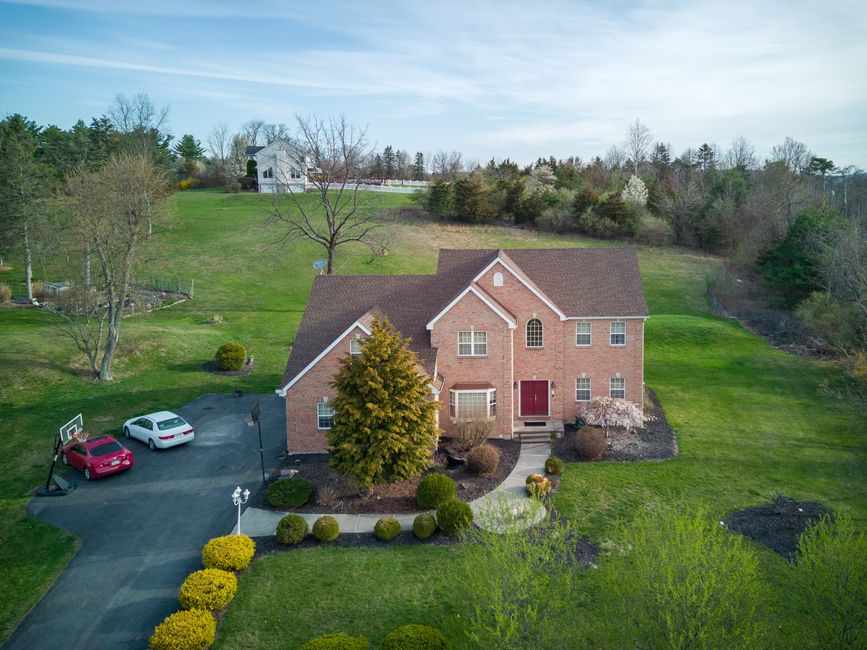
And yes, physician loans still exist in 2026. Despite occasional rumors that these programs disappeared after the 2008 housing crisis or during the pandemic, they remain widely available and competitive. Multiple national and regional lenders actively offer them in Pennsylvania, and the terms have only improved as lenders compete for physician borrowers with strong repayment histories.
One additional financial resource worth knowing about is the Pennsylvania Primary Care Loan Repayment Program, which offers up to $80,000 in loan repayment for full-time physicians, dentists, and psychologists who practice in designated shortage areas. This is not a mortgage product, but it can free up cash flow that makes homeownership even more affordable. If you qualify for both a physician mortgage and state loan repayment, your financial picture becomes exceptionally strong.
How Physician Loans Differ from Conventional Mortgages
The differences between a physician loan and a conventional mortgage are concentrated in four areas. First, the down payment: physician loans routinely offer 100 percent financing with no PMI, while conventional loans require 3 to 20 percent down and charge PMI below 20 percent equity. Second, debt-to-income calculations: physician lenders typically exclude deferred student loans from DTI if payments are paused for 12 or more months, and they use income-driven repayment amounts when loans are in active repayment. Third, employment verification: a signed contract for a position starting within 90 to 120 days replaces the two years of tax returns that conventional lenders demand. Fourth, credit score minimums: a 700 FICO is the common threshold, but higher scores unlock better rates and higher zero-down loan limits.
Top Physician Mortgage Lenders in Pennsylvania (2026 Comparison)
The Pennsylvania physician mortgage market includes national banks, credit unions, and specialized mortgage companies. The table below compares the key features of the most competitive lenders serving Pennsylvania in 2026.
Lender Name: First National Bank (FNB)
Max Loan Amount: $1.25 million (100% financing); higher with down payment
Min Down Payment: 0%
Min Credit Score: 700
Eligible Professions: MD, DO, DDS, DMD
Unique Feature: Construction-to-permanent loans available
Lender Name: Guaranteed Rate Affinity
Max Loan Amount: $2 million (100% financing with 720+ FICO)
Min Down Payment: 0%
Min Credit Score: 700 (720 for max 0% down)
Eligible Professions: MD, DO, DDS, DMD, PA, NP, CRNA, DVM
Unique Feature: Power-Bid fully underwritten pre-approval; non-occupant co-borrowers allowed
Lender Name: Citizens Bank
Max Loan Amount: $1 million (0% down); higher with down payment
Min Down Payment: 0%
Min Credit Score: 700
Eligible Professions: MD, DO, DDS, DMD; non-US citizens eligible
Unique Feature: Construction-to-permanent loans; works with visa holders

Lender Name: Flagstar Bank
Max Loan Amount: $10 million (10% down required)
Min Down Payment: 0% on lower tiers; 10% for jumbo
Min Credit Score: 700
Eligible Professions: MD, DO, DDS, DMD, PA, NP, CRNA, DVM, attorneys, pilots
Unique Feature: Highest loan limits; broadest professional eligibility
Lender Name: First Citizens Bank
Max Loan Amount: Varies by market
Min Down Payment: 0% via 80/20 structure
Min Credit Score: 700
Eligible Professions: MD, DO, DDS, DMD
Unique Feature: 80/20 mortgage (traditional loan plus HELOC) for 100% financing
Lender Name: Liberty Federal Credit Union
Max Loan Amount: $3 million
Min Down Payment: Varies; 0% available on lower amounts
Min Credit Score: 700
Eligible Professions: MD, DO, DDS, DMD
Unique Feature: Credit union pricing; high loan limits
Lender Name: Huntington Bank
Max Loan Amount: $750,000 (0% down); higher with down payment
Min Down Payment: 0%
Min Credit Score: 700
Eligible Professions: MD, DO, DDS, DMD
Unique Feature: Strong presence in PA and Midwest markets
Specific interest rates are not published here because they fluctuate daily and vary by borrower profile. The most reliable way to compare rates is to request personalized loan estimates from two or three lenders on this list on the same day, so you are comparing apples to apples. Pay attention not just to the rate but to origination fees, discount points, and total closing costs.
Which Lender is Best for Your Situation?
Your choice depends on your specific circumstances. If you need a high loan amount above $2 million, Flagstar Bank and Liberty Federal Credit Union are your best options. If your credit score falls in the 700 to 720 range, Citizens Bank and First National Bank are more forgiving and still offer zero-down financing. If you are a non-US citizen on a visa, Citizens Bank explicitly works with foreign national physicians. If you are buying in a competitive market like Philadelphia’s Main Line and need your offer to stand out, Guaranteed Rate Affinity’s Power-Bid pre-approval gives you a fully underwritten commitment letter before you bid, which sellers and listing agents value highly.
Physician Loan Eligibility in Pennsylvania: Who Qualifies?
The standard eligible professions across all physician mortgage programs are MD, DO, DDS, and DMD. If you hold one of these degrees and have a signed employment contract, you meet the baseline eligibility at every lender on the list above.
What has changed in recent years, and what many borrowers still find confusing, is the expansion of eligibility to other healthcare professionals. The question “Can a PA get a physician loan?” comes up frequently, and the answer is yes, at select lenders. Flagstar Bank and Guaranteed Rate Affinity both extend eligibility to physician assistants, nurse practitioners, certified registered nurse anesthetists, and veterinarians. Flagstar goes even further, including attorneys and pilots in its program. If you are a PA or NP in Pennsylvania, do not assume you are excluded. You simply have fewer lender options than an MD or DO, so shopping around is essential.
Credit score requirements are consistent across lenders: a 700 FICO is the floor. However, the difference between a 700 and a 740 score can be significant. Borrowers with scores above 740 typically qualify for the highest zero-down loan limits and the most competitive rates. If your score is close to 700, it is worth spending a few months improving it before applying. Paying down credit card balances and correcting any errors on your credit report can yield a quick boost.
Student loan treatment is where physician mortgages depart most dramatically from conventional underwriting. If your federal student loans are in deferment for 12 or more months from the date of your mortgage application, most physician lenders exclude them entirely from your DTI calculation. If you are on an income-driven repayment plan and making active payments, the lender uses your actual IBR payment amount, not the standard amortized payment that a conventional lender would calculate. This alone can reduce your DTI by hundreds or even thousands of dollars per month, making the difference between approval and denial.
The employment contract requirement is straightforward: you need a signed offer letter or contract for a position that starts within 90 to 120 days of closing. Residents and fellows in their final year qualify as long as they have a contract for an attending position or a fellowship. If you are relocating to Pennsylvania for a new job, you can close on your home before your start date, which is a major advantage over conventional loans that require pay stubs from a current employer.
How to Apply for a Physician Loan in Pennsylvania (Step-by-Step)
The application process for a physician loan is similar to any mortgage, but with a few physician-specific steps that can make or break your experience.
Step one is getting pre-approved, not just pre-qualified. A pre-qualification is a quick estimate based on self-reported numbers. A pre-approval involves a full underwriting review of your credit, income, and assets. Guaranteed Rate Affinity’s Power-Bid program takes this further by issuing a fully underwritten commitment letter that functions almost like a cash offer in the eyes of a seller. In Pennsylvania markets where multiple offers are common, this can be the edge that wins you the house.
Step two is gathering your documents. You will need your signed employment contract showing your salary and start date, your medical license or proof of eligibility, residency or fellowship verification if you are still in training, two years of tax returns if you have been working, and your most recent student loan statements showing the payment status and monthly obligation. If your loans are deferred, you need documentation proving the deferment extends at least 12 months from your application date.
Step three is comparing loan estimates. Once you have pre-approvals from two or three lenders, request official loan estimates on the same day. Look beyond the interest rate. Compare the origination charges, underwriting fees, discount points, and total cash required at closing. One lender might offer a lower rate but charge higher fees that negate the savings. Another might have a slightly higher rate but cover more of the closing costs. This is the gap in most online physician loan comparisons: they talk about rates generically but rarely address closing costs. The only way to fill that gap is to get real estimates and compare them line by line.
Step four is locking your rate. Mortgage rates change daily, sometimes intraday. When you find a rate and fee structure that works, lock it. If your closing is 30 to 60 days out, a rate lock protects you from market swings. Some lenders offer a float-down option that lets you take a lower rate if rates drop during your lock period, but this usually costs extra. Ask each lender about their lock policy before you commit.
Physician Loans vs. Conventional vs. FHA vs. VA: Which is Best for PA Doctors?
Physicians in Pennsylvania have access to multiple mortgage types, and the right choice depends on your financial profile and eligibility.
A physician loan is the best fit for most attending physicians and residents because it eliminates the down payment barrier, waives PMI, and treats student debt favorably. If you have high student loan balances and limited savings, this is almost certainly your best option. The tradeoff is that physician loan rates can be slightly higher than conventional rates for borrowers with excellent credit and large down payments, but the difference is often marginal and well worth the flexibility.
A conventional loan requires a down payment of 5 to 20 percent and charges PMI if you put down less than 20 percent. If you have saved a substantial down payment and have a low DTI, a conventional loan might offer a slightly lower rate. But for most early-career physicians, the down payment requirement alone makes conventional loans impractical. Even a 5 percent down payment on a $400,000 home is $20,000, which many residents and new attendings simply do not have liquid.
An FHA loan allows a down payment as low as 3.5 percent, but it requires mortgage insurance premiums for the life of the loan, regardless of equity. FHA loan limits also cap out below what many physicians need in higher-cost Pennsylvania markets. For a physician who can qualify for a zero-down, no-PMI physician loan, an FHA loan is almost never the better choice.
A VA loan offers zero down payment, no PMI, and competitive rates, but it is only available to veterans, active-duty service members, and eligible surviving spouses. If you have VA eligibility, compare a VA loan against a physician loan carefully. VA loans have a funding fee that can be rolled into the loan, but they often have lower rates and more flexible underwriting. For a physician who is also a veteran, the VA loan is frequently the superior product.
The bottom line: for most Pennsylvania physicians without VA eligibility, a physician loan is the optimal path to homeownership. The student loan DTI exclusion alone makes it the most practical choice, and the zero-down, no-PMI structure preserves your cash for other priorities like paying down debt or investing.
Frequently Asked Questions About Physician Loans in Pennsylvania
Do physician loans have higher interest rates? Not necessarily. Rates are competitive with conventional mortgages, though they vary by lender and by your credit profile. The only way to know is to compare loan estimates from multiple physician mortgage lenders and a conventional lender on the same day.
Can I use a physician loan for a second home or investment property? No. Physician mortgages are strictly for primary residences. If you want to buy a rental property or vacation home, you will need a conventional investment property loan or a second-home mortgage.
What happens to my student loans after I buy? You can refinance them later if rates are favorable, but during the mortgage application process, keep them in deferment if possible. This keeps your DTI low and maximizes your purchasing power. Once the mortgage closes, you can reassess your student loan strategy independently.
Can I refinance out of a physician loan later? Yes. Once you have built 20 percent equity through payments and appreciation, you can refinance into a conventional loan. This can make sense if conventional rates have dropped below your physician loan rate and you want to eliminate any remaining features of the original loan that no longer serve you.
Final Advice for Pennsylvania Physicians Buying a Home in 2026
Start by getting pre-approved with two or three lenders from the list above before you begin house hunting. A pre-approval letter in hand gives you a realistic budget and signals to sellers that you are a serious buyer. With a median home price of $287,500 and a physician salary of $244,000, the Pennsylvania housing market is favorable for doctors. Do not let student debt convince you that homeownership is years away. The physician mortgage programs available in 2026 are designed precisely for your situation.
Think long-term as well. A physician loan is a bridge, not a permanent structure. Plan to refinance into a conventional loan within three to five years, once you have built equity and your student loans are under control. That strategy minimizes your long-term interest costs while giving you the flexibility to buy now, when you need it most.
USAA Physician Loans: 2026 Guide for Doctors, Dentists, and Vets
If you are a medical professional researching USAA physician loans, you likely know USAA for their century of service to military families. Since 1922, the organization has built a reputation on serving those who serve, and their mortgage division brings over 20 years of experience specifically to the table. But a strong military pedigree does not automatically translate into the best physician mortgage. This guide answers the question “Does USAA offer physician loans?” with a definitive yes, then walks through exactly what the program delivers, who qualifies, how it stacks up against VA loans and competing lenders, and whether it deserves your application in 2026.
Table of Contents
Who Qualifies for the USAA Physician Loan? (Eligibility Requirements)
USAA Physician Loan vs. VA Loan: Which Is Better for Military Doctors?
What Is the USAA Physician Loan? (Program Overview)
The USAA Physician Loan is a specialized mortgage product designed for medical professionals who carry high student loan debt relative to their early-career income. Its headline feature is financing up to 100 percent of the home’s purchase price with no private mortgage insurance, or PMI. On a $500,000 home, skipping PMI can save $200 to $400 per month compared to a conventional loan with less than 20 percent down.

The program covers a broad range of medical degrees: MD, DO, DDS, DMD, PharmD, and DVM. That means physicians, dentists, pharmacists, and veterinarians all fall under the same umbrella, which is wider than many competing physician loan programs that limit eligibility to MDs and DOs only.
Underwriting accounts for the financial reality of residency and fellowship. Standard conventional loans apply strict debt-to-income ratios using the full student loan payment, which can disqualify early-career doctors before they ever reach underwriting. The USAA physician loan often uses a more favorable calculation, such as one percent of the outstanding loan balance or the actual income-driven repayment amount, to keep DTI within workable limits. This flexibility, combined with the zero-down option, lets residents and fellows buy a home without draining savings that are better reserved for moving costs, board exam fees, or an emergency fund.
Who Qualifies for the USAA Physician Loan? (Eligibility Requirements)
Eligibility starts with your degree. You need at minimum an MD, DO, DDS, DMD, PharmD, or DVM. Residents, fellows, and fully licensed attending physicians all qualify, provided they meet the remaining criteria.
Employment verification is non-negotiable. USAA requires a signed employment contract or a formal letter of acceptance from a hospital, private practice, or healthcare system. You typically need to start that position within 90 to 120 days of closing. This timeline mirrors what Bank of America offers with its doctor loan, which allows closing up to 90 days before a new job begins.
Membership is the gate that sets this program apart from every other physician loan on the market. You must be eligible for USAA membership, which means you are an active-duty service member, a veteran, or an eligible family member of one. If you have no military connection whatsoever, this program is not available to you, regardless of your medical credentials.
USAA does not publish hard minimums for credit scores or income, but competitive applicants typically carry scores of 680 or higher with verifiable income from their contract or current position. The loan applies to primary residences only: single-family homes, condos, and townhomes qualify, while investment properties and second homes do not.
USAA Physician Loan vs. VA Loan: Which Is Better for Military Doctors?
Military physicians face a unique choice. They often qualify for both a VA loan and the USAA physician loan, and picking the wrong one can cost thousands over the life of the mortgage.
VA loans offer zero down payment and no PMI, just like the physician loan. But VA loans carry a funding fee that ranges from 1.25 percent to 3.3 percent of the loan amount, depending on down payment size and whether you have used your VA entitlement before. Borrowers with a service-connected disability rating are exempt from this fee, but many early-career military doctors do not yet have that rating. The physician loan has no funding fee whatsoever.
Underwriting is where the physician loan pulls ahead for residents and fellows. VA loans follow standard agency underwriting guidelines, which can treat high student loan balances as a disqualifying factor even if payments are deferred. The physician loan was built specifically to handle that scenario. If you are a first-year resident with $300,000 in student loans and a modest resident salary, the physician loan may approve you when a VA loan will not.
VA loans also have county-based conforming limits for zero-down purchases, though jumbo VA loans exist with a down payment. Physician loans through USAA often extend to jumbo amounts with 100 percent financing, giving you more purchasing power in high-cost markets like San Diego, Washington D.C., or Seattle.
The bottom line: if you have full VA entitlement and a funding fee exemption, the VA loan is probably cheaper. If you are early in your career, carrying heavy student debt, and lack a disability rating, the physician loan offers a smoother path to approval.
USAA Physician Loan Interest Rates and Costs in 2026
USAA does not publicly advertise specific physician loan rates, and that lack of transparency is worth noting. Reddit user feedback consistently describes USAA mortgage rates as “not as competitive” compared to Navy Federal Credit Union, Veterans United, or local credit unions. That said, rate alone is not the full picture.
Physician loan rates from USAA may run slightly higher than conventional or VA rates, but the trade-off is 100 percent financing with no PMI. On a $600,000 loan, a rate that is 0.25 percent higher might add roughly $90 per month, while eliminating PMI could save $250 or more. The total monthly payment matters more than the interest rate in isolation.
Closing costs follow standard industry expectations: origination fees, appraisal, title insurance, and escrow. USAA may offer lender credits if you accept a higher rate, which can reduce upfront cash requirements. The program carries no prepayment penalty, so you can refinance later without penalty once your income grows or rates drop.
Rate locks typically run 30 to 60 days. If you are buying new construction with a longer timeline, extended locks are available for a fee. Ask your loan officer for a written estimate that includes the rate, APR, and total cash to close before you commit.
How to Apply for a USAA Physician Loan (Step-by-Step)
Applying follows a clear sequence, but the membership requirement means you should start early.
Step one: verify your USAA membership eligibility. If you served, your parent served, or your spouse served, you can join online in minutes. You cannot apply for any USAA financial product without an active membership.
Step two: gather your documentation. You will need your signed employment contract or acceptance letter, verification of your medical degree, the last two years of tax returns if you filed, recent pay stubs, and full student loan statements showing balances and monthly payments. Having these ready before you apply speeds underwriting considerably.
Step three: get prequalified. Use USAA’s online prequalification tool or call the mortgage hotline directly. Prequalification gives you a preliminary loan amount and rate estimate without a hard credit pull, so you can shop with confidence.
Step four: submit the full application through USAA’s digital portal. Upload all requested documents and respond promptly to underwriter requests. Delays in documentation are the most common reason closings get pushed back.
Step five: close and fund. Once underwriting approves your file, you will schedule closing. USAA allows closing before your job start date, which is especially useful for residents and fellows relocating for a new position.
USAA Physician Loan vs. Competitors (2026 Comparison)
No single lender wins for every borrower, and the physician loan space has grown more competitive in 2026. Here is how USAA compares to the major alternatives.
Bank of America’s doctor loan uses a tiered down payment structure: three percent down on mortgages up to $850,000, five percent up to $1 million, ten percent up to $1.5 million, and fifteen percent up to $2 million. USAA offers 100 percent financing across the board, but Bank of America does not require military affiliation. If you are a civilian doctor, Bank of America is the more accessible option. Bank of America also allows closing 90 days before your job start date, matching USAA’s flexibility on that front.
Navy Federal Credit Union serves the same military population as USAA but does not offer a dedicated physician loan program. Their conventional and VA mortgages often carry lower rates than USAA, according to member feedback, but they lack the specialized underwriting for high student debt. For a military doctor, USAA wins on program design; Navy Federal may win on rate.
Veterans United specializes exclusively in VA loans and consistently earns top customer service ratings. If you are a military physician with strong VA eligibility, Veterans United may offer better VA rates and a smoother process than USAA’s VA loan channel. But they have no physician loan alternative if you need flexible DTI treatment.
Local and regional banks deserve a look. Many community lenders offer physician loans with competitive rates and a dedicated loan officer who knows your market. USAA’s advantage is convenience and integration for existing members who already bank, invest, and insure through the company.
One differentiator no competitor matches: USAA’s Government Shutdown Program. When federal funding lapses and military paychecks stop, USAA provides no-interest loans and payment relief to affected members. For a military physician working at a VA hospital or federal facility, that safety net has real value.
Pros and Cons of USAA Physician Loans
The program has clear strengths and equally clear limitations. Weigh both sides before applying.
On the pro side, 100 percent financing with no PMI preserves cash and lowers monthly payments. The broad degree eligibility covers MDs, DOs, dentists, pharmacists, and veterinarians. Underwriting flexes for high student loan debt in ways conventional loans do not. The Government Shutdown Program offers a financial backstop most lenders cannot match. And USAA brings over two decades of mortgage experience to the table.
On the con side, USAA membership is mandatory, which excludes civilian medical professionals entirely. Rates may not be the most competitive, based on consistent Reddit feedback and the absence of published rate data. That lack of public rate transparency makes comparison shopping harder. USAA does not staff a dedicated physician loan specialist phone line; you will work through the general mortgage department. And the program covers primary residences only, with no option for investment properties or second homes.
Frequently Asked Questions About USAA Physician Loans
Does USAA offer physician loans? Yes. USAA has a dedicated Physician Loan program for medical professionals holding MD, DO, DDS, DMD, PharmD, or DVM degrees. The program is active in 2026 and available to members who meet eligibility requirements.
Can I use a USAA physician loan for a jumbo mortgage? Yes. USAA physician loans can cover jumbo loan amounts, which in 2026 typically means anything above the conforming loan limit of $766,550. Many borrowers secure 100 percent financing on jumbo purchases, though specific limits depend on your qualifications and the property location.
Do I need to be a USAA member to get a physician loan? Yes. USAA membership is a hard requirement. You must have a military connection through your own service, a parent’s service, or a spouse’s service. There is no workaround for civilians.
What is the minimum down payment for a USAA physician loan? The program allows up to 100 percent financing, meaning zero down payment is possible for qualified borrowers. Your specific terms will depend on credit, income, and the loan amount.
Are USAA physician loan rates higher than conventional rates? They can be slightly higher, but the absence of PMI and the option for zero down often offset the rate difference. Always compare the total monthly payment, including principal, interest, taxes, insurance, and any mortgage insurance, rather than focusing on the rate alone. For a broader look at how physician mortgages compare to standard financing, the physician loans overview covers multiple lender programs and their typical terms.
Final Verdict: Is the USAA Physician Loan Right for You?
The USAA physician loan works best for a specific borrower: a military-affiliated medical professional who wants 100 percent financing with no PMI and needs underwriting that accommodates high student loan debt. If you are an active-duty physician, a veteran in residency, or the spouse of a service member entering practice, this program deserves a close look.
It is not the right fit for civilians, who cannot join USAA at all, or for rate-sensitive borrowers willing to make a down payment in exchange for a lower interest rate. It also will not work for investment property purchases.
Your action step is straightforward. If you qualify for USAA membership, get prequalified to see your specific rate and terms. Then take those numbers to at least two other lenders, such as Bank of America’s doctor loan program or a local credit union with a physician mortgage, and compare the total cost. For physicians exploring the full range of borrowing options, the guide on financing options for physicians covers practice loans, lines of credit, and other capital strategies that complement a home purchase. The best physician loan is the one that costs you the least over the time you plan to own the home, and you will only know that by shopping your offer.
USAA Physician Loans: A Complete Guide for Doctors in 2026
If you are searching for usaa physician loans, you likely already know that standard mortgage underwriting doesn’t account for your future earning potential. You might be a third-year resident with $300,000 in student loans and a signed attending contract for $350,000 starting in July. To a conventional lender, you look like a risk. To USAA, you look like exactly the kind of member they built this program for. This guide cuts through the marketing noise and gives you a transparent look at eligibility, down payment specifics, the application process, and how USAA stacks up against competitors like Bank of America and Navy Federal. We are focusing specifically on the USAA Physician Loan program, not their VA or conventional products, though we will contrast them where it helps clarify your options.
Table of Contents
USAA Physician Loan Requirements: What You Need to Apply in 2026
Final Verdict: Is a USAA Physician Loan Right for You in 2026?
What Is the USAA Physician Loan? (And Who Qualifies)
The USAA Physician Loan is a specialized mortgage product that allows medical professionals to finance up to 100 percent of a home’s purchase price without requiring Private Mortgage Insurance. That last part matters more than most first-time buyers realize. PMI on a conventional loan with less than 20 percent down typically runs between 0.5 and 1.5 percent of the loan amount annually. On a $500,000 mortgage, that translates to roughly $200 to $400 per month that you never see again. The physician loan eliminates that line item entirely.
Eligibility extends to MDs, DOs, dentists holding a DDS or DMD, and certain other licensed physicians. Residents and fellows are typically eligible provided they have a signed employment contract for an attending position. USAA mortgage loans under this program are available up to $1.5 million, though exact terms vary based on your location, credit profile, and the specific property.

The core philosophy behind the product is simple: traditional underwriting penalizes high student loan debt, but a physician’s income trajectory makes that snapshot misleading. USAA underwrites based on your attending salary contract rather than your current resident stipend, which is the single biggest reason this product exists.
How It Differs from a Standard Conventional Loan
A conventional loan treats your student loan balance as a weight dragging down your debt-to-income ratio. If you owe $250,000 in federal loans on an income-driven repayment plan, the standard calculation can still push your DTI above acceptable limits. The USAA Physician Loan flips that logic. It evaluates the income you are about to earn, not the income you currently earn.
The second major difference is the down payment structure. Conventional loans require 20 percent down to avoid PMI. Many doctors finish training with minimal savings, making that threshold impossible. The physician loan removes that barrier entirely while still waiving PMI. Finally, USAA allows a higher debt-to-income ratio than conventional limits, often accommodating DTIs up to 45 or even 50 percent when a signed contract demonstrates a significant and imminent income jump.
USAA Physician Loan Requirements: What You Need to Apply in 2026
USAA does not publish a hard minimum credit score for this specific product, but industry patterns and borrower reports suggest that a score of 680 or above puts you in competitive territory. Scores below 660 may still qualify but should expect higher rates or additional scrutiny during underwriting. If your credit needs work, spend six months cleaning it up before applying. The rate difference alone can save tens of thousands over the life of the loan.
The documentation checklist is where many applicants hit friction. You will need your medical license or, if you are still in training, your residency or fellowship contract. Your signed employment contract for the attending position is the centerpiece of the application, especially if you are closing within 90 days of starting the job. Recent graduates should have a diploma or transcript ready. On the financial side, plan to submit W-2s, two years of tax returns, and recent bank statements. If you have a spouse whose income you want considered, their documentation will be required as well.

The debt-to-income ratio flexibility is one of the program’s strongest features. While USAA’s published maximum DTI for VA loans sits between 43 and 50 percent, the physician loan operates with similar latitude. The key variable is the strength of your contract. A signed attending agreement showing a salary jump from $60,000 to $350,000 gives underwriters confidence that your current DTI snapshot is not predictive of your ability to repay.
Residents and fellows should note the closing timeline. You can close up to 90 days before your new job starts, a policy that mirrors what Bank of America offers for its doctor loan program. The catch is that you must provide a fully executed contract with a start date, and the underwriter will verify that date with your employer. If your start date slips, your closing date may slip with it.
USAA Physician Loan Rates and Fees in 2026: What to Expect
Here is the uncomfortable truth about USAA physician loan rates: you will not find them published online. USAA does not display live rate quotes for this product on its website. You must call or begin an application to see personalized numbers. This lack of transparency is a legitimate frustration and one of the most common complaints on physician forums.
Based on borrower reports and discussions on Reddit, USAA’s rates for this product tend to run 0.25 to 0.5 percentage points higher than what you would find from smaller physician-focused lenders or aggressive credit unions. That spread may sound small, but on a $750,000 loan, a quarter-point difference adds roughly $35,000 in extra interest over 30 years. The trade-off is that USAA offers 100 percent financing, which many competitors do not.
Fees deserve equal scrutiny. Expect an origination fee in the range of 0.5 to 1 percent of the loan amount. The appraisal will run between $500 and $700. There is no PMI line item, but understand that the cost of waiving PMI is often built into the interest rate itself through what the industry calls a lender-paid premium. You are not avoiding that cost entirely; you are paying for it differently.
A word about the loyalty assumption: USAA is genuinely excellent for insurance and banking. Their mortgage division, however, operates as a separate business unit with its own pricing models. Do not assume that your 15-year membership or multi-policy insurance bundle earns you a meaningful rate discount on a physician loan. Shop accordingly.
Step-by-Step: How to Apply for a USAA Physician Loan
The application process starts with prequalification, which you can initiate on USAA’s website or by calling their home loan assistance department at 855-430-8489. Their phone hours are Monday through Friday from 7 a.m. to 7 p.m. Central Time and Saturday from 7 a.m. to 3 p.m. Central Time. Prequalification uses a soft credit pull, so your score will not take a hit at this stage. You will receive a rough estimate of what you can borrow, but it is not a commitment to lend.
Step two is gathering your physician-specific documents, and this is where timelines often stretch. Your employment contract, medical license, and residency completion certificate form the core of what makes this application different from a standard mortgage. If any of these documents are pending, your application stalls. Get them in order before you start.
Once you have a purchase agreement on a property, you move to the formal application and rate lock. Lock your rate immediately if the number looks favorable. Mortgage rates shift daily, and a quarter-point swing overnight can change your monthly payment by a meaningful amount. USAA will require full documentation at this stage, including pay stubs, tax returns, and bank statements.
Underwriting and appraisal typically take 30 to 45 days from the formal application date. The underwriter will verify your employment contract directly with your future employer and confirm your start date and salary. The appraisal must support the purchase price. If it comes in low, you will need to renegotiate with the seller or bring cash to cover the gap. Once underwriting clears, you sign closing documents, often electronically, and the loan funds.
USAA Physician Loans vs. The Competition (2026 Comparison)
Comparing USAA to Bank of America reveals a clear trade-off between down payment flexibility and maximum loan size. Bank of America’s doctor loan offers down payments as low as 3 percent on mortgages up to $850,000, 5 percent up to $1 million, 10 percent up to $1.5 million, and 15 percent up to $2 million. USAA offers 100 percent financing up to $1.5 million with no down payment required at any tier. If you have minimal cash reserves and want to preserve liquidity, USAA wins on the down payment front. If you are buying in a high-cost market and need a loan above $1.5 million, Bank of America is the better option, since they stretch to $2 million.
Navy Federal Credit Union frequently surfaces in physician discussions as a rate leader for military-affiliated borrowers. Multiple Reddit threads and forum posts cite Navy Federal as offering lower rates and more responsive service during the mortgage process. USAA counters with a longer institutional history, having served the military community since 1922, and a broader suite of financial products that some borrowers value as a one-stop relationship. On pure rate competitiveness, however, Navy Federal often has the edge.
Physician-only lenders like Laurel Road and SoFi take a different approach. They specialize exclusively in medical professionals and often have more flexible underwriting for borrowers with extremely high student loan balances relative to income. Their systems are built to handle the nuances of physician compensation, including productivity bonuses and partnership tracks. USAA is a better fit if you already have a banking relationship with them and prefer consolidating your financial life under one login. For pure rate shopping and underwriting flexibility, the physician-only lenders deserve a look.
The verdict depends on your priorities. USAA is a solid option if you are a veteran or military family member seeking 100 percent financing with no PMI and you value brand continuity. If your primary goal is the lowest possible interest rate, start your search elsewhere and bring competing quotes back to USAA to see if they will match.
Pros and Cons of USAA Physician Loans (Honest Assessment)
The strengths of this program are real and specific. One hundred percent financing with no PMI is rare in the mortgage market, and it is particularly valuable for physicians emerging from training with high earning power but low savings. The underwriting philosophy that considers future earning potential rather than current debt ratios is exactly what residents and fellows need. USAA’s reputation for customer service, particularly for military families, adds a layer of trust that generic lenders cannot replicate. And if the physician loan does not work out, USAA’s HomeReady loan offers another low down payment path.
The weaknesses are equally real. Rates tend to run higher than what competitors offer, a pattern consistently reported across physician forums and Reddit threads. The absence of live rate transparency online means you cannot quietly comparison shop without initiating contact. The $1.5 million loan cap excludes buyers in markets like Manhattan, San Francisco, or parts of Los Angeles where a modest home can exceed that threshold. And USAA’s current lineup does not include jumbo loans or investment property financing, which limits your options if you plan to buy a multi-unit property or a second home.
Frequently Asked Questions About USAA Physician Loans
Does USAA offer physician loans to residents? Yes, provided you have a signed contract for your attending position starting within 90 days of closing. The contract is the linchpin.
Can I use a USAA Physician Loan for a second home or investment property? No. This product is strictly for primary residences. If you are looking to finance a rental property or vacation home, you will need to explore other options.
What is the phone number for USAA home loan assistance? The general mortgage line is 855-430-8489. If you are experiencing financial hardship and need loss mitigation help, call 855-430-8488.
Is the USAA Physician Loan available to dentists? Yes. DDS and DMD holders are explicitly eligible, along with MDs, DOs, and certain other licensed physicians.
Final Verdict: Is a USAA Physician Loan Right for You in 2026?
This product works best for military-affiliated doctors who want 100 percent financing with no PMI and value keeping their mortgage, banking, and insurance under one roof. If you are a resident or fellow with a signed attending contract and minimal savings, the zero-down structure solves a real problem. Skip USAA if you are a pure rate shopper, need a loan above $1.5 million, or want the absolute lowest cost option available. Your action step is straightforward: call USAA for a personalized rate quote, then compare it with at least two other lenders before committing. A Bank of America doctor loan quote and a rate from a physician-specific lender will give you the context you need to make an informed decision.
Physician Loans in Minnesota: 2026 Guide for Doctors & Medical Professionals
If you are a physician or medical professional looking to buy a home in Minnesota, understanding physician loans Minnesota offers can save you tens of thousands of dollars upfront. The state presents a unique financial landscape: strong earning potential at world-class institutions like Mayo Clinic and the Allina Health system, paired with the reality of six-figure student loan debt and a housing market that has grown increasingly competitive. A standard conventional mortgage often penalizes exactly the profile you fit: high income but low liquid assets, with deferred debt that looks worse on paper than it actually is. This guide cuts through the national noise to give you a local, data-driven breakdown of lenders, eligibility, and the real cost comparison that no one else is publishing.
Table of Contents
Physician Loan Requirements in Minnesota (Eligibility and Credit)
Physician Loan vs. Conventional Loan in Minnesota: Cost Comparison
Frequently Asked Questions About Physician Loans in Minnesota
What Is a Physician Mortgage Loan? (The Minnesota Context)
A physician mortgage loan is a specialized financing product designed exclusively for medical professionals. It allows for zero percent down payment and waives the requirement for private mortgage insurance, or PMI, entirely. Eligible professions typically include MD, DO, DDS, DMD, DVM, DPM, PharmD, NP, PA, and CRNA, though the exact list varies by lender. These are not government-backed loans like FHA or VA programs. They are conventional loans with special underwriting exceptions offered by a select group of banks and credit unions that understand the medical career trajectory.

In Minnesota, this product carries specific weight. The median home value in the state sits around $331,190, but that number obscures the reality in the communities where most physicians practice. In suburbs like Edina and Woodbury, or in Rochester near Mayo Clinic, move-in ready homes for a professional family routinely list between $450,000 and $700,000. A conventional loan on a $600,000 property with five percent down requires $30,000 in cash plus closing costs, and then adds PMI on top of principal and interest. A physician loan eliminates both the cash barrier and the monthly PMI penalty.
The most critical underwriting distinction concerns student loans. On a conventional mortgage, your debt-to-income ratio includes a percentage of your total student loan balance, even if payments are deferred. Physician loans typically exclude deferred student loans with at least twelve months of forbearance remaining from the DTI calculation. For a resident or fellow carrying $250,000 in federal loans, this single provision can mean the difference between qualifying for a home and being denied outright.
Top Minnesota Physician Loan Lenders for 2026
The lender landscape for physician mortgages in Minnesota splits between national institutions with broad product lines and local banks that understand the state’s specific markets. Comparing offers from both categories is the most reliable way to secure favorable terms.
National and Regional Lenders Active in Minnesota
Alliant Credit Union stands out for one specific reason: it imposes no time limit on training completion. An attending physician who finished residency fifteen years ago qualifies under the same program as a 2026 fellowship graduate. Alliant requires a minimum credit score of 700 and offers one hundred percent financing up to $1,000,000. For physicians purchasing in Minneapolis or St. Paul proper, where single-family homes in desirable neighborhoods can push against that ceiling, this is a strong baseline option.
Wintrust Mortgage maintains a significant Midwest footprint and offers zero percent down up to $1,250,000. That extra $250,000 in full-financing headroom matters in markets like Edina or Wayzata, where median sale prices run higher than the state average. Wintrust also structures loans for physicians relocating with a signed employment contract, accepting that contract in lieu of two years of tax returns.
Flagstar Bank targets the upper end of the market. Its physician program covers loans up to $2,000,000 with ten to fifteen percent down, which suits established attendings purchasing in premium Twin Cities neighborhoods or building custom homes. BMO, Huntington, and Truist all offer competitive physician mortgage products as well, often with rate buydowns or relationship discounts for medical professionals who bring additional assets under management.
Local Minnesota Lenders (The Unique Angle)
Frandsen Bank and Trust operates as a true community bank with deep knowledge of Minnesota’s varied housing markets, from the Twin Cities metro to Duluth and greater Minnesota. Working with a local lender means your loan officer understands the appraisal environment in Rochester versus a lake property in Otter Tail County. That local underwriting intelligence can prevent deals from collapsing over valuation issues that a national bank’s automated system might mishandle.
Merchants Bank offers the MedPro program, which explicitly includes Advanced Practice Registered Nurses (NP, CRNA, CNM, CNS, CNL) and Physician Assistants. This broader eligibility is not universal among physician loan programs, many of which restrict participation to MDs, DOs, and dentists. Merchants Bank also caps origination fees at $2,500, a meaningful cost control when origination charges on larger loans can otherwise run one percent of the loan amount. For non-physician providers in Minnesota, Merchants Bank is often the strongest starting point.
Physician Loan Requirements in Minnesota (Eligibility and Credit)
Qualifying for a physician mortgage in Minnesota follows a pattern that is consistent across most lenders, though individual programs have their own thresholds. The standard minimum credit score is 700. Some lenders will accept 680 if the applicant has strong compensating factors, such as a larger cash reserve or a particularly high income relative to the loan amount. Anything below 680 will be difficult to place, regardless of profession.
The debt-to-income ratio cap typically sits at forty-five percent. The key advantage, as noted earlier, is the treatment of deferred student loans. If your federal loans are in deferment with at least twelve months remaining, most physician loan underwriters will exclude those payments from the DTI calculation entirely. This is not a loophole; it is a deliberate program feature designed to reflect the reality that your income will rise substantially once you complete training.
Employment verification is the other major flexibility point. A signed employment contract with a start date within thirty to ninety days of closing can substitute for two years of tax returns. This provision is critical for new attendings moving to Minnesota to join Mayo Clinic, Allina Health, HealthPartners, or Essentia Health. You do not need to have started the job yet; you need the signed contract and the credentialing confirmation.
Profession eligibility varies. MD, DO, DDS, and DMD are accepted by virtually every physician loan program. DVM, DPM, and PharmD are included by most. The line gets drawn at APRNs and PAs. Some national lenders exclude them. In Minnesota, Merchants Bank’s MedPro program is the most reliable option for NPs, CRNAs, and PAs. Confirm eligibility with each lender before submitting an application.
Physician Loan vs. Conventional Loan in Minnesota: Cost Comparison
No other top resource on physician loans in Minnesota provides a side-by-side cost analysis. Here is the math that matters.
Consider a physician buying a $450,000 home in Minneapolis. On a conventional loan with five percent down, the borrower brings $22,500 in cash plus closing costs, which in Minnesota typically run two to three percent of the purchase price. The loan amount is $427,500. At a 6.5 percent thirty-year fixed rate, the monthly principal and interest payment is $2,702. PMI on this loan, with less than twenty percent down, adds roughly $150 to $200 per month. Total monthly housing cost before taxes and insurance: approximately $2,875.
On a physician loan with zero percent down, the borrower brings only closing costs. The loan amount is the full $450,000. The interest rate will likely be 0.25 to 0.5 percent higher, so assume 6.875 percent. The monthly principal and interest payment is $2,956. There is no PMI. Total monthly cost before taxes and insurance: $2,956.
The physician loan costs about $80 more per month in this scenario. Over thirty years, the physician loan borrower pays more total interest because the loan amount is larger and the rate is slightly higher. But the physician loan borrower also kept $22,500 in cash. Invested at a conservative seven percent annual return, that $22,500 grows to over $170,000 over the same thirty years. The opportunity cost of parting with the down payment dwarfs the interest rate differential.
The decision framework is straightforward. If you have ample cash and the rate spread is wide, a conventional loan may win on total interest paid. If you value liquidity, want to preserve capital for student loan repayment or practice buy-in, or simply do not have a large cash reserve yet, the physician loan is the superior tool. For most residents, fellows, and new attendings, the physician loan wins decisively.
Buying a Home in Minnesota’s Top Medical Hubs
Minnesota’s physician housing markets vary dramatically by region, and your loan strategy should account for where you are practicing.
The Twin Cities metro, encompassing Minneapolis and St. Paul along with suburbs like Edina, Woodbury, and Minnetonka, commands median home values between $350,000 and $450,000, with professional-class homes frequently exceeding $600,000. The conventional loan limit for 2025 sits at $806,500 for most of the country. A physician buying above that threshold with a conventional loan faces jumbo underwriting, which is stricter and more expensive. Physician loans that offer one hundred percent financing up to $1,000,000 or $1,250,000 allow you to bypass jumbo territory entirely, even on a high-value purchase.
Rochester presents a unique market driven almost entirely by Mayo Clinic. Demand is consistent, inventory is tight, and sellers often receive multiple offers. A pre-approval letter from a physician loan lender signals to listing agents that your financing is secure and that the down payment will not be a point of failure. One hundred percent financing up to $1,000,000 covers the vast majority of Rochester properties comfortably.
Duluth and greater Minnesota offer lower price points, typically $250,000 to $350,000, but fewer lender options. National physician loan programs will still serve these areas, but a local lender like Frandsen Bank and Trust understands the market nuances and may offer more flexible appraisal processes for unique or rural properties.
For physicians considering rural practice, Minnesota operates the Rural Physician Loan Forgiveness Program. This state-run initiative provides up to $33,000 per year toward student loan repayment, with a maximum benefit of $132,000 over four years. The next application cycle opens November 1, 2026, and closes January 6, 2027. Pairing a physician mortgage with state loan forgiveness creates a powerful financial strategy: zero-down homeownership combined with aggressive student debt reduction funded by the state. This combination is available nowhere else in quite this form.
Can Residents and Fellows Get Physician Loans in Minnesota?
Yes, residents and fellows can qualify for physician mortgage loans, but the path is narrower than it is for new attendings. The primary challenge is the employment verification requirement. Most lenders want a signed contract for an attending-level position. A resident on a one-year or three-year training contract may not meet that threshold at every institution.
The practical strategy for residents is to work with a lender that explicitly accommodates training contracts. Alliant Credit Union is resident-friendly and, as noted, imposes no time limit since training completion, which means the same program works for you now and later. A zero-down physician loan allows a resident to enter the housing market without draining savings that will be needed for board exams, licensing, and relocation after training.
The caveat is resale risk. If you are in a three-year residency and may move for fellowship or an attending position, transaction costs from buying and selling within a short window can erode any equity you build. In that scenario, the physician loan still works, but you should plan to hold the property as a rental or accept that breaking even on the sale is a reasonable outcome given that you lived in the home without a down payment.
Frequently Asked Questions About Physician Loans in Minnesota
What credit score do I need for a physician mortgage in Minnesota? The standard minimum is 700. Some lenders accept 680 with strong compensating factors such as high income relative to the loan amount or significant cash reserves. A score below 680 will be difficult to place.
Do physician mortgages have higher interest rates? Typically, physician loan rates run 0.25 to 0.5 percent higher than conventional thirty-year fixed rates. The zero percent down payment and absence of PMI usually offset this difference, especially when the opportunity cost of the down payment is factored in.
Can I get a physician loan with student loan debt? Yes. This is one of the core design features of the product. Deferred student loans with at least twelve months of forbearance remaining are generally excluded from the debt-to-income calculation.
What is the maximum loan amount for a physician mortgage in Minnesota? One hundred percent financing is available up to $1,000,000 or $1,250,000 depending on the lender. Financing with ten to fifteen percent down extends to $1,500,000 or $2,000,000.
Do physician loans require PMI? No. The waiver of private mortgage insurance is the defining benefit of the product and applies across all major physician loan programs.
Can nurse practitioners and physician assistants qualify? Yes, but not at every lender. Merchants Bank’s MedPro program is the most inclusive option in Minnesota for APRNs and PAs. Confirm eligibility with each lender before applying.
Final Advice for Minnesota Physicians Buying a Home in 2026
Physician mortgage loans are the most effective tool available for medical professionals in Minnesota to enter the housing market without liquidating savings or paying PMI. The state’s combination of strong health systems, varied housing markets, and a unique loan forgiveness program for rural practice creates options that do not exist in most other states.
Get pre-approved with at least two lenders, one national and one local, before you start touring homes. Compare the rate, the loan limit at zero percent down, and the fee structure. If you are considering rural practice, mark the November 1, 2026, opening date for the Minnesota Rural Physician Loan Forgiveness Program on your calendar. The physician loan gets you into the home. The forgiveness program can erase a substantial portion of the student debt that made the physician loan necessary in the first place.
Do Physician Assistants Qualify for Physician Loans? (2026 Guide)
If you typed “do physician assistants qualify for physician loans” into a search bar, you are not alone. A quick scan of Reddit threads and professional forums reveals widespread confusion on this exact question, with PAs swapping conflicting experiences and bank names. The short answer is yes, many major lenders now include physician assistants in their physician mortgage programs, but eligibility is not universal. It depends on the bank, not just your title. By the end of this guide, you will know exactly which lenders say yes, what terms to expect in 2026, and how to apply with confidence.
Table of Contents
The Short Answer: Yes, But Not Every Lender Says Yes
Physician assistants can and do qualify for physician mortgage loans. The catch is that not every bank offering a “doctor loan” has opened the door to PAs. Historically, these products were reserved for medical doctors and dentists, designed to attract high-earning professionals with heavy student debt but strong future income trajectories. That has changed. With more than 153,400 PAs employed in the United States and the profession projected to grow another 28 percent through 2033, lenders have recognized a large, creditworthy market.

Still, some institutions restrict their physician loan programs to MDs, DOs, and sometimes dentists or veterinarians. The term “physician loan” is a marketing label, not a regulatory category. What matters is the underwriting criteria each bank sets for eligible professions. Before you spend time on an application, verify that the lender explicitly includes physician assistants. Calling and asking a mortgage desk directly is the fastest way to avoid dead ends.
What Makes a Physician Assistant Mortgage Different?
Physician assistant mortgage loans differ from conventional mortgages in several ways that directly address the financial profile of a working PA. The headline benefit is the down payment structure. Programs typically offer zero to ten percent down payment options, with some lenders providing up to 100 percent financing on loans up to one million or even one and a half million dollars, depending on the market and the institution.
Just as important is the absence of Private Mortgage Insurance. On a conventional loan, putting less than twenty percent down triggers PMI, an extra monthly cost that protects the lender, not you. PA mortgage programs waive PMI entirely, which can save hundreds of dollars each month.
Debt-to-income calculations are also more flexible. Many lenders exclude student loan payments from DTI if the borrower is on an income-driven repayment plan, using a nominal percentage or the actual documented payment instead of the fully amortizing amount. Income verification is relaxed as well. An offer letter or signed employment contract with a start date and salary often replaces the standard two years of tax returns that conventional underwriting demands. Loan limits reach high without triggering jumbo rate spikes, a meaningful advantage in expensive housing markets.
Minimum Requirements for PAs in 2026
Credit Score Thresholds
Credit score requirements vary by lender, and the spread is wide enough to matter. First Horizon Bank sets its minimum at 680, making it one of the most accessible options for PAs still building their credit profile. At the other end, First Western Trust requires a 720 minimum. Most lenders in this space target a 700 FICO score for their best terms, meaning zero down and no reserve requirements. A score around 685 may still qualify with some institutions, but expect a higher down payment requirement or a rate adjustment. Checking your credit before applying gives you leverage to negotiate or to target the right lender from the start.
Employment and Income Verification
One of the strongest features of a PA mortgage loan is how it handles employment timing. Many lenders allow closing up to ninety days before you start a new position. First Horizon extends that window to six months prior to your employment start date, which is valuable if you are relocating or transitioning between jobs. W-2 employees have the smoothest path. If you work as a 1099 contractor or split time across multiple part-time roles, expect additional documentation requirements. An offer letter with a stated salary and start date is often sufficient, eliminating the need for two years of tax history that conventional loans demand.
Student Loan Treatment
Student debt is a reality for most PAs, and physician mortgage underwriting accounts for it. Lenders typically apply the one percent rule or use your actual monthly payment, whichever is lower, when calculating your debt-to-income ratio. This approach prevents an income-driven repayment plan from artificially inflating your DTI. Additionally, PAs qualify for federal forgiveness programs like Public Service Loan Forgiveness and the National Health Service Corps, and some lenders factor eligibility for these programs into their underwriting decisions.
Which Lenders Offer PA Mortgage Loans?
Confirmed Lenders for Physician Assistants
At least eight specific banks are documented as offering physician assistant mortgage loans in 2026. The list includes American National Bank, BankSNB, Cadence Bank, First Horizon Bank, First National Bank of Omaha, Horizon Bank, Premier Bank, and The Federal Savings Bank. Each has its own terms, credit thresholds, and geographic footprint.
First Horizon stands out for two reasons: the lowest published minimum credit score at 680 and the most flexible closing timeline, allowing up to six months before your employment start date. First Western Trust, while requiring a 720 minimum score, may offer higher loan limits that suit buyers in high-cost markets. When you contact these lenders, ask to speak with a physician loan specialist. A general mortgage officer may not know the nuances of PA eligibility within their own institution.
How to Find a Lender in Your State
State-by-state availability is one of the largest gaps in existing content about PA mortgage loans. Not every lender operates in all fifty states, and a bank that serves PAs in Texas may not do so in Oregon. The most reliable method is to call each lender’s mortgage desk directly and ask a specific question: “Do you offer physician mortgage loans to physician assistants in my state?” National banks like First National Bank of Omaha tend to have broader geographic coverage than regional banks, but regional institutions sometimes offer more competitive terms within their footprint.
Physician Assistant Loan vs. Conventional, FHA, and VA Loans
Understanding how a PA mortgage stacks up against other loan types clarifies when it is the right choice. Conventional loans require three to five percent down and charge PMI if your down payment is under twenty percent. That PMI adds a recurring cost that does not build equity. FHA loans allow 3.5 percent down but impose both upfront and annual mortgage insurance premiums for the life of the loan, which can make them more expensive over time than they first appear.
VA loans, available to PAs who are veterans, are the only product that competes directly on zero-down terms. However, VA funding fees and occupancy requirements differ from PA loan programs, and not every PA qualifies. The trade-off with a physician assistant mortgage is often the interest rate. PA loans may carry a slightly higher rate than a conventional loan for the same borrower profile. That premium buys you zero down, no PMI, and flexible DTI treatment. For a PA early in their career with strong earning potential but limited savings, that trade-off frequently makes financial sense.
Common Challenges PAs Face When Applying
The application process is not always straightforward. One recurring problem is lender confusion. A loan officer unfamiliar with physician mortgage products may incorrectly tell a PA they do not qualify, even when their bank’s program includes physician assistants. Always ask to speak with a physician loan specialist who knows the product.
Income variability creates another hurdle. PAs working locum tenens or juggling multiple part-time positions may face additional scrutiny compared to a single W-2 employee. Contract type matters. W-2 employees have the clearest path to approval. If you are a 1099 contractor or run a side business, be prepared for more detailed income documentation. Student loan debt can still be a barrier if you are not enrolled in an income-driven repayment plan, since the lender may use a higher monthly payment figure in your DTI calculation.
Should You Consider Alternatives?
Personal Loans vs. Mortgages
Doc2Doc Lending and similar providers offer personal loans marketed to PAs, but these products serve a different purpose. Personal loans are unsecured and carry significantly higher interest rates than mortgages. They work well for short-term cash flow gaps, such as covering moving expenses, licensing fees, or a relocation deposit. They are not a substitute for a home purchase loan. Using a personal loan as a down payment source can also complicate mortgage underwriting.
State-Specific Programs
Some states offer loan repayment programs for PAs working in underserved areas. Maryland, for example, runs a state-level repayment program that can reduce monthly student loan obligations and improve your DTI ratio. Check your state’s health resources department or primary care office for PA-specific housing assistance or repayment incentives. These programs do not replace a mortgage but can strengthen your overall financial profile when you apply.
How to Apply for a PA Physician Loan
Start by gathering your documentation. You will need your signed offer letter or employment contract with salary and start date, your last two pay stubs if currently employed, two years of W-2s if available, and details of your student loan repayment plan. Check your credit score before contacting lenders. Aim for 700 or above for the best terms, but know that a 680 opens doors at specific institutions.
Contact at least three lenders from the confirmed list. Ask each one directly about PA eligibility and state availability. Request a loan estimate and compare them side by side. Look at the interest rate, closing costs, down payment requirement, and any reserve requirements the lender imposes. Get pre-approved before you start house hunting. A pre-approval letter for a physician assistant mortgage signals to sellers that you are a serious, qualified buyer, which can matter in competitive markets.
Frequently Asked Questions
Can a PA get a physician loan with a 680 credit score? Yes, with First Horizon and potentially other lenders, though terms may be less favorable than those offered to borrowers with higher scores.
Do PA loans require a down payment? Some programs offer zero percent down up to one million dollars. Others require five to ten percent down for physician assistants, depending on the lender and loan amount.
Can I use a PA loan to refinance? Rarely. Most physician mortgage programs are designed for home purchases only. Refinance options for existing PA homeowners are limited, though some lenders may offer them on a case-by-case basis.
Do PA loans have higher interest rates? Often they do, compared to conventional loans with twenty percent down. The trade-off is no PMI, flexible DTI treatment, and the ability to buy with little or no money down.
Physician Loans in Oregon 2026: Top Lenders, Rates & Requirements
For Oregon physicians, the path to homeownership often feels like a contradiction. You have a high-earning career ahead of you, yet your bank account tells a different story after years of medical school and residency. The median home price in Oregon sits above $490,000, which means a conventional 20% down payment approaches six figures. That is a steep ask for any early-career doctor managing six-figure student debt. Physician loans in Oregon exist precisely to bridge this gap, offering financing that treats medical professionals as the low-risk borrowers their career trajectories suggest they are, rather than the cash-poor applicants their current balance sheets might show. This guide covers the lenders, requirements, and Oregon-specific details that national overviews routinely skip.
Table of Contents
How Physician Loans Differ from Conventional Mortgages in Oregon
Interest Rates and Costs: What Oregon Borrowers Should Expect in 2026
Why Oregon Physicians Need a Specialized Mortgage in 2026
Oregon’s housing market has not become more forgiving. With median home prices exceeding $490,000, a standard 20% down payment demands roughly $98,000 in cash. For a resident earning $60,000 to $70,000 annually, or even a new attending still stabilizing after relocation, that number is simply out of reach. The math gets worse in Portland, Bend, and Eugene, where desirable neighborhoods routinely push prices well above the state median.
Physician loans eliminate private mortgage insurance even with zero down. On a $500,000 loan, PMI typically costs $200 to $500 per month. Avoiding that expense over several years saves tens of thousands of dollars, money that can go toward student loan repayment or practice buy-in costs instead.

The treatment of student debt is where these loans truly separate from conventional mortgages. A standard lender calculates your debt-to-income ratio using a monthly payment derived from your full loan balance, often 1% of the total. For a physician carrying $300,000 in deferred federal loans, that is a phantom $3,000 monthly obligation that can torpedo a loan application. Physician loans typically exclude deferred student debt from DTI calculations entirely, recognizing that income-driven repayment plans will keep actual payments manageable.
Closing flexibility matters enormously for relocating doctors. Most physician loan programs allow you to close up to 90 days before your employment start date. If you match to a residency at OHSU or accept an attending position at a Portland hospital, you can secure housing before moving day rather than scrambling after arrival. In competitive markets where inventory moves fast, that head start is invaluable.
How Physician Loans Differ from Conventional Mortgages in Oregon
The structural differences between physician loans and conventional mortgages are worth understanding in detail, because they explain why these products exist in the first place.
Down payment requirements sit at the most visible divide. Physician loans in Oregon offer 0% to 5% down payment options with no PMI attached. Conventional loans demand 3% minimum for first-time buyers and 20% to avoid PMI. FHA loans require 3.5% down but carry mortgage insurance for the life of the loan. The zero-down physician loan is not a marketing gimmick; it reflects a calculated risk assessment by lenders who know that physician default rates are exceptionally low.

Student loan treatment represents the less visible but arguably more important difference. Conventional underwriting guidelines force lenders to count either the actual monthly payment or 1% of the outstanding balance, whichever is greater. For deferred loans with no current payment, that 1% rule can inflate DTI beyond acceptable thresholds. Physician loans sidestep this by accepting documentation of income-driven repayment plan terms or excluding deferred loans from the calculation entirely.
Income verification follows a different logic. A conventional mortgage typically requires two years of tax returns and W-2s to establish stable earnings. A physician with a signed employment contract and a start date within 90 days can qualify on the strength of that contract alone. Residents and fellows with limited work history receive the same consideration as attending physicians with established practices.
Credit score minimums for physician loans range from 680 to 720, depending on the lender and loan amount. That is higher than FHA minimums but comparable to conventional conforming loan requirements. The tradeoff is access to loan amounts that conventional products cannot touch. Oregon physician loans reach $3.5 million through KeyBank and $5 million through Genisys Credit Union, well beyond the 2026 conforming loan limit.
Top Physician Mortgage Lenders in Oregon for 2026
National Lenders with Strong Oregon Presence
BMO, formerly Bank of Montreal, has built a physician loan program that addresses the five concerns most commonly raised by medical borrowers: student debt burden, limited income history, PMI avoidance, cash reserve requirements, and the need to close before starting a new position. BMO offers 100% financing up to $1 million, which covers a substantial home in most Oregon markets outside Portland’s most expensive enclaves. A 0.125% interest rate discount applies when you enroll in auto-pay from a BMO checking account, a small but meaningful reduction over the life of a large loan. BMO maintains physical branches in Oregon, which matters if you prefer in-person consultations during the mortgage process.
KeyBank operates as a major regional bank with a significant Oregon footprint, including branches in Portland and surrounding communities. Their physician loan structure uses a tiered approach: 0% down up to $750,000, then 5% down up to $1 million, with maximum loan amounts reaching $3.5 million for high-value properties. This tiered system gives flexibility across price points, from starter homes to luxury estates. The physical branch network means you can sit across a desk from your loan officer, a preference many first-time homebuyers hold.
Flagstar Bank provides 100% financing up to $850,000, positioning them well for mid-range purchases in Oregon’s suburban markets like Beaverton, Hillsboro, and Gresham. Their program covers the sweet spot for many attending physicians buying a first or second home without stretching into jumbo territory.
Alliant Credit Union offers 100% financing up to $1,250,000, one of the higher zero-down caps available. As a credit union, Alliant typically carries lower fees than traditional banks, though you should verify that they serve Oregon residents directly. Some credit unions impose geographic membership restrictions that can affect eligibility.
Local and Credit Union Options
Consolidated Community Credit Union stands out as a genuine Oregon-based institution offering physician loans with local underwriting. CCCU emphasizes relationship-based lending, meaning your loan decision is made by people who understand the Oregon market rather than a distant underwriting engine. For borrowers who value personal service and want to work with a lender that reinvests in the local community, CCCU represents a compelling alternative to national banks. One notable restriction: CCCU explicitly excludes condominiums from their physician loan program, so Portland buyers targeting downtown or Pearl District condos should look elsewhere.
Genisys Credit Union brings an unusual feature to the Oregon market: physician construction loans written under the same terms as purchase loans. If you plan to build a custom home on land in rural Oregon, the Willamette Valley, or the outskirts of Bend, Genisys allows you to finance construction with the same low-down-payment structure that applies to existing homes. This is a rare offering that most national lenders do not match.
Movement Mortgage broadens the eligible profession list beyond the standard MD, DO, DDS, and DMD designations. Their program includes RNs, CRNAs, and pharmacists, making it a fit for dual-income households where one partner is a physician and the other works in an advanced practice nursing or pharmacy role. For couples looking to combine incomes on a single application, this expanded eligibility can make a meaningful difference in loan qualification.
Eligibility Requirements for Oregon Physician Loans
Approved degree types follow a consistent pattern across most lenders. MD and DO physicians, DDS and DMD dentists, DPM podiatrists, and DVM veterinarians qualify universally. Some lenders extend eligibility further: Movement Mortgage includes RN, CRNA, and PharmD holders, while BMO and others may accept additional doctoral-level medical professionals on a case-by-case basis.
Employment status covers the full career spectrum. Residents and fellows qualify with a signed employment contract or offer letter, even if their start date is months away. Attending physicians with established practices qualify using either employment contracts or recent pay stubs. The key document across all stages is the contract, which serves as proof of future income sufficient to service the loan.
Credit score minimums generally start at 680 for loan amounts under $1 million. Jumbo loans exceeding $1 million typically require scores of 700 to 720. These thresholds are firm at most institutions, though credit unions may exercise more flexibility than large banks. If your score falls below 680, working with a lender that offers manual underwriting or waiting a few months to improve your credit may be necessary.
Debt-to-income ratio caps range from 45% to 50% depending on the lender. The critical variable is how student loans factor into that ratio. Most physician loan programs either exclude deferred student loans entirely or use the actual income-driven repayment amount rather than the 1% rule. This treatment alone can reduce your calculated DTI by 10 to 15 percentage points compared to a conventional application.
Loan purpose restrictions apply uniformly: physician loans are for primary residences only. You cannot use them to finance a vacation home, rental property, or investment purchase. Condominium eligibility varies by lender. Some require the condo complex to be warrantable, meaning it meets Fannie Mae and Freddie Mac guidelines for owner-occupancy ratios and financial stability. CCCU prohibits condo financing under its physician loan program regardless of warrantability status.
Oregon-Specific Considerations You Should Know
Regional housing differences within Oregon are substantial enough to affect your lender choice and loan strategy. Portland metro remains the most expensive market, with desirable close-in neighborhoods like Irvington, Eastmoreland, and the West Hills commanding prices well above the state median. Bend has seen rapid appreciation driven by remote workers and retirees, pushing prices toward Portland levels. Eugene and Corvallis offer more moderate pricing but competitive inventory due to university-affiliated demand. Rural Oregon, including communities in the Willamette Valley and eastern parts of the state, presents lower price points but fewer lender options and potentially longer appraisal timelines.
Property taxes deserve attention because Oregon has no sales tax, shifting the revenue burden to property and income taxes. Multnomah County, which includes Portland, carries higher effective property tax rates than neighboring Washington and Clackamas counties. A home purchased in Multnomah County at $600,000 may carry an annual tax bill $1,000 to $2,000 higher than an equivalent property across the county line. Factor this into your monthly payment calculations when comparing homes in different counties.
The Oregon Health Care Provider Loan Repayment Program, administered through OHSU, offers up to $35,000 in student loan repayment for physicians who commit to working in underserved areas of the state. This program rarely appears in national physician loan articles, but it is directly relevant to Oregon doctors. If you are willing to practice in a rural or Health Professional Shortage Area, the loan repayment benefit can offset a meaningful portion of your student debt while you simultaneously use a physician loan to purchase a home. The combination of low-down-payment financing and state-sponsored loan repayment creates a powerful financial position.
Condominium restrictions require proactive investigation. If you are eyeing a condo in Portland’s Pearl District, South Waterfront, or downtown, confirm with your lender before making an offer that the building qualifies for physician loan financing. Non-warrantable condos, which include buildings with high investor-to-owner ratios or ongoing litigation, will be rejected by most physician loan programs. CCCU’s blanket exclusion of condos adds another layer of complexity for Portland buyers specifically.
The closing timeline advantage is particularly useful in Oregon’s relocation-heavy physician market. With OHSU, Providence, Kaiser Permanente, and Legacy Health all drawing physicians from out of state, the ability to close 90 days before your start date allows you to move directly into your purchased home rather than renting temporarily. In a market where good rental properties are scarce and short-term leases carry premiums, this benefit has real financial value.
Interest Rates and Costs: What Oregon Borrowers Should Expect in 2026
Physician loan interest rates in 2026 will likely run 0.25% to 0.50% higher than comparable conventional conforming loans. This premium reflects the risk lenders absorb by offering zero-down financing with no PMI. On a $500,000 loan, a 0.375% rate differential translates to roughly $100 more in monthly interest, a figure that should be weighed against the PMI savings of $200 to $500 per month. In most scenarios, the physician loan still comes out ahead.
Rate discounts can narrow the gap. BMO’s 0.125% auto-pay discount is a straightforward reduction available to any borrower who sets up automatic payments from a BMO checking account. Credit unions like Alliant and Genisys may offer member rate reductions or loyalty discounts that trim another eighth to quarter point. Ask each lender directly about available discounts, as these are rarely advertised prominently.
Closing costs in Oregon typically run 2% to 5% of the loan amount, covering origination fees, appraisal, title insurance, escrow, and recording charges. On a $600,000 loan, expect $12,000 to $30,000 in closing costs. Some lenders offer lender credits that offset these costs in exchange for accepting a slightly higher interest rate. This tradeoff can make sense if you plan to stay in the home for only a few years and prefer to minimize upfront cash outlay.
The PMI savings are worth quantifying. A conventional loan with 5% down on a $500,000 home would carry PMI of approximately $200 to $300 per month until you reach 20% equity, which could take five to seven years. Total PMI paid over that period: $12,000 to $25,000. A physician loan at 0% down with no PMI eliminates that entire expense, more than offsetting any rate premium.
Rate lock periods typically span 30 to 60 days. If you are closing 90 days before your employment start date, confirm with your lender that the lock period covers the full timeline from application to closing. Extended rate locks beyond 60 days may carry additional fees or require a higher rate.
Frequently Asked Questions About Physician Loans in Oregon
Can I use a physician loan for a second home or investment property?
No. Physician loans are restricted to primary residences. If you plan to purchase a rental property or vacation home, you will need to pursue conventional financing or other loan products for those purchases.
Do I need to be a fully licensed attending to qualify?
No. Residents and fellows qualify with a signed employment contract or offer letter. The contract serves as sufficient proof of future income, and lenders understand that residency and fellowship salaries are stable and predictable.
What if my co-borrower is not a medical professional?
Some lenders allow non-physician co-borrowers, but the loan terms may change. You might face a higher down payment requirement or lose the zero-down option entirely. Check with individual lenders about their co-borrower policies before applying jointly.
Are physician loans available for condos in Portland?
Yes, but only for warrantable condos that meet Fannie Mae and Freddie Mac guidelines. Non-warrantable buildings, including those with high investor ownership or pending litigation, will not qualify. Consolidated Community Credit Union does not finance condos under its physician loan program at all, so Portland condo buyers should look to BMO, KeyBank, or Flagstar instead.
How do I find a lender with a physical branch in Oregon?
KeyBank and BMO operate branches throughout Oregon, particularly in the Portland metro area. Consolidated Community Credit Union is Oregon-based with local offices. National lenders like Flagstar and Alliant may operate remotely, which works well for borrowers comfortable with digital applications but may not suit those who prefer face-to-face meetings.
What loan amounts can I expect with zero down?
Zero-down caps vary by lender: BMO offers 100% financing up to $1 million, Alliant up to $1,250,000, Flagstar up to $850,000, and KeyBank up to $750,000. Above those thresholds, a down payment of 5% to 10% typically applies, scaling with the loan amount up to each lender’s maximum limit. For jumbo purchases above $2 million, expect to put at least 10% down regardless of lender.
How does the Oregon Health Care Provider Loan Repayment Program interact with physician loans?
The OHSU program provides up to $35,000 in student loan repayment for physicians working in underserved areas. While this program does not directly affect your mortgage application, the reduced student debt burden can improve your overall financial picture and free up cash flow for homeownership costs. If you are considering a position in a rural or underserved Oregon community, factor this benefit into your location decision and your long-term financing options for physicians.
Can I refinance an existing conventional mortgage into a physician loan?
Physician loans are primarily purchase-loan products. If you already own a home and want to refinance, you will typically need to pursue conventional refinancing options. Some credit unions may offer physician-specific refinance products, but these are less common than purchase loans. For physicians looking to free up capital for practice investments, a physician line of credit may serve as a complementary financial tool alongside your mortgage strategy.
The Complete Guide to Refinancing Physician Loans in 2026
If you hold a physician mortgage loan and have watched interest rates shift over the past year, you have probably asked yourself one question: can I refinance this loan? The answer is yes. Refinancing physician loans is not only possible, it is a standard transaction that many doctors use to lower their monthly payments, shorten their loan term, or adapt their mortgage to a new financial reality. Because physician loans typically carry interest rates that run 0.25% to 0.5% higher than conventional mortgages, the opportunity to refinance into a lower rate can be especially meaningful for medical professionals who financed their homes during training or early in their careers. This guide walks you through when refinancing makes sense, what it costs, how the process differs from conventional refinancing, and what unique considerations apply to physicians.
Table of Contents
How Refinancing Your Mortgage Affects Student Loan Repayment
Frequently Asked Questions About Refinancing Physician Loans
Can You Refinance a Physician Mortgage Loan?
Yes, physician mortgage loans can be refinanced just like any conventional mortgage. Both fixed-rate and adjustable-rate physician loans are eligible for refinancing, and many major banks and specialty lenders offer programs designed specifically for this purpose. The key distinction to understand is that physician loans already exclude private mortgage insurance, which is one of the primary reasons conventional borrowers refinance. For you, the motivation is different. Since physician loans carry slightly higher rates, refinancing becomes attractive when market rates drop enough to offset the costs of the transaction. Lenders that serve the medical community understand your income trajectory and the structure of physician compensation, which means the refinancing process is built around documentation you can actually provide.

When Does Refinancing a Physician Loan Make Sense?
The 1% Rate Drop Rule
The most widely cited guideline among mortgage professionals is to consider refinancing only when you can reduce your interest rate by at least a full percentage point. This threshold exists because refinancing is not free. Closing costs typically range from 3% to 6% of the loan principal, and you need meaningful monthly savings to recoup that expense within a reasonable timeframe. If your current physician loan sits at 6.75% and you can refinance at 5.5%, the math may work in your favor. If the spread is only half a point, the savings may not justify the cost. Throughout 2026, pay attention to Federal Reserve signals and mortgage rate trends. Rate environments shift, and a window that looks marginal today could widen meaningfully in a matter of months.

Calculating Your Break-Even Point
The break-even calculation is straightforward and essential. Divide your total closing costs by the monthly savings the new loan would generate. The result is the number of months it will take to recover your upfront expense. For example, if refinancing costs $8,000 and reduces your payment by $200 per month, your break-even point is 40 months, or roughly 3.3 years. Most advisors recommend proceeding only when the break-even falls within three to five years. If you plan to sell the home or relocate for a new position before that point, refinancing may cost you more than it saves. This calculation should anchor every refinancing decision you make, regardless of how attractive a quoted rate appears on the surface.
Life Events That Trigger a Refinance Review
Beyond rate movements, certain life events create natural moments to evaluate whether refinancing your physician loan makes sense. Marriage or divorce changes your household income and liability structure, and a new loan can reflect that updated picture. Relocating for a practice opportunity may mean keeping your current home as a rental property, which could require refinancing into a different loan product. The transition from residency to attending status brings a significant income increase that may qualify you for better terms than you received as a trainee. Similarly, if you are buying out a partner’s equity in a practice or expanding into a new specialty, accessing the equity in your home through a refinance might be part of your broader financial strategy, though you will need to understand the limitations around cash-out refinancing that apply to physician loans specifically.
What Does It Cost to Refinance a Physician Loan?
Refinancing a physician loan costs between 3% and 6% of the loan principal, based on data from Freddie Mac. On a $500,000 mortgage, that translates to $15,000 to $30,000 in total closing costs. These costs include origination fees charged by the lender, the appraisal fee to determine your property’s current market value, title insurance and settlement fees, recording charges from your county, and the cost of pulling your credit report. Physician loan refinancing fees are comparable to conventional refinancing costs, so there are no hidden premiums simply because you hold a doctor loan. Some lenders allow you to roll closing costs into the new loan balance rather than paying them out of pocket at closing. This reduces your upfront cash requirement but increases your principal and the total interest you will pay over the life of the loan. Always request a Loan Estimate from multiple lenders. This standardized document breaks down every fee line by line and makes it possible to compare offers on an apples-to-apples basis.
Physician Loan Refinancing vs. Conventional Refinancing
When you refinance a physician loan, you have two paths: refinance into another physician loan product or refinance into a conventional mortgage. Each has distinct trade-offs. Physician loan refinance rates tend to run slightly higher than conventional rates, though the gap narrows considerably if you have strong credit and substantial equity. The original physician loan likely required little to no down payment, which means you may have started with minimal equity. If you want to refinance into a conventional loan, you will typically need at least 20% equity to avoid private mortgage insurance, a cost your physician loan never carried. Income documentation also differs. Physician loan underwriting often considers your future earning potential and accepts an employment contract as proof of income, while conventional underwriting relies more heavily on current income and tax returns. On the other hand, physician loans can reach loan amounts of $2.5 million to $4 million depending on the lender, well above conventional conforming limits. If you are financing a high-value property, staying within the physician loan ecosystem may be your best option.
Credit Score and Eligibility Requirements for Refinancing
Most lenders require a minimum FICO score of 680 for physician loan refinancing, though some set the bar higher. Eligible professions include MD, DO, DDS, DMD, DVM, DPM, OD, CRNA, and pharmacists. Residents and fellows can refinance even while still in training, provided you have a signed employment contract and can document your future income. Lenders evaluate your debt-to-income ratio as part of the underwriting process, but physician loan programs are notably more flexible with student debt than conventional mortgages. Many lenders will exclude deferred student loans from the DTI calculation or use a percentage of the total balance rather than the full monthly payment. Employment verification typically requires a signed contract, recent pay stubs, or both. If you are self-employed or a practice owner, expect to provide additional documentation, including profit and loss statements and business tax returns.
Can You Do a Cash-Out Refinance on a Physician Loan?
This is one of the most important limitations to understand before you begin the refinancing process. Most physician loan programs do not permit cash-out refinancing. If your goal is to access the equity you have built in your home to fund practice start-up costs, purchase equipment, or consolidate high-interest debt, a physician loan refinance will not accomplish that. This restriction is not widely discussed on lender marketing pages, but it is a real constraint that physicians in the community have encountered repeatedly. If you need capital for your practice, alternative financing options may serve you better. Working capital loans, practice acquisition financing, and equipment financing are designed specifically for these purposes and do not require you to encumber your home. Some lenders may offer cash-out refinancing on conventional loans once you have built sufficient equity, so if accessing cash is your primary objective, ask specifically about this feature before submitting an application. The answer will quickly narrow your lender options.
How the Physician Loan Refinancing Process Works
The refinancing process follows a structured sequence that typically takes 30 to 45 days from application to closing. Start by reviewing your current loan terms, interest rate, and remaining balance so you know exactly what you are working with. Next, shop multiple lenders. Compare not only rates but also fees, loan limits, and estimated closing timelines. Once you select a lender, submit your application along with income documentation, credit authorization, and details about the property. The lender will order an appraisal to determine the current market value of your home, which affects your loan-to-value ratio and the terms you qualify for. The underwriting team then reviews your entire file, verifying employment, income, assets, and credit history. If everything checks out, you proceed to closing, where you sign the final documents and your new loan replaces the existing mortgage. Throughout this process, a free lender matching service can connect you with financing partners who understand physician-specific loan products, saving you the time of researching dozens of banks on your own.
How Refinancing Your Mortgage Affects Student Loan Repayment
Refinancing your mortgage does not directly affect your eligibility for Public Service Loan Forgiveness or income-driven repayment plans. These are separate financial tracks, and a mortgage refinance will not appear on your student loan record or change your PSLF qualifying payment count. However, the indirect effects are worth considering. Lowering your monthly mortgage payment frees up cash flow that you can direct toward student loan payments, retirement contributions, or practice investment. A reduced mortgage payment also improves your debt-to-income ratio, which can strengthen your application if you are simultaneously seeking practice acquisition financing or a working capital loan. If you are pursuing PSLF or enrolled in an income-driven repayment plan, coordinate with your financial advisor before making any major changes to your monthly obligations. The full picture matters, and a decision that looks smart in isolation may have unintended consequences when viewed alongside your complete financial strategy.
Choosing the Right Lender for Physician Loan Refinancing
Not all lenders understand physician finances. The right lender for your refinance will be one that specializes in working with medical professionals and recognizes that your income trajectory, student debt load, and career stage do not fit the standard borrower profile. Start by comparing loan limits. Some lenders cap physician loans at $1.5 million while others go up to $4 million, and the right fit depends on your property value and remaining balance. Check state-by-state availability carefully. A lender that offers physician loan refinancing in one region may not operate in yours. Evaluate the application process itself. Digital-first lenders with dedicated physician loan specialists often provide a faster, more streamlined experience, which matters when you are balancing patient care with personal financial decisions. Read reviews and pay attention to community feedback from other physicians. Real-world experiences reveal which lenders close on time, which ones communicate clearly, and which ones create unnecessary friction. Tools like loan calculators and comparison resources can help you model different scenarios before you commit to a lender, giving you confidence that the numbers work.
Frequently Asked Questions About Refinancing Physician Loans
Can you refinance a physician loan to a conventional loan? Yes, provided you have sufficient equity and meet conventional underwriting standards for credit score, income documentation, and debt-to-income ratio.
Do physician loan refinance rates differ from purchase rates? Rates for refinancing may run slightly higher than purchase rates, though this varies by lender and your specific financial profile.
How long does refinancing take? The typical timeline is 30 to 45 days from application to closing, though complex files or appraisal delays can extend that window.
Can you refinance if you are still in residency? Yes. Lenders that serve physicians will accept a signed employment contract and proof of future income in place of current pay stubs.
What if rates go up after you lock? Rate locks typically last 30 to 60 days. Ask your lender whether they offer a float-down option, which allows you to capture a lower rate if market rates drop during the lock period. Not all lenders provide this feature, so confirm before you commit.
Refinancing a physician loan is a decision that rewards careful calculation and clear-eyed comparison. By understanding the costs, the break-even math, and the specific limitations that apply to physician loan products, you can move forward with confidence that your refinance serves your long-term financial goals rather than just your short-term cash flow.
Wellspire Medical Group: A Comprehensive Guide to Houston’s Multi-Specialty Practice
Wellspire Medical Group has established itself as a growing presence in the Greater Houston healthcare landscape, evolving from a single clinic into a multi-specialty system that now serves thousands of patients across several suburban communities. For physicians evaluating referral partnerships, studying practice growth models, or simply seeking to understand the competitive landscape in the Houston market, Wellspire Medical Group offers a compelling case study in multi-specialty expansion. This guide provides a thorough overview of the practice, its locations, specialties, patient experience, and the practical details you need to make informed decisions, whether you are referring patients or drawing lessons for your own practice journey.
Table of Contents
The Growth Story: From Single Clinic to Multi-Specialty System
What Wellspire Medical Group Doesn’t Tell You: Information Gaps
Key Takeaways for Physicians Evaluating Wellspire Medical Group
How Affiliate Guy Can Help You Find the Right Practice Financing
Overview of Wellspire Medical Group
Wellspire Medical Group began as a single Houston clinic and has since grown into a multi-specialty healthcare system with a footprint spanning multiple communities in the Greater Houston area. The practice now serves patients in Humble, Atascocita, Kingwood, Spring, Cypress, and Memorial City, reflecting a deliberate strategy of geographic expansion into Houston’s rapidly developing suburban corridors.

The practice operates under a coordinated care model, bringing together a range of medical specialties under one organizational roof. This structure allows patients to receive primary care, specialty consultations, and diagnostic services without navigating multiple independent practices. For physicians, this integrated approach can reduce the friction of cross-referrals and improve continuity of care.
Wellspire Medical Group maintains consistent business hours across its locations, operating Monday through Friday from 8:00 AM to 5:00 PM, with closures on weekends. The practice also functions as a COVID-19 testing site, a service that underscores its responsiveness to shifting community health needs and its operational capacity to handle public health demands alongside routine patient care.
Locations and Service Areas
Wellspire Medical Group operates multiple locations across the Houston metropolitan region, making its services accessible to patients in several distinct communities. The Atascocita location, situated at 17903 W. Lake Houston Parkway, Suite 201, Humble, TX 77346, serves as one of the practice’s primary care hubs. Additional locations extend into Cypress and other Houston-area communities, creating a network that reduces travel burdens for patients seeking multi-specialty care.

Each location maintains consistent business hours and accepts insurance for patient visits, though the specific plans accepted are not publicly detailed. Patients are advised to verify coverage directly with the practice before scheduling appointments.
For physicians considering practice expansion into the Houston market, Wellspire Medical Group’s multi-location model demonstrates a replicable growth strategy. The practice’s ability to establish and maintain consistent operations across six distinct service areas suggests a level of operational maturity that newer or expanding practices can study. When evaluating your own growth plans, whether through practice acquisition financing or practice start-up financing, understanding how established groups like Wellspire have scaled their physical presence can inform your location strategy and capital allocation decisions.
Medical Specialties Offered
Orthopedic Surgery and Cardiology
Wellspire Medical Group includes orthopedic surgery and cardiology among its specialty offerings, two service lines that significantly expand the practice’s clinical capabilities. Orthopedic surgery services address a range of musculoskeletal conditions, from joint replacements to sports medicine procedures, while cardiology provides diagnostic and treatment options for heart-related conditions.
The inclusion of these surgical and cardiac specialties allows Wellspire Medical Group to manage complex cases internally rather than referring patients to external providers. For physicians evaluating practice capabilities, the presence of orthopedics and cardiology signals a comprehensive care environment capable of handling conditions that extend well beyond primary care.
Family Medicine, Primary Care, and Pediatrics
Family medicine and primary care form the foundation of Wellspire Medical Group’s patient relationships, emphasizing preventive health and long-term continuity of care. Pediatrics extends these services to younger patients, creating a family-centered model where multiple generations can receive care within the same practice.
These specialties generate consistent patient volume and foster the kind of long-term relationships that support practice stability. Wellspire Medical Group’s integration of primary and specialty care mirrors the structure of many successful multi-specialty groups across the country. For physicians building or expanding their own practices, this combination of primary care volume and specialty depth can create a financially resilient model.
Dermatology and Laboratory Testing
Dermatology services at Wellspire Medical Group cover skin health, from routine screenings to treatment of complex conditions. On-site laboratory testing supports rapid diagnosis and treatment planning, reducing the time between initial consultation and clinical decision-making.
The combination of dermatology and lab services within the same practice reduces the need for external referrals, which can improve both patient satisfaction and practice revenue retention. When patients can receive a skin evaluation and any necessary lab work in a single visit, the experience is more convenient and the practice captures services that might otherwise go to outside providers. This integrated approach is worth considering if you are evaluating equipment financing for in-house diagnostic capabilities in your own practice.
Patient Experience and Reputation
Wellspire Medical Group’s Atascocita location holds a 3.0-star rating on Yelp based on 28 reviews, a moderate score that reflects a mix of positive care experiences and areas where patients see room for improvement. While a 3.0 rating is not exceptional, it is also not uncommon for multi-specialty practices that handle high patient volumes across diverse service lines.
Patient feedback highlights specific providers by name. Dr. Odi and Dr. Egesi are described in reviews as compassionate and attentive listeners, qualities that resonate strongly with patients seeking primary and specialty care. These individual provider relationships appear to be a bright spot in the practice’s reputation.
The moderate overall rating suggests an opportunity for Wellspire Medical Group to enhance patient communication and service consistency across all touchpoints. For physicians considering patient referrals to the practice, understanding this reputation profile helps set appropriate expectations. It also serves as a reminder that patient experience management is an ongoing operational priority for any growing practice.
Appointment Scheduling and Patient Access
Patients can schedule appointments at Wellspire Medical Group through the practice’s website at wellspire.net or via online booking platforms such as healow. Phone scheduling is available during business hours, Monday through Friday, providing multiple access points for patients with different preferences.
The practice accepts insurance, though specific plan details are not publicly listed. This lack of transparency around accepted plans is a notable gap, as patients typically want to confirm coverage before committing to an appointment. Anyone scheduling care should contact the office directly to verify that their insurance plan is accepted.
Wellspire Medical Group does not currently appear to offer telehealth or virtual visit options, based on publicly available information. For patients seeking remote care, this represents a service gap compared to other multi-specialty practices that have integrated virtual visits into their care delivery models. For physicians and practice administrators, the appointment process reflects the practice’s operational maturity and its approach to patient accessibility. The absence of telehealth may also signal an opportunity for competing practices in the Houston market to differentiate themselves.
Billing and Administrative Information
A dedicated billing office line is available at 281-446-7173, with option 3 specifically designated for refund or overpayment inquiries. This level of specificity in publicly available contact information is relatively uncommon and addresses a known patient pain point: navigating billing questions after a visit.
Despite this helpful detail, Wellspire Medical Group does not publicly disclose self-pay rates, copay ranges, or financial assistance policies. Patients without insurance or those seeking cost estimates before care have no clear pathway to obtain pricing information without calling the office directly.
Another notable gap is the absence of patient portal details in public-facing materials. The search query “Wellspire patient portal” appears frequently enough to indicate patient demand, yet no organic result describes how to access or use such a portal if one exists. For physicians managing their own practices, these gaps highlight the importance of transparent billing and administrative processes. Clear financial communication builds patient trust and reduces the administrative burden on front-office staff. If you are considering working capital loans to invest in practice management systems, patient-facing billing transparency should be a priority.
The Growth Story: From Single Clinic to Multi-Specialty System
Wellspire Medical Group’s expansion from a single Houston clinic to a multi-specialty healthcare system has been documented by Community Impact, a local news outlet covering Houston-area business and community developments. This growth trajectory reflects the increasing demand for coordinated, multi-specialty care in Houston’s rapidly growing suburban communities.
The practice now serves six distinct communities, a geographic expansion that required careful planning around real estate, staffing, equipment acquisition, and patient acquisition in each new market. For physicians exploring practice acquisition financing or practice start-up financing, Wellspire’s model offers a real-world example of scalable growth executed in a competitive healthcare market.
Understanding how practices like Wellspire Medical Group evolve from single-location clinics into regional systems can inform your own strategic planning and financing decisions. The path from one clinic to multiple locations involves capital investment at every stage, from commercial real estate financing for new facilities to equipment financing for the diagnostic and treatment tools that support expanded specialty lines. Studying established practices helps you anticipate the financial milestones and operational challenges that accompany growth.
What Wellspire Medical Group Doesn’t Tell You: Information Gaps
Several information gaps exist in Wellspire Medical Group’s public-facing materials, and these omissions are worth noting whether you are a referring physician or a practice owner studying the competitive landscape.
Insurance plan details are not publicly listed, creating uncertainty for prospective patients who want to confirm coverage before scheduling. Provider bios, board certifications, and educational backgrounds are also absent from online materials, which is unusual for a multi-specialty practice where patients often research their physicians before booking.
No pricing information, self-pay rates, or financial assistance policies are available, leaving uninsured patients without a clear sense of what care will cost. Patient portal access and telehealth options are not described despite being common search queries, suggesting either that these services are not offered or that the practice has not prioritized communicating them.
For physicians evaluating the practice or considering similar models, these gaps highlight opportunities for differentiation in your own practice. Transparent provider credentials, clear insurance and pricing information, and accessible digital tools like patient portals and telehealth can set your practice apart in a market where patients increasingly expect these features as standard.
Frequently Asked Questions About Wellspire Medical Group
How do I contact Wellspire Medical Group for billing issues?
Call 281-446-7173 and select option 3 for billing-related inquiries. This line is specifically designated for refund or overpayment questions. General appointment scheduling uses a separate contact process, so patients with non-billing concerns should use the main scheduling line or the online booking system.
What insurance plans does Wellspire Medical Group accept?
The practice accepts insurance but does not publish a detailed list of accepted plans. Patients should contact the office directly to verify coverage before scheduling an appointment. This is a common gap in publicly available information and one that prospective patients should address proactively to avoid unexpected costs.
Does Wellspire Medical Group offer telehealth appointments?
Current public information does not indicate telehealth or virtual visit availability. Patients seeking remote care should confirm options when scheduling their appointment. This represents a potential service gap compared to other multi-specialty practices in the Houston area that have integrated virtual visits into their care models.
Key Takeaways for Physicians Evaluating Wellspire Medical Group
Wellspire Medical Group represents a successful multi-specialty model serving diverse Houston communities, with a growth story that demonstrates how a single clinic can evolve into a regional healthcare system. The practice’s expansion across six service areas, its integration of primary and specialty care, and its operational infrastructure offer valuable reference points for physicians at any career stage.
The practice’s growth story offers lessons for physicians considering practice expansion or acquisition. From securing appropriate financing for each phase of growth to building a specialty mix that supports both patient volume and revenue diversity, Wellspire’s trajectory illustrates the strategic decisions that shape a multi-location practice.
Patient experience data and operational gaps provide insight into areas where the practice could improve, and these same areas represent opportunities for competing or emerging practices to differentiate themselves. Understanding local practices like Wellspire Medical Group helps physicians make informed decisions about referrals, partnerships, or competitive positioning. Whether you are evaluating patient care options or planning your own practice growth, comprehensive research into the practices operating in your target market is essential.
How Affiliate Guy Can Help You Find the Right Practice Financing
When you are ready to start, acquire, or expand your own practice, securing the right financing is critical to your success. Affiliate Guy offers a free lender matching service that connects physicians with lenders who understand medical practice cash flow, student debt considerations, and the unique income trajectories that define a physician’s career.
Whether you need practice acquisition financing to purchase an established clinic, practice start-up financing to launch a new venture, equipment financing for diagnostic and treatment technology, or working capital loans to smooth cash flow during growth phases, the right funding partner makes a measurable difference. Our service also covers debt refinancing and commercial real estate financing for physicians ready to invest in their own facilities.
Use our loan calculator and comparison tools to evaluate your options before committing to any lender. We help physicians like you navigate the financing landscape so you can focus on what matters most: delivering excellent patient care and building a practice that serves your community for years to come.
We Care Daily Clinics: A Complete Guide for Physicians Referencing Opioid Treatment Services
As a physician practicing in Washington State, you see the toll of the opioid crisis in your exam rooms, emergency departments, and follow-up visits. Finding reliable, accessible treatment options for patients with opioid use disorder is a persistent challenge, one that demands partners who can act quickly and meet patients where they are. We Care Daily Clinics is an opioid treatment provider designed to remove the barriers that so often stand between a patient and the start of recovery. This guide gives you the clinical, operational, and logistical information you need to evaluate We Care Daily Clinics as a referral destination or treatment partner. You will find details on services, medications, specialized programs, hours, insurance, and the practical steps your patients will take when they walk through the door.
Table of Contents
Overview of We Care Daily Clinics
We Care Daily Clinics operates as a licensed opioid treatment provider serving Pierce and King County, Washington. The organization maintains two fixed physical locations: one in Auburn at 3320 Auburn Way N and another in Seattle at 13555 Aurora Ave N. Beyond these brick-and-mortar sites, the clinic deploys mobile units that bring treatment directly to communities in SODO, Tacoma, and Lake City, a model that expands access to neighborhoods with limited treatment infrastructure.

The clinic serves adults aged 18 and older, pregnant individuals, and both Native and non-Native populations. One of its defining operational features is a no-referral policy. Patients can present as walk-ins without a prior appointment or a formal referral from a physician, and same-day treatment initiation is available. This low-barrier design is intentional, recognizing that the window of motivation for someone with opioid use disorder can be narrow and unpredictable. The clinic accepts a broad range of payment methods, including Medicaid, Medicare, self-pay, private insurance, military insurance, and offers financial aid for qualifying patients. For you as a referring physician, this means you can direct patients with confidence that payer coverage will not be an immediate disqualifier.
Treatment Services and Medication-Assisted Treatment
The clinical backbone of We Care Daily Clinics is Medication for Opioid Use Disorder, or MOUD, using FDA-approved medications. The clinic offers four primary pharmacologic options: methadone, buprenorphine (commonly dispensed as Suboxone), naltrexone (available as the extended-release injectable Vivitrol), and Sublocade, a monthly injectable form of buprenorphine. Having multiple medication pathways available under one roof allows the clinical team to tailor treatment to individual patient needs, prior treatment history, and personal preference, a flexibility that can improve retention and outcomes.
Medication management is integrated with substance use disorder counseling and psychosocial support. The treatment model does not treat medication as a standalone intervention but as one component of a broader recovery framework. The clinic emphasizes what it calls whole-person care, addressing not only the neurobiological dimensions of addiction but also the social determinants that shape a patient’s ability to sustain recovery. This includes assistance with housing stability, coordination of medical appointments, transportation, and meeting daily needs that might otherwise derail treatment adherence.
A distinctive feature is the Neighborhood Center, a programmatic offering that extends beyond traditional clinical care. Here, patients can access life skills classes, job search assistance, peer support groups, and practical tools for rebuilding a life disrupted by substance use. For physicians who work with patients facing housing instability, unemployment, or social isolation, knowing that a treatment provider addresses these domains alongside medication management can make the difference between a referral that sticks and one that does not.
Specialized Programs and Patient Populations
Perinatal Care for Pregnant Individuals
Pregnant patients who use opioids represent a uniquely vulnerable population with complex medical and psychosocial needs. We Care Daily Clinics maintains a dedicated perinatal program designed specifically for this group. The program provides specialized medical monitoring and counseling support throughout pregnancy, with care coordination that connects to obstetric providers to safeguard both maternal and fetal health. The enrollment process mirrors the clinic’s broader low-barrier philosophy: patients are not required to demonstrate readiness or meet preconditions before starting treatment. For an obstetrician, family medicine physician, or emergency department clinician encountering a pregnant patient with opioid use disorder, knowing that a same-day, pregnancy-informed treatment option exists can accelerate a critical intervention.
Mobile Clinic Model
The mobile clinic units serving SODO, Tacoma, and Lake City represent a deliberate strategy to close geographic and transportation gaps in treatment access. These units deliver MOUD services directly to neighborhoods where fixed-site clinics are scarce or where patients face logistical hurdles in traveling to Auburn or Seattle. The mobile model reduces a common point of failure in opioid treatment: the patient who wants to engage but cannot reliably get to a clinic. By bringing medication, counseling, and intake services into the community, the mobile units create a lower-friction entry point. For physicians practicing in or near these service areas, the mobile option can be the deciding factor for a patient who has previously disengaged from treatment due to transportation barriers.
Accessibility, Hours, and Transportation
Location Hours and Walk-In Policy
The Auburn clinic operates Monday through Friday from 5:30 a.m. to 8:00 p.m., with Saturday hours from 5:30 a.m. to 11:00 a.m. The clinic is closed on Sundays. Hours for the Seattle location and mobile units may vary, so patients should confirm directly before traveling. The extended weekday hours, particularly the early morning opening and evening availability, accommodate patients who work, have family responsibilities, or face scheduling constraints that make standard business-hour appointments impractical.
Same-day treatment and walk-in access remain available across all service locations. The clinic explicitly communicates that patients do not need to feel ready to start, a messaging choice that lowers the psychological threshold for someone ambivalent about treatment. This stance acknowledges what many clinicians know firsthand: waiting for a patient to feel fully prepared can mean waiting through preventable overdoses. The operational decision to accept patients immediately, without a waiting period or multi-step intake process, is one of the clinic’s most clinically significant features.
Transportation and Patient Support
Transportation is a well-documented barrier to consistent treatment attendance, and We Care Daily Clinics addresses it directly with a dedicated transportation line. Registered patients can arrange rides to and from treatment by calling or texting (253) 999-5754, a service available Monday through Saturday. An additional detail that surfaces in patient reviews is that the transportation service accommodates pets, a small but meaningful policy that removes yet another obstacle for patients who might otherwise skip treatment because they cannot leave an animal unattended. For physicians counseling patients who have cited transportation as a reason for past treatment dropout, this service provides a concrete, operational answer.
Insurance, Payment, and Financial Aid
We Care Daily Clinics accepts a broad payer mix that includes Medicaid, Medicare, private insurance, and military insurance. Self-pay options are available for patients without coverage or those who prefer not to use insurance, though specific pricing is not published publicly. The clinic also offers financial aid for qualifying patients, which can reduce out-of-pocket costs for those with limited means. For physicians referring patients, the practical guidance is straightforward: advise patients to call the clinic directly before their first visit to verify coverage under their specific plan and to discuss payment options if they are uninsured or underinsured. This step takes minutes and can prevent the discouragement of arriving only to face unexpected costs.
What Physicians Should Know Before Referring a Patient
No referral is required for a patient to access services at We Care Daily Clinics. Patients can self-present at any location or contact the clinic directly to begin the intake process. That said, the clinic welcomes professional referrals and maintains a Refer a Patient page along with dedicated contact pathways for healthcare partners. When you refer a patient, you are not sending them into a black box; the clinic is structured to receive and act on outside clinical communication.
The same-day start capability is worth underscoring. In opioid treatment, delays of even 24 to 48 hours between the decision to seek help and the first dose of medication can result in relapse, withdrawal-driven dropout, or fatal overdose. A clinic that eliminates that gap offers a clinically meaningful advantage. Patient reviews, which as of July 2026 average 3.2 stars across 11 ratings on Yelp, reflect a range of individual experiences. As with any service provider, some patients report positive interactions while others note areas for improvement. Encourage patients to visit or call to form their own impression rather than relying solely on online ratings. The clinic is best suited for patients who need a low-barrier, medication-first treatment approach with integrated social support, particularly those who have struggled with traditional intake processes, transportation, or rigid appointment schedules.
Frequently Asked Questions About We Care Daily Clinics
Does We Care Daily Clinics accept Medicaid? Yes, the clinic accepts both Medicaid and Medicare, along with private insurance, military insurance, and self-pay. Financial aid is also available for qualifying patients.
How do I start treatment at We Care Daily Clinics? Walk-ins are welcome at all locations. You can also call the clinic directly to ask questions or begin the intake process. No referral is needed, and same-day treatment initiation is available.
What medications does We Care Daily Clinics offer? The clinic provides methadone, buprenorphine (Suboxone), naltrexone (Vivitrol), and Sublocade, all FDA-approved for the treatment of opioid use disorder.
Does We Care Daily Clinics provide transportation? Yes, a dedicated transportation service is available Monday through Saturday for registered patients. Call or text (253) 999-5754 to arrange rides. The service is noted to be pet-friendly.
Is there a program for pregnant patients? Yes, the clinic offers a dedicated perinatal program for pregnant individuals who use opioids, with specialized medical support and care coordination with obstetric providers.
How LendPhysician.com Supports Your Practice
While you focus on connecting patients to the right treatment resources, your own practice may be facing growth decisions that require capital. Expanding into underserved areas, upgrading diagnostic equipment, or simply managing cash flow during periods of high patient volume all demand financing that understands how physician practices actually operate. Practice Acquisition Financing and Practice Start-Up Financing can fund a new location or the purchase of an existing practice, while Equipment Financing supports investments in the technologies your patients depend on. Working Capital Loans and Debt Refinancing provide liquidity when reimbursement cycles create temporary pressure, and Commercial Real Estate Financing is available if you are considering expanding your physical footprint. Our free lender matching service connects you with lenders who understand physician income trajectories, student debt loads, and practice cash flow patterns. You can use our loan calculator and comparison tools to evaluate your options before making any commitment, giving you the clarity to move forward on your own terms.
Conclusion
We Care Daily Clinics fills a critical gap in opioid treatment access across the Puget Sound region through its fixed sites, mobile units, and a low-barrier enrollment model that prioritizes immediate care over administrative hurdles. For physicians, understanding the clinic’s medication offerings, specialized programs, hours, transportation support, and insurance acceptance enables confident, informed referrals that meet patients where they are. Whether you are a resident building your community resource knowledge or an established practitioner refining your referral network, this clinic represents a viable, whole-person treatment pathway for patients with opioid use disorder. For your own practice growth, LendPhysician.com provides the financing tools and lender matching you need to keep your focus where it belongs: on patient care.
Care Free Medical: A Complete Guide to Services, Eligibility, and Access in Lansing, Michigan
Care Free Medical stands as a vital safety-net healthcare provider for underinsured and uninsured adults and children across Metro Lansing, Michigan. Whether you are a physician looking to refer patients who have fallen through the cracks of traditional insurance coverage, or you are searching for affordable medical, dental, optometry, or behavioral health care for yourself or your family, understanding exactly what this organization offers is essential. This guide walks you through every service, eligibility requirement, and practical detail you need to access care or support the mission. By the end, you will know who qualifies, how to make an appointment, what happened with the recent building crisis, and why Care Free Medical matters for the health of the entire Ingham County community.
Table of Contents
What Is Care Free Medical? Understanding the Mission and Impact
New Location and Building Crisis: What Patients Need to Know
Why Care Free Medical Matters for Physicians and Healthcare Professionals
Conclusion: Care Free Medical as a Model for Community Health
What Is Care Free Medical? Understanding the Mission and Impact
Care Free Medical was founded to deliver high-quality healthcare to adults and children who lack adequate insurance coverage in the Metro Lansing area. The organization operates on an innovative and integrated model, bringing medical, dental, optometry, and behavioral health services together under one roof. This whole-person approach is designed to improve quality of life while reducing overall healthcare costs for a population that might otherwise rely on emergency rooms for routine needs.
Since its founding, Care Free Medical has provided over 100,000 medical visits to more than 8,500 patients. The organization currently handles more than 12,000 annual office visits, a figure that underscores the sustained and growing demand for affordable care in Ingham County. The leadership team, headed by CEO Farhan Bhatti and COO Danielle Hill, has maintained a sharp focus on cost-effective care models that do not compromise on quality. For physicians who treat patients across the economic spectrum, Care Free Medical represents a critical downstream partner, a place where uninsured patients can receive consistent follow-up care rather than disappearing from the healthcare system altogether.
Services Offered at Care Free Medical
Primary Medical Care
The medical team at Care Free Medical provides comprehensive primary care for both adults and children. This includes chronic disease management for conditions such as diabetes, hypertension, and heart disease, along with preventive services like annual physicals, immunizations, and routine health screenings. For patients who have delayed care due to cost concerns, these visits often catch issues that would otherwise progress unchecked.
During the organization’s current relocation period, telehealth appointments have become a central part of maintaining continuity of care. Patients can consult with providers remotely while the new physical location is being fully established. When a condition requires advanced intervention, the medical staff coordinates referrals to specialists and community partners, ensuring that a lack of insurance does not mean a lack of options.
Dental Services
Oral health is frequently the first service to be neglected when budgets are tight, yet it is deeply connected to overall wellness. Care Free Medical offers general dentistry for underinsured and uninsured patients of all ages. Preventive care includes cleanings, exams, and fluoride treatments. When problems are identified, the dental team provides restorative procedures such as fillings, extractions, and basic oral surgery.

Patient education forms a core part of every visit, with providers explaining the links between oral hygiene and conditions like heart disease and diabetes. The clinic operates on a sliding fee scale or reduced-cost basis for those without coverage. Because pricing details can shift, you should contact the clinic directly to confirm current rates before scheduling.
Optometry Program
Vision care at Care Free Medical goes well beyond basic prescriptions. The optometry program provides wellness vision exams and targeted ocular health care for patients managing diabetes, hypertension, HIV, hepatitis, and other conditions that carry eye-related complications. For many patients, these exams are the first line of defense against preventable vision loss.
The program keeps costs remarkably low. Single vision glasses with a frame are available for $30, and bifocal glasses cost $45. Optometry hours are Wednesdays from 9:00 AM to 4:00 PM. The clinic accepts Medicaid, Medicare, McLaren Health Plan, Ingham Health Plan, and various third-party payers for these services. For patients whose vision needs have been sidelined by financial pressure, this program removes a barrier that affects everything from employment to safe driving.
Behavioral Health Services
Mental health support at Care Free Medical is integrated directly into the primary care setting, reflecting the understanding that physical and behavioral health cannot be separated. Patients can access counseling and therapy for anxiety, depression, trauma, and stress-related conditions without navigating a separate referral system.
Providers coordinate closely with medical staff to address behavioral factors that influence chronic illness, such as medication adherence, lifestyle changes, and coping with long-term diagnoses. This integrated model is designed to reduce healthcare costs by tackling root causes rather than treating symptoms in isolation. Services are available to patients of all ages within the Care Free Medical system.
Who Is Eligible for Care Free Medical Services?
Care Free Medical primarily serves underinsured and uninsured adults and children residing in Ingham County, Michigan. The organization’s mission centers on filling the gap for those who earn too much to qualify for certain public assistance programs but too little to afford commercial insurance, as well as those who have no coverage at all.
The optometry program has confirmed acceptance of Medicaid, Medicare, McLaren Health Plan, Ingham Health Plan, and third-party payers. For medical and dental services, you should verify insurance acceptance directly, as coverage details can vary by service line. The clinic’s policy is that no patient is turned away due to an inability to pay, though specific eligibility criteria do apply. The coverage area focuses on Metro Lansing and the surrounding Ingham County communities. Before your first visit, call 517-887-5922 to confirm that you qualify and to understand what documentation you may need to bring.
New Location and Building Crisis: What Patients Need to Know
The Emergency Relocation
The story of Care Free Medical’s recent relocation is one of sudden crisis and determined resilience. The organization’s former building at 1100 E Saginaw St was red-tagged by the City of Lansing after burst pipes caused extensive water damage throughout the facility. Employees were given only one hour to evacuate the premises, grabbing what they could and leaving behind equipment, records, and the familiar space where thousands of patients had received care.
What made the situation particularly painful was that conditions had been deteriorating for four years under new building ownership. Staff and patients endured winters without adequate heat. Summers brought indoor temperatures that reached 90 degrees Fahrenheit with no air conditioning. Elevators remained non-functional for over six months, creating serious accessibility barriers for patients with mobility challenges. The burst pipes were the breaking point, forcing an urgent search for a new, safe facility where patients and staff could receive and deliver care with dignity.
Current Operations and New Address
Care Free Medical has relocated to 1115 S. Pennsylvania Ave, Suite 101, Lansing, MI 48912. This new location represents a fresh start with improved facilities designed to support the integrated care model. During the transition, the organization has maintained operations primarily through telehealth appointments, a pivot that has kept thousands of patients connected to their providers despite the physical disruption.
In-person services are being restored as the new space becomes fully operational. Because availability can change during this period, you should call 517-887-5922 or email admin@carefreemedical.org to confirm which services are being offered in person and which remain telehealth-only. The resilience shown through this crisis speaks to the organization’s commitment to its patients, a commitment that never wavered even when the building itself failed.
Insurance and Payment Options at Care Free Medical
Understanding what you will pay before you walk through the door removes one of the biggest sources of anxiety around seeking healthcare. Care Free Medical accepts Medicaid, Medicare, McLaren Health Plan, Ingham Health Plan, and various third-party payers. The optometry program has published clear pricing: $30 for single vision glasses with a frame and $45 for bifocals, figures that are dramatically lower than commercial optical retailers.
For uninsured patients, the clinic operates on a sliding fee scale or reduced-cost basis. The organization’s core commitment is affordability, and staff members will work with you to find a payment solution that fits your circumstances. Detailed pricing for medical, dental, and behavioral health services is not publicly listed online, which means a quick phone call before your appointment is the best way to get accurate, current information about your expected costs.
How to Make an Appointment at Care Free Medical
Scheduling an appointment is straightforward. Call 517-887-5922 to arrange medical, dental, optometry, or behavioral health visits. If you prefer written communication, email admin@carefreemedical.org for general inquiries and appointment requests. When you call, specify which service you need so the staff can direct you to the appropriate scheduling pathway.
Telehealth appointments remain available for many services during the relocation period, and they may continue as an option even after the new location is fully operational. Optometry appointments are scheduled on Wednesdays between 9:00 AM and 4:00 PM. For your first in-person visit, bring proof of insurance if you have it, along with a form of identification. If you are uninsured, the staff will guide you through the eligibility verification process when you arrive.
Community Support: How You Can Help Care Free Medical
The building crisis created an urgent need for community support, and that need continues as the organization stabilizes in its new home. Donations are actively sought to fund ongoing operations and the costs associated with the relocation. Every financial contribution directly supports the more than 8,500 patients who depend on Care Free Medical for essential healthcare services they cannot access elsewhere.
The organization’s promotional video won “Most Inspirational Video of the Year,” a recognition that highlights the emotional resonance of its mission and the real stories of patients whose lives have been changed. Volunteer opportunities are available for medical professionals who want to contribute their skills, as well as for community members who can support administrative and operational functions. For physicians considering how to give back, volunteering at a safety-net clinic like Care Free Medical offers a direct way to serve patients who might otherwise go without care.
Why Care Free Medical Matters for Physicians and Healthcare Professionals
If you are a physician practicing in or near Ingham County, Care Free Medical fills a gap that your own practice likely cannot address alone. When you encounter a patient who has lost insurance coverage or who cannot afford your recommended treatment plan, knowing exactly where to refer them changes the trajectory of their health. Care Free Medical accepts those referrals and provides the consistent, integrated care that prevents small problems from becoming emergencies.
The organization’s integrated model also offers a case study in efficient community health center operations. The ability to pivot to telehealth during a building crisis, while simultaneously managing a physical relocation, demonstrates a level of operational resilience that any practice can learn from. The leadership team’s focus on cost-effective care without sacrificing quality is directly relevant to physicians who are managing their own practice finances.
For physicians who are exploring practice acquisition, start-up financing, or working capital solutions, organizations like Care Free Medical illustrate the real-world impact of accessible healthcare. Sustainable practice financing is what keeps doors open and patients served. If you are evaluating funding options for your own clinic, tools like a free lender matching service can help you compare loan products tailored to medical practices, from equipment financing to commercial real estate loans. The stability that comes from having the right financing in place is what allows you to focus on patient care rather than cash flow, a lesson that safety-net providers and private practices share.
Frequently Asked Questions About Care Free Medical
Does Care Free Medical accept my insurance?
Accepted insurance plans include Medicaid, Medicare, McLaren Health Plan, Ingham Health Plan, and various third-party payers. The optometry program has confirmed these insurers. For medical and dental services, verify your specific plan by calling 517-887-5922. If you are uninsured, you are still welcome, and the clinic will discuss payment options with you directly.
What are the hours at the new location?
Current hours may vary during the relocation period as in-person services are phased back in. Call ahead to confirm the schedule for your specific service. Optometry appointments are available on Wednesdays from 9:00 AM to 4:00 PM. Telehealth appointments offer flexible scheduling for many medical and behavioral health services.
How do I make an appointment?
Call 517-887-5922 or email admin@carefreemedical.org. Specify whether you need medical, dental, optometry, or behavioral health services so the staff can schedule you appropriately. Telehealth appointments can be arranged if you prefer not to visit in person or if your service is currently being offered remotely.
Who is Dr. Farhan Bhatti?
Dr. Farhan Bhatti serves as Chief Executive Officer of Care Free Medical. He leads the organization’s mission to provide integrated, affordable healthcare to underserved populations across Metro Lansing. Patients searching for “Dr Bhatti Care Free Medical” are typically looking for information about the clinic’s services and leadership.
Conclusion: Care Free Medical as a Model for Community Health
Care Free Medical demonstrates what becomes possible when a healthcare organization commits to serving patients regardless of their ability to pay. The integrated model, combining medical, dental, optometry, and behavioral health services, addresses the whole person in a way that fragmented care cannot. The organization’s resilience through a building crisis that would have shuttered many practices speaks to a mission-driven culture that puts patients first.
For physicians, understanding safety-net providers like Care Free Medical strengthens your ability to serve your own patients. When you know where to send someone who cannot afford your care, you close a loop that might otherwise end in an emergency room visit or a condition left untreated. Whether you need care yourself, want to refer a patient, or are considering how to support the mission through donations or volunteering, Care Free Medical welcomes your involvement.
For physicians who are building or expanding their own practices, the journey of Care Free Medical reinforces a fundamental truth: stable, well-funded healthcare operations change lives. Whether you are exploring practice acquisition financing, equipment loans, or debt refinancing to strengthen your clinic’s foundation, having the right financial structure in place gives you the freedom to focus on what matters most, your patients.
LEAA Health Medical House Calls: What Physicians and Patients Should Know in 2026
When a patient cannot safely leave home for urgent medical care, or when a busy professional simply cannot afford hours in a waiting room, the traditional healthcare delivery model breaks down. LEAA Health medical house calls address this gap by bringing licensed providers directly to homes and offices across New York, Florida, and Texas. The service promises to replace the urgent care visit with something more personal: a clinician at your bedside, equipped to diagnose, treat, and even perform minor procedures without the travel, the wait, or the exposure risk. This article examines what LEAA Health actually offers, what it costs, how patients and physicians rate the experience, and where the service falls short on transparency, so you can make an informed decision for yourself or someone in your care.
Table of Contents
What Is LEAA Health? Understanding the Concierge House Call Model
How LEAA Health Compares to Traditional Urgent Care and ER Visits
Financing Options for Physicians Considering House Call Services
What Is LEAA Health? Understanding the Concierge House Call Model
LEAA Health operates as a mobile urgent care service, dispatching physicians and medical providers to patients’ homes or workplaces rather than requiring a visit to a brick-and-mortar clinic. The company has been in operation for over eight years and maintains a physical location at 1382 E 13th Street in Brooklyn, New York, with an additional Manhattan address at 509 5th Avenue. Its hours of operation run Monday through Friday from 7:00 AM to 11:00 PM, and Sunday during the same window. The service is closed on Saturdays, though patient reviews confirm that providers have been available on holidays, including Thanksgiving.

The founder, Eli Ofel, brings a deeply personal motivation to the company’s mission. After his mother passed away in 2026 following a fall and subsequent hip replacement surgery, Ofel articulated a philosophy that “every day matters” in delivering care at home. That narrative shapes the brand’s identity and underscores its focus on patients who cannot easily access traditional medical settings, particularly elderly individuals, those with mobility impairments, and families managing acute illnesses outside of business hours.
Services Offered by LEAA Health Medical House Calls
The clinical scope of LEAA Health medical house calls extends well beyond what many patients associate with home-based care. For acute symptom management, the service treats the conditions that typically drive urgent care visits: fever, chills, cough, congestion, runny nose, sore throat, sinus pressure, body aches, and mild wheezing. These are the complaints that fill waiting rooms during flu season and respiratory outbreaks, and LEAA positions itself as a direct alternative to sitting in those rooms.

What distinguishes the service is its diagnostic capability in the home setting. Providers can perform X-rays, draw blood for laboratory testing, and administer COVID-19, flu, and RSV tests on site. One patient review highlighted a particularly striking example: a provider performed stitches on a child while the child remained in his own bed, sparing the family an emergency room visit and the trauma that can accompany it for a young patient. This level of procedural care in the home is uncommon among house call services.
Preventive and therapeutic offerings round out the menu. IV therapy addresses dehydration and nutritional deficiencies, flu shots provide seasonal protection, and iron infusions support patients who need supplementation without a hospital visit. Taken together, the range of services positions LEAA as more comprehensive than a typical house call operation, approaching what you would expect from a well-equipped urgent care center, minus the facility itself.
How LEAA Health Compares to Traditional Urgent Care and ER Visits
The most immediate advantage of choosing LEAA Health medical house calls over a traditional urgent care center is the elimination of travel time and waiting rooms. For physicians treating elderly, immunocompromised, or mobility-impaired patients, this is not merely a convenience: it is a clinical consideration. Patients with advanced dementia, bed-ridden conditions, or severe frailty face real risks when moved from home to a clinic, including falls, confusion, and exposure to infectious disease.
That last point, exposure reduction, has taken on lasting importance since the COVID-19 pandemic. Waiting rooms concentrate sick patients, and for someone who is already vulnerable, a visit for one condition can result in acquiring another. House calls invert that risk by bringing a single provider into a controlled environment.
LEAA also narrows the gap between home care and facility-based care by offering portable X-rays and blood work, services that most house call practices do not provide. This means a patient with suspected pneumonia, for example, can receive a chest X-ray and diagnosis without leaving the living room. However, the distinction between urgent care and emergency care remains critical. House calls cannot replace the emergency department for true emergencies: chest pain, severe trauma, stroke symptoms, or any condition requiring immediate advanced imaging or surgical intervention still demands a 911 call.
Pricing and Insurance: What You Need to Know About Costs
Pricing transparency is the most significant gap in LEAA Health’s public-facing information. The company does not publish specific pricing for house calls, IV therapy, or any individual service on its website. Patient reviews consistently describe the service as “a bit costly” or “not inexpensive,” but these comments are invariably followed by statements that the expense was worth it for the convenience and quality of care received. Without official figures, prospective patients are left to infer costs from vague testimonials.
Insurance and Medicare acceptance is equally unclear. One patient review stated explicitly, “I hope they can work with Medicare in the near future,” which strongly suggests that LEAA does not currently accept Medicare. No official statement about private insurance acceptance appears on the company’s website, leaving patients to wonder whether they can submit claims for reimbursement or must pay entirely out of pocket.
There is evidence of financial flexibility beyond standard billing. One reviewer noted that the provider “hooked me up with a coupon that covered the full cost” of a prescribed medication, indicating that LEAA may offer cost-saving assistance on a case-by-case basis. For physicians considering this service for their own families or recommending it to patients, the lack of pricing transparency is a notable gap. Direct inquiry to LEAA Health is recommended for specific cost estimates before committing to care.
Patient Experience and Reputation: Analyzing the Reviews
LEAA Health’s own website displays a 4.7 rating drawn from 354 reviews, with patients praising the professionalism, speed, and compassionate care they received. Many of these testimonials come from adult children managing care for elderly parents with dementia or bed-ridden conditions, a demographic that clearly values the service’s core offering.
Yelp tells a different story. On that platform, LEAA holds a 2.5 rating from just 13 reviews, a significant discrepancy that warrants scrutiny. The small sample size on Yelp means these complaints may not represent the typical experience, but the contrast is sharp enough that potential users should read reviews across multiple platforms before forming a judgment.
Common positive themes across review sources include providers arriving promptly, explaining treatment clearly, and handling anxious patients, including children, with patience. The ability to perform stitches on a child in his own bed was highlighted as a standout service that turned a potentially traumatic experience into a manageable one. Criticisms on Yelp center on billing concerns, communication breakdowns, and service consistency. Given the limited number of negative reviews, it is difficult to determine whether these reflect systemic problems or isolated incidents.
Service Area and Availability: Where LEAA Health Operates
LEAA Health lists availability in three states: New York, Florida, and Texas. That multi-state footprint is broader than many local house call services, but the company does not define specific geographic boundaries within those states. In New York, the Brooklyn and Manhattan addresses suggest coverage across New York City boroughs, but the exact service radius, whether it extends to Staten Island, Queens, or the Bronx, remains unconfirmed.
For Florida and Texas, no city-level service areas are published. A physician in Miami, Orlando, Houston, or Dallas would need to contact LEAA directly to determine whether the service reaches their location. This lack of specificity is a practical barrier for anyone trying to evaluate the service quickly.
Hours present another consideration. LEAA operates Monday through Friday and Sunday from 7:00 AM to 11:00 PM, but remains closed on Saturdays. A direct competitor, Sickday, operates from 8:00 AM to 9:00 PM seven days a week. For a family needing care on a Saturday, LEAA’s closure means either waiting until Sunday or seeking an alternative, a limitation that may influence the decision-making process.
How LEAA Health Stacks Up Against Competitors
Sickday emerges as the most direct competitor in the New York market, offering similar testing services with broader hours that include Saturday availability. For patients whose needs fall on a weekend, that schedule difference alone may determine which service they call. Both companies target the same fundamental need: urgent care without the urgent care facility.
Traditional concierge medicine practices represent another comparison point. Many of these practices offer house calls as part of a membership model, requiring an annual fee that can run into thousands of dollars. LEAA appears to operate on a fee-for-service basis, which may be more accessible for patients who need only occasional visits rather than ongoing concierge access.
Urgent care centers remain the default option for most patients, and they offer advantages that house calls cannot match: they are more numerous, more likely to accept a wide range of insurance plans, and equipped for a broader scope of care. LEAA’s value proposition is strongest for patients who cannot or should not travel, and for families who place a high premium on time savings and the comfort of receiving care at home.
The company occupies a distinctive niche. No direct competitor offers the same combination of in-home X-rays, stitches, IV therapy, and acute care with multi-state coverage. That unique positioning may matter most to physicians who need to refer patients to a service that can handle more than a basic sick visit.
Common Questions About Medical House Calls
Why don’t doctors do house calls anymore? The decline began in the mid-20th century, driven by efficiency pressures, reimbursement models that reward high patient volumes, and the centralization of expensive diagnostic equipment in hospitals and clinics. Services like LEAA Health represent a revival of the model, made possible by portable diagnostic technology and a concierge pricing structure that compensates providers for travel time and lower patient throughput.
Are house call doctors more expensive? Generally, yes. House calls eliminate the overhead of maintaining a physical office, but they add significant travel time and logistical complexity. Patients consistently report paying a premium for the convenience, though exact figures vary widely by service, location, and the complexity of care provided. The value calculation depends on the individual patient’s circumstances: for someone who cannot leave home, the alternative cost of ambulance transport or missed care may far exceed the house call fee.
What is a house call in healthcare? A modern house call is a visit from a licensed medical provider, whether a physician, nurse practitioner, or physician assistant, to a patient’s home or workplace. The provider arrives equipped to diagnose and treat acute conditions, perform tests, and administer treatments that would otherwise require a clinic visit. Unlike the traditional house call of decades past, today’s version often includes portable diagnostic tools that bring a surprising level of clinical capability to the bedside.
What are red flags for a doctor? For house call services specifically, several warning signs deserve attention. Lack of transparent pricing should prompt direct questions before booking. Unclear provider credentials, meaning you cannot verify who will arrive at your door and what qualifications they hold, is a serious concern. Inconsistent reviews across platforms, as seen with LEAA’s divergent ratings on its own site versus Yelp, warrant reading broadly before deciding. Always confirm that providers are licensed in your state, a verification that can typically be performed through your state’s medical board website.
Financing Options for Physicians Considering House Call Services
For physicians who want to integrate house call services into their own practice, or who need working capital to cover unexpected medical expenses for themselves or family members, several financing pathways exist. Practice acquisition financing and practice start-up financing can help physicians launch or expand a mobile or concierge practice model, covering everything from initial operating costs to the purchase of portable diagnostic equipment.
Equipment financing specifically addresses the tools that make comprehensive house calls possible: portable X-ray machines, handheld ultrasound devices, IV therapy supplies, and the diagnostic kits needed to deliver care comparable to a clinic visit. These are capital-intensive purchases, and spreading the cost over time can preserve cash flow during the early stages of practice growth.
Working capital loans provide liquidity for day-to-day operations, marketing, and staffing, all of which become more complex when providers are dispatched across a service area rather than centralized in one location. For physicians carrying high-interest debt from medical school or a prior practice setup, debt refinancing can lower monthly payments and free up cash flow for business expansion.
A free lender matching service connects physicians with lenders who understand the unique income trajectory and cash flow patterns of medical professionals. These lenders recognize that a physician’s earning potential and practice revenue do not follow the same curve as a typical small business, and they structure loan terms accordingly. For anyone exploring the launch of a house call practice, understanding the full range of financing options is a practical first step toward building a sustainable model.
Key Takeaways for Physicians Evaluating LEAA Health
LEAA Health medical house calls fill a genuine need for patients who cannot easily access traditional urgent care: elderly individuals, those with disabilities, immunocompromised patients, and busy families who value time and convenience above all else. The service’s diagnostic capabilities, including in-home X-rays and blood work, set it apart from many competitors and bring it closer to the clinical scope of a facility-based urgent care center.
The company’s reputation is strong on its own platform but shows meaningful divergence on Yelp, where a small number of reviews paint a less favorable picture. Due diligence across multiple review sources is recommended before referring patients or booking care for yourself or a family member.
Pricing and insurance acceptance remain the most significant unknowns. Without published rates or a clear statement on Medicare and private insurance, every prospective patient must contact LEAA directly for cost estimates. That extra step may be frustrating, but it is necessary given the current state of transparency.
For physicians considering a similar model, whether as a new venture or an expansion of an existing practice, financing options exist to support practice acquisition, equipment purchase, and working capital needs. LEAA’s multi-state presence in New York, Florida, and Texas makes it one of the broader house call networks available, though exact service boundaries within those states should be confirmed before relying on the service for patient care.
Dignity Health Medical Group: A Complete Guide for Physicians and Patients
When you search for Dignity Health Medical Group, you are looking at one of the largest multi-state physician networks in the western United States, operating across California, Arizona, and Nevada as part of the CommonSpirit Health system. Whether you are a physician evaluating practice alignment, a resident exploring career paths, or a patient seeking coordinated care, understanding the full scope of this organization matters. The publicly available information tells part of the story: 12 medical groups, more than 160 clinics, and a nonprofit mission centered on whole-person care. But there are gaps in what the organization’s own pages address, particularly around corporate history, controversies, and what the network actually means for physicians making career and financial decisions. This article fills those gaps.
Table of Contents
What Is Dignity Health Medical Group?
Dignity Health Medical Group is the physician-led, multi-specialty clinical arm of the broader Dignity Health hospital system. It encompasses 12 medical groups and more than 160 clinics across California, with additional locations in Arizona and Nevada. These outpatient practices function as the primary access point for patients, offering everything from family medicine and pediatrics to highly specialized surgical and medical services.

The distinction between the medical group and the hospital network is important. Dignity Health itself operates more than 50 hospitals and 400 care centers spanning California, Arizona, and Nevada. The medical group represents the employed and affiliated physician practices that feed into and coordinate with those hospitals. This integrated structure means a patient seen in a Dignity Health Medical Group clinic for primary care can be referred seamlessly to a Dignity Health hospital for surgery or inpatient treatment.
At the corporate level, Dignity Health is a member of CommonSpirit Health, one of the largest nonprofit health systems in the United States. The organization traces its roots to San Francisco in 1986 and maintains a values-driven mission emphasizing what it calls “humankindness,” a philosophy of compassionate, whole-person care addressing body, mind, and spirit. For physicians, this nonprofit, mission-oriented structure has practical implications for compensation models, practice autonomy, and the types of services offered.
Dignity Health Medical Group Locations by State
California
California represents the largest and most established footprint for Dignity Health Medical Group. The medical groups serve communities stretching from Bakersfield and the Central Valley through Greater Sacramento and into Southern California markets. Each California medical group operates with a degree of semi-independence, managing local physician recruitment and community relationships, while sharing the system’s patient portal, billing infrastructure, and quality standards.
What distinguishes the California locations is their visible commitment to quality accreditation. The California medical group pages prominently display three badges: an IHA Award for Excellence in Healthcare for Commercial HMO performance in measurement year 2024, Patient-Centered Medical Home (PCMH) recognition, and a TBP GOLD 2025 award. These accreditations signal investment in coordinated care models and value-based payment readiness, factors that directly affect physicians practicing in these environments.
California facilities are also where the organization has made what its social media presence describes as significant strides in sustainability, though specific metrics and program details are not published on the main medical group pages. For physicians concerned with institutional environmental practices, this represents an area worth investigating directly with local medical group leadership.
Arizona

The Arizona operations center on the Phoenix metropolitan area, with clinics in Gilbert, Chandler, and surrounding communities. The specialty mix here is notably concentrated, with dedicated centers that include the Dignity Health Hernia Institute, Maternal Fetal Medicine, Heart and Vascular, Infectious Disease, and Behavioral Health clinics.
The Hernia Institute is a differentiator not seen in the California or Nevada markets, suggesting a strategic investment in building a regional center of excellence around hernia repair. For surgeons specializing in abdominal wall reconstruction or general surgeons considering employment, this represents a focused clinical program with built-in referral volume.
Arizona locations emphasize integrated specialty care with strong referral pathways to Dignity Health hospitals in the region. Primary care and family medicine serve as the entry point for most patients, with same-day and urgent care options available. The Arizona medical group participates in the same patient portal and online scheduling tools used across the system, creating a consistent patient experience regardless of location.
Nevada
Nevada operations are concentrated in Henderson and Las Vegas, structured as part of the Dignity Health–St. Rose Dominican hospital network. The clinic portfolio includes multi-specialty practices, bariatric surgery, pediatric endocrinology, and primary care.
A unique offering in this market is the St. Rose Pediatric Endocrinology Dream Fund Clinic in Henderson. The name suggests a charitable or foundation-supported program, though details about funding sources and eligibility are not published on the main pages. For pediatric endocrinologists or physicians interested in mission-driven subspecialty care, this clinic represents a distinctive practice setting.
Looking ahead, the organization has announced plans for an advanced care facility expected to open in early Fall 2027. While specifics about the facility’s scope and service lines are limited, the expansion signals ongoing investment in the Nevada market. Physicians considering long-term practice in the Las Vegas or Henderson areas should monitor these developments, as new facilities typically create opportunities for practice acquisition, employment, and referral relationships.
Services and Specialties Offered
Across all three states, Dignity Health Medical Group offers core services in primary care, family medicine, pediatrics, urgent care, imaging, and cardiology. The depth of specialty coverage varies by location, with California offering the broadest range at more than 65 specialties system-wide.
Behavioral health and mental health services are integrated into primary care settings in many locations, reflecting the organization’s whole-person care philosophy. This integrated model means primary care physicians within the medical group often work alongside behavioral health specialists, a structure that can reduce burnout and improve care coordination for patients with comorbid conditions.
Telehealth and virtual care options are available, though the organization lacks a dedicated telehealth landing page with detailed instructions. Patients and physicians should contact their local clinic directly for specifics on virtual visit availability, platform requirements, and scheduling procedures. Patient-facing resources include online bill pay, medical records requests, insurance acceptance verification, and a “Find a Doctor” search tool accessible from each state-specific landing page.
Accreditation, Awards, and Quality Recognition
The California medical group distinguishes itself with three visible accreditations displayed prominently on its landing page. The IHA Award for Excellence in Healthcare, specific to Commercial HMO performance for measurement year 2024, reflects performance on clinical quality measures and patient experience metrics. Patient-Centered Medical Home (PCMH) recognition signals a commitment to coordinated, team-based primary care with emphasis on accessibility, comprehensive care, and quality improvement.
The TBP GOLD 2025 award, associated with value-based payment performance, indicates the California medical group has met benchmarks for cost efficiency and quality outcomes in risk-based contracts. For physicians evaluating practice environments, these accreditations matter. They signal the organization’s investment in quality infrastructure, care coordination staffing, and data analytics capabilities. They also suggest eligibility for value-based payment models that can affect physician compensation structures.
Notably, Arizona and Nevada medical group pages do not display the same accreditation badges. This does not necessarily mean lower quality in those markets; it may reflect different reporting structures, state-level contracting differences, or simply less emphasis on digital display of credentials. Physicians considering positions in Arizona or Nevada should ask directly about quality recognition and value-based contract participation during the interview process.
Corporate Structure and History
What Did Dignity Health Used to Be Called?
Dignity Health was founded in San Francisco in 1986 under the name Catholic Healthcare West. The organization operated under that name for 26 years before rebranding to Dignity Health in 2012. The name change reflected a strategic decision to adopt a broader, more inclusive brand identity while maintaining the organization’s Catholic heritage and nonprofit mission. For physicians who trained or practiced in California during the Catholic Healthcare West era, the Dignity Health name represents continuity of the same underlying system.
Who Did Dignity Health Merge With?
In 2019, Dignity Health merged with Catholic Health Initiatives (CHI), a large nonprofit health system with a strong presence in the Midwest and South, to form CommonSpirit Health. The merger created one of the largest nonprofit health systems in the country, operating in 21 states with combined revenues exceeding $29 billion.
The merger combined Dignity Health’s West Coast concentration with CHI’s broader geographic footprint. For Dignity Health Medical Group, the merger meant becoming part of a national system while retaining its regional brand and a significant degree of clinical autonomy. Physicians practicing within the medical group today are employed by or affiliated with an organization that is simultaneously local in its operations and national in its resources and administrative scale.
What Company Owns Dignity Health?
CommonSpirit Health is the parent organization. Dignity Health operates as a member of this system, governed by a unified board of directors at the CommonSpirit level. The ownership structure is that of a nonprofit Catholic health system, meaning there are no private shareholders or equity investors.
Local medical groups retain operational independence for physician recruitment, practice management, and community partnerships. This structure matters for physicians because it affects compensation models, benefits administration, and the degree of practice autonomy. A physician joining a Dignity Health Medical Group practice in Bakersfield is not joining a monolithic national employer but rather a local medical group that operates within a larger system’s framework of values, compliance requirements, and financial infrastructure.
What Is the Dignity Health Controversy?
Search data indicates significant public curiosity about controversies involving Dignity Health, though the organization’s own pages do not address this topic. As a Catholic health system, Dignity Health follows the Ethical and Religious Directives for Catholic Health Care Services, which govern policies on reproductive health, end-of-life care, and other ethically complex areas. These directives have generated debate and, at times, public controversy.
Specific areas of historical scrutiny include restrictions on certain reproductive health services, including tubal ligations and some contraception services at Catholic-affiliated facilities. The application of these directives in secular hospital acquisitions has drawn criticism from physicians and patient advocacy groups concerned about access to comprehensive reproductive care. End-of-life care policies consistent with Catholic teaching have also been the subject of public discussion.
The organization has additionally faced class-action lawsuits related to wage and hour practices in prior years, a type of litigation not uncommon in large health systems. For physicians considering employment or practice alignment with Dignity Health Medical Group, understanding these policies and their practical implications is essential. A physician whose personal practice values or specialty services conflict with Catholic ethical directives should have candid conversations with medical group leadership before committing to employment or clinical affiliation.
What Dignity Health Medical Group Means for Physicians
For physicians exploring practice acquisition, start-up financing, or employment, Dignity Health Medical Group represents a large, established system with integrated referral networks and a recognizable brand. The organization’s nonprofit status and quality accreditations may appeal to physicians seeking mission-driven practice environments where clinical decisions are not driven by shareholder expectations.
However, alignment with a large system also raises financial considerations. Physicians joining an employed medical group within Dignity Health need to understand compensation structures, productivity expectations, and the degree of clinical autonomy they will retain. Those considering acquiring a practice that currently refers into the Dignity Health network should evaluate how the system’s integrated model might affect referral patterns and payer contracts.
For physicians transitioning out of system employment into independent practice, or those acquiring a practice within the Dignity Health ecosystem, working capital and equipment financing become practical concerns. Whether you need to finance new medical equipment, secure working capital during a transition period, or refinance existing debt, understanding your financing options is part of making a sound career move. Platforms that offer a free lender matching service and loan comparison tools can help physicians evaluate their borrowing options without committing to a particular lender prematurely. Similarly, physicians starting independent practices that will compete with or complement Dignity Health Medical Group locations may need commercial real estate financing or practice start-up funding to establish their presence.
The key is to approach any practice decision, whether joining Dignity Health Medical Group or building alongside it, with a clear picture of both the clinical landscape and the financial infrastructure supporting your choice.
Frequently Asked Questions About Dignity Health Medical Group
What is the difference between Dignity Health and Dignity Health Medical Group? The medical group is the physician practice arm, encompassing outpatient clinics and employed physician practices. Dignity Health is the broader hospital and health system that includes those medical groups plus hospitals, care centers, and other facilities.
How do I find a doctor within Dignity Health Medical Group? Each state-specific landing page features a “Find a Doctor” search tool that allows you to search by specialty, location, or provider name. You can also filter by insurance accepted and whether the provider is accepting new patients.
Does Dignity Health Medical Group accept my insurance? Insurance acceptance varies by location and individual clinic. The organization states that it accepts a broad range of insurance plans, but you should verify coverage with your specific clinic or use the insurance verification tools available on the state landing pages.
Are there career opportunities with Dignity Health Medical Group? Yes, though career pages are not prominently linked from the main medical group pages. Physician and advanced practice provider opportunities are typically listed through the CommonSpirit Health careers portal, which aggregates positions across the entire system.
Does Dignity Health Medical Group offer telehealth? Yes, virtual care options are available, but the organization does not maintain a dedicated telehealth landing page with detailed instructions. Contact your local clinic directly to confirm telehealth availability, platform requirements, and scheduling procedures.
Key Takeaways
Dignity Health Medical Group operates 12 medical groups and more than 160 clinics across California, Arizona, and Nevada as the physician practice arm of the broader Dignity Health system, which is itself a member of CommonSpirit Health. The organization holds notable accreditations including Patient-Centered Medical Home recognition and IHA awards, with California locations displaying the most visible quality badges. Its corporate history includes founding as Catholic Healthcare West in 1986, rebranding to Dignity Health in 2012, and merging with Catholic Health Initiatives to form CommonSpirit Health in 2019. Significant gaps in publicly available information include detailed controversy context, career resources, telehealth specifics, and independent quality metrics. For physicians, understanding the organization’s structure, values, and financial dynamics is essential before pursuing practice alignment, acquisition, or employment within or alongside this network.
Resource Medical Group: A Physician’s Guide to Financing Home Medical Equipment Practices
If you are a physician evaluating the home medical equipment space, you are likely weighing two distinct priorities: the clinical value these services bring to patients and the financial viability of the business model itself. The HME market is growing as an aging population requires more durable medical equipment, oxygen therapy, and CPAP supplies, yet the operational and financial complexities can be significant. Resource Medical Group, a multi-location HME provider based in South Carolina, offers a useful lens through which to examine these dynamics. By analyzing its market position, operational structure, and visible gaps, you can better understand what to look for when acquiring, starting, or financing your own HME practice.
Table of Contents
Understanding Resource Medical Group’s Market Position in South Carolina
Evaluating the Financial Health of an HME Practice: Lessons from Resource Medical Group
Competitive Differentiation: What a Physician-Owner Can Improve
User Intent and Search Behavior for “Resource Medical Group”
Key Takeaways for Physicians Considering HME Practice Ownership
Understanding Resource Medical Group’s Market Position in South Carolina
Resource Medical Group operates as a multi-location home medical equipment provider with a stated focus on local, community-based service across Duncan, Anderson, North Charleston, Beaufort, and Greenville. The company employs over 45 staff members, positioning itself as a substantial regional player capable of handling high-volume equipment needs including CPAP, oxygen, crutches, and hospital bed rentals. For a physician considering an acquisition target, this scale suggests an established operational footprint with existing referral relationships and patient volume.

Their official marketing emphasizes a local approach, community board service, charitable contributions, and serving indigent patients. These are meaningful differentiators against national chains that often lack deep community ties. A practice that has built goodwill through charitable equipment provision and board involvement may have stronger referral loyalty than a transactional competitor. However, there is a key gap for physicians to note: despite claims of being different, there is no publicly available pricing, insurance acceptance details, or Medicare and Medicaid coverage information. This absence complicates financial due diligence considerably.
If you are evaluating a similar practice acquisition or start-up, you must verify payer mix and reimbursement rates directly. Do not rely on marketing claims alone. Request detailed accounts receivable aging reports, payer contracts, and reimbursement histories. A lender experienced in medical practice financing will expect this documentation as part of any loan application for practice acquisition financing.
Evaluating the Financial Health of an HME Practice: Lessons from Resource Medical Group
The Disconnect Between Marketing and Customer Sentiment
Resource Medical Group’s Yelp rating stands at 1.6 stars across 20 reviews, signaling significant negative customer sentiment that could impact patient retention and referral volume. While a small sample size warrants caution, the consistency of low ratings deserves attention. The company has not claimed its Yelp page or responded to any reviews, indicating a gap in reputation management that a new physician-owner would need to address immediately.
The financial implication here is direct: poor online reputation can reduce patient acquisition and increase marketing costs, directly affecting working capital requirements and practice valuation. When you model cash flow projections for a potential acquisition, factor in the cost of reputation repair, including staff training, customer service improvements, and possibly a rebranding effort. Lenders providing working capital loans will want to see that you have accounted for these transitional expenses.
Operational Costs and Capital Requirements

Operating multiple locations across Duncan, Anderson, North Charleston, Beaufort, Myrtle Beach, and Greenville suggests significant overhead for rent, staffing, inventory, and delivery logistics. With over 45 employees, payroll represents a major fixed cost. A physician acquiring such a practice would need to model cash flow carefully, especially given the lack of public financial data. Multi-location operations can create economies of scale in purchasing and marketing, but they also introduce complexity in inventory management and staff oversight.
Practice acquisition financing and working capital loans can bridge the gap between purchase price and the operational runway needed to stabilize or improve service quality. When approaching lenders, prepare a detailed pro forma that accounts for the full cost of maintaining multiple locations while you implement operational improvements. Lenders who specialize in healthcare business financing will understand the unique cash flow cycles of HME operations, including the lag between equipment delivery and insurance reimbursement.
Revenue Streams and Equipment Mix
Revenue for an HME practice like Resource Medical Group likely comes from CPAP and CPAP supplies, which represent recurring consumables with predictable reorder patterns, oxygen therapy, medical equipment rental, and hospital bed rental. This mix of one-time sales and recurring revenue is attractive from a valuation standpoint, as recurring revenue provides cash flow stability that lenders favor.
However, the absence of online ordering or e-commerce functionality limits passive income potential and may increase administrative labor costs. Patients who cannot reorder CPAP supplies online must call during business hours, tying up staff time that could be directed toward higher-value activities. A physician-owner could introduce a digital ordering system post-acquisition to improve margins and patient convenience, potentially funded through equipment financing or a working capital loan. This single operational improvement could reduce labor costs while increasing patient satisfaction and reorder frequency.
Financing Pathways for Physicians Entering the HME Space
Practice Acquisition Financing for Established HME Companies
Acquiring an existing operation like Resource Medical Group requires capital for the purchase price, inventory, and assumption of leases. Lenders who understand medical practice cash flow can structure deals based on projected earnings, not just tax returns. This is especially important in HME acquisitions, where owner compensation and discretionary expenses may obscure the true earning power of the business.
The key metric lenders will evaluate is the practice’s historical reimbursement patterns, including payer mix across Medicare, Medicaid, and private insurance, and patient volume stability. A diversified payer mix reduces risk, while heavy reliance on Medicare reimbursement exposes the practice to policy changes. You should also examine the age and condition of the equipment inventory, as outdated equipment may require immediate capital investment that must be factored into your total financing need.
A free lender matching service can connect you with lenders experienced in HME acquisitions, saving weeks of searching for the right terms. Rather than approaching banks that may not understand medical equipment reimbursement cycles, you can compare offers from lenders who have financed similar transactions and can structure repayment around your projected cash flow.
Practice Start-Up Financing for New HME Ventures
If you plan to build a new HME practice from scratch, perhaps in an underserved area of South Carolina where Resource Medical Group does not operate, you will need capital for equipment inventory, leasehold improvements, licensing, and initial staffing. Start-up financing typically requires a stronger personal credit profile and a detailed business plan that demonstrates demand and a clear path to profitability.
Your business plan should include a competitive analysis of existing providers, a marketing strategy for building referral relationships with local physicians and hospitals, and realistic financial projections that account for the reimbursement lag common in medical equipment. Lenders will want to see that you understand the Medicare competitive bidding program and have secured the necessary accreditation and supplier numbers before opening your doors.
Using loan calculator and comparison tools to model different loan amounts, interest rates, and repayment timelines before approaching lenders will help you enter negotiations with realistic expectations. Understanding your debt service coverage ratio under various scenarios demonstrates to lenders that you have thought through the financial commitment.
Equipment Financing and Working Capital for Growth
HME practices require significant upfront investment in durable medical equipment such as hospital beds, oxygen concentrators, and CPAP machines. Equipment financing allows you to preserve cash while acquiring essential assets, using the equipment itself as collateral. This structure can be particularly advantageous for new practices that need to build inventory without depleting working capital.
Working capital loans are critical for managing the lag between delivering equipment and receiving insurance reimbursements, a common cash flow challenge in medical practices. Even established HME providers can experience cash flow strain when reimbursement cycles extend or when a large institutional order creates a temporary gap between payables and receivables. Having access to a working capital line ensures you can meet payroll and supplier obligations without disruption.
If you already have high-interest debt from a prior practice or student loans, debt refinancing can lower monthly payments and free up capital for your HME venture. Many physicians carry significant educational debt that impacts their debt-to-income ratio, and refinancing at a lower rate can improve both personal cash flow and borrowing capacity for practice investment.
Competitive Differentiation: What a Physician-Owner Can Improve
Resource Medical Group’s website lacks patient education content such as CPAP therapy tips, oxygen safety guidance, and condition-specific information. This is a missed opportunity for both SEO and patient trust. A physician-led practice can publish authoritative content that attracts organic search traffic and positions the practice as a trusted resource, not just a equipment supplier.
There are no customer testimonials or success stories on the official site. A physician-owner could build credibility by featuring real patient outcomes and provider referrals, with appropriate privacy protections in place. Testimonials from referring physicians carry particular weight in the HME space, where hospital discharge planners and specialists need confidence that their patients will receive proper equipment and instruction.
The absence of online ordering or e-commerce functionality is a significant gap in a post-pandemic market where convenience is expected. Implementing this could be a quick win for revenue growth, allowing patients to reorder supplies at any hour and reducing the administrative burden on staff.
A physician-led HME practice can leverage clinical credibility to build stronger referral relationships with hospitals and specialists, something a non-clinical owner cannot replicate. When you can speak to referring physicians about equipment specifications, therapeutic goals, and patient compliance from direct clinical experience, you differentiate your practice in ways that marketing alone cannot achieve.
User Intent and Search Behavior for “Resource Medical Group”
Navigational intent dominates searches for Resource Medical Group. Users are primarily looking for specific locations in Anderson, Beaufort, Myrtle Beach, and Greenville, along with phone numbers and hours of operation. This tells you that the audience is largely existing or prospective patients who need to reach a physical location.
Transactional intent is also present. The related search for paying bills indicates existing customers seeking payment portals, a clear transactional need that the current website does not fully address. A physician-owner who acquires or starts a competing practice should ensure the website prominently features a secure payment portal and clear billing instructions to reduce inbound customer service calls.
Evaluation intent appears through searches for reviews and cross-referencing on Yelp, MapQuest, and CareCredit. Users are verifying the company before committing to services. For a physician entering this market, proactively managing your online reputation across these platforms is not optional. Claim your profiles, respond to reviews professionally, and ensure your practice information is consistent across all directories.
Key Takeaways for Physicians Considering HME Practice Ownership
Resource Medical Group demonstrates both the potential and the pitfalls of the HME market: strong community positioning and multi-location scale, but significant gaps in reputation management, pricing transparency, and digital presence. These gaps represent opportunities for a physician-owner who can apply clinical credibility and operational discipline to an established business model.
A physician-owner has a unique opportunity to combine clinical expertise with business acumen, improving patient trust and operational efficiency. Financing is available at every stage, from acquisition to start-up to growth, but requires working with lenders who understand the specific cash flow cycles of medical equipment reimbursement. The right financing partner will structure terms around your practice’s actual economics, not a generic small business template.
If you are ready to explore your options, a free lender matching service can connect you with lenders who specialize in medical practice financing, and loan calculator tools can help you model your specific scenario before you commit. The HME market rewards operators who combine clinical knowledge with sound financial planning, and as a physician, you are uniquely positioned to deliver both.
Alora Medical Spa: A Complete Guide to Services, Pricing, and What Sets It Apart
Table of Contents
What Is Alora Medical Spa? Understanding the OB/GYN-Integrated Model
Full Service Menu at Alora Medical Spa: What Treatments Are Available
Pricing Context: What You Can Expect to Pay at Alora Medical Spa
Recovery, Downtime, and Side Effects: What to Know Before Your Appointment
How Alora Medical Spa Compares to Other Med Spas in the Kansas City Area
What Is Alora Medical Spa? Understanding the OB/GYN-Integrated Model
Alora Medical Spa opened its doors in 2022 as a natural extension of the Women’s Clinic of Johnson County, a physician-led OB/GYN practice that has served the Kansas City metro area since 1992. Located at 8901 West 74th Street, Suite 1, in Shawnee Mission, Kansas, the spa operates within the same facility that has delivered women’s healthcare for over three decades. This is not a standalone cosmetic boutique renting space in a strip mall. It is a medical spa born from a working obstetrics and gynecology clinic, and that distinction shapes everything about how treatments are evaluated, recommended, and performed.

The philosophy driving Alora Medical Spa is that wellness is not purely medical, and aesthetics are not purely cosmetic. When you walk through the doors, you are entering a practice that views skin health, sexual wellness, and anti-aging as components of comprehensive women’s care. The spa’s affiliation with WCJC means that treatments like the O-Shot and FemTouch vaginal laser, procedures that address menopause symptoms, sexual dysfunction, and pelvic floor concerns, are offered alongside Botox and dermal fillers. This integration is rare in the med spa industry. Most facilities focus exclusively on appearance. Alora Medical Spa focuses on the whole woman, from reproductive years through postmenopause, and that clinical foundation gives patients a level of medical oversight that standalone spas simply cannot replicate.
Full Service Menu at Alora Medical Spa: What Treatments Are Available
Alora Medical Spa offers a broad treatment menu spanning more than eleven distinct categories. The services are organized around facial rejuvenation, body contouring, and sexual wellness, reflecting the practice’s dual commitment to aesthetics and women’s health.
Injectables and Facial Rejuvenation
The injectables program at Alora Medical Spa includes Botox for dynamic wrinkles across the forehead, crow’s feet, and glabellar lines. Typical treatment sessions last fifteen to twenty minutes, making them accessible even for patients with tight schedules. Dermal fillers from the Juvederm product line are available for volume restoration, lip enhancement, and midface contouring. These hyaluronic acid-based fillers can address age-related volume loss and sculpt facial features with results that last from six months to two years depending on the product selected.
Microneedling is another core offering, using controlled micro-injuries to stimulate collagen production and improve skin texture, fine lines, and acne scarring. Chemical peels in varying strengths provide skin resurfacing for hyperpigmentation, sun damage, and active acne. Medical-grade facials round out the facial rejuvenation menu, customized to individual skin types and performed under clinical supervision. Because Alora Medical Spa operates within a physician-led practice, these treatments benefit from a level of diagnostic precision that goes beyond what an aesthetician working independently can provide. Your skin is assessed through a medical lens, and treatment plans are built accordingly.

Vaginal Health and Sexual Wellness Treatments
This is where Alora Medical Spa separates itself from nearly every other med spa in the Kansas City region. The O-Shot, or orgasm shot, uses platelet-rich plasma derived from your own blood to rejuvenate vaginal tissue, improve sexual sensation, and address stress urinary incontinence. The procedure is minimally invasive and draws on regenerative medicine principles that have been used in orthopedics and wound care for years. For women experiencing menopausal discomfort, the O-Shot can be a meaningful intervention when topical treatments and hormonal therapies have fallen short.
FemTouch is a vaginal laser treatment designed to address laxity, dryness, and atrophy, conditions that affect a significant percentage of perimenopausal and postmenopausal women. The laser delivers controlled thermal energy to the vaginal mucosa, stimulating collagen remodeling and improving tissue health. Recovery is minimal, and the procedure is performed in-office without anesthesia. These treatments exist at Alora Medical Spa because the practice’s OB/GYN leadership understands that sexual health is health. You are not being sold a luxury add-on. You are being offered a medically indicated solution to a quality-of-life concern, and that framing matters.
Laser and Energy-Based Procedures
The laser and energy device lineup at Alora Medical Spa is extensive. The AcuPulse CO2 laser provides ablative skin resurfacing for deeper wrinkles, acne scars, and sun damage. This is a more aggressive treatment with a longer recovery window, but it delivers dramatic results for patients willing to accept the downtime. Laser hair removal is available for permanent hair reduction across multiple body areas, using technology that targets melanin in the hair follicle to disable future growth.
Sclerotherapy addresses spider veins and small varicose veins through a series of injections that collapse the affected vessels. The procedure is performed under medical supervision, which is important because vein treatment, while cosmetic in many cases, can intersect with underlying vascular conditions that require a physician’s assessment. Sentient Sculpt uses 2.45 GHz energy technology for non-invasive cellulite reduction, targeting the fibrous bands that create the dimpled appearance associated with cellulite. Tixel, a thermal-mechanical device, delivers collagen remodeling for the face, neck, and chest. One notable advantage of Tixel is its safety profile across all skin types, including darker Fitzpatrick tones that may not be candidates for certain laser treatments. This inclusivity is worth noting if you have previously been told that your skin type limits your treatment options.
Pricing Context: What You Can Expect to Pay at Alora Medical Spa
Alora Medical Spa does not publish a detailed price list on its website, a practice that is standard across much of the medical aesthetics industry. Treatment costs vary based on the number of units, syringes, or sessions required, and those variables depend on your anatomy, your goals, and the provider’s assessment. What you can do is understand the industry benchmarks so you enter your consultation with realistic expectations.
For Botox, the national average ranges from $300 to $600 per treatment area, with pricing typically calculated per unit at approximately $10 to $15 per unit. Dermal fillers like Juvederm generally cost between $600 and $1,200 per syringe, and multiple syringes may be recommended for full-face rejuvenation. Microneedling sessions typically fall between $250 and $700 depending on whether radiofrequency or platelet-rich plasma is added. Laser hair removal ranges from $200 to $500 per session per body area, with a series of six to eight treatments usually required for optimal results.
The search volume for “Alora medical spa prices” suggests that many prospective patients want cost clarity before booking. The spa’s Virtual Consultation Tool offers a pathway to personalized quotes without committing to an in-person visit. You can discuss your concerns, receive treatment recommendations, and get pricing estimates remotely. Cosmetic procedures are generally not covered by health insurance, though treatments like FemTouch for documented vaginal atrophy or stress incontinence may qualify for HSA or FSA reimbursement. If affordability is a concern, asking about payment plans during your consultation is a reasonable step. Many med spas offer third-party financing, and Alora Medical Spa may have options that are not advertised on its public-facing materials.
Recovery, Downtime, and Side Effects: What to Know Before Your Appointment
Understanding what happens after you leave the treatment room is essential for planning your schedule and managing expectations. Botox and dermal filler appointments involve minimal downtime. You may experience mild swelling, redness, or bruising at the injection sites for twenty-four to forty-eight hours. You will be advised to avoid strenuous exercise, alcohol, and lying flat for at least four hours after Botox to prevent product migration. Most patients return to work and normal activities immediately.
Microneedling and chemical peels produce one to three days of visible redness and peeling, similar to a moderate sunburn. Sun avoidance is critical for at least one week, and broad-spectrum sunscreen becomes non-negotiable. The AcuPulse CO2 laser is the most intensive treatment on the menu, with a healing period of five to fourteen days that includes redness, swelling, and possible crusting as the skin regenerates. Strict sun protection and wound care protocols are required, and you will need to plan for social downtime.
FemTouch and the O-Shot typically involve no downtime. Mild sensitivity may persist for twenty-four to forty-eight hours, and sexual activity is usually restricted for three to five days post-treatment. Sentient Sculpt and Tixel are low-downtime procedures. Most patients experience mild warmth or redness that resolves within hours. All medical procedures carry risks, including infection, scarring, hyperpigmentation, and unsatisfactory results. Choosing a physician-led facility like Alora Medical Spa reduces these risks because treatments are performed or supervised by providers with medical training who can recognize complications early and intervene appropriately.
How Alora Medical Spa Compares to Other Med Spas in the Kansas City Area
The Kansas City metro area has no shortage of medical spas, but Alora Medical Spa occupies a distinct position. Its OB/GYN integration is the primary differentiator. Competitors in the region and nationally, including similarly named spas like Elara Medspa in Tempe, Arizona, and Allaura Med Spa in Gilbert, Arizona, operate as standalone cosmetic practices. They may offer excellent injectables and laser treatments, but they do not sit inside a women’s health clinic with three decades of patient relationships and clinical infrastructure.
The availability of O-Shot, FemTouch, and Sentient Sculpt positions Alora Medical Spa as a whole-person wellness destination. You can address vaginal dryness and crow’s feet in the same facility, with providers who understand how menopause affects both. The spa benefits from the established trust and patient base of WCJC, which has been a fixture in the Shawnee Mission community since 1992. Newer standalone spas cannot claim that longevity or the referral pathways that come from an existing OB/GYN practice.
Alora Medical Spa’s stated focus on women of all ages means the treatment philosophy spans reproductive health for younger women through menopause management for older patients. This creates a broader demographic reach and a continuity-of-care model that standalone cosmetic spas rarely achieve. If you are looking for a med spa that understands the full arc of women’s health, from sexual wellness to anti-aging, Alora Medical Spa offers an experience that is difficult to find elsewhere in the Kansas City market.
Practical Information: Location, Hours, and How to Book
Alora Medical Spa is located at 8901 West 74th Street, Suite 1, Shawnee Mission, Kansas 66204, within the Women’s Clinic of Johnson County facility. The phone number is 913-266-8927, and operating hours are Monday through Friday, 9:00 a.m. to 5:00 p.m. Weekend appointments are not currently available, which may be a consideration if your schedule requires Saturday or Sunday availability.
The spa offers a Virtual Consultation Tool for prospective patients who prefer to discuss treatment options remotely before scheduling an in-person appointment. This is a practical starting point if you are researching multiple providers or want to understand your options without committing to a drive and a time slot. If you are already an established OB/GYN patient at WCJC, the spa’s location within the same facility may allow for coordinated care and streamlined medical records access.
Prospective patients frequently search for “Alora medical spa near me” and “Alora medical spa reviews,” indicating that location convenience and social proof are top decision-making factors. Patient testimonials are available on Google, Yelp, and the WCJC website. Reviewing these before booking can give you a sense of other patients’ experiences with specific treatments and providers.
Frequently Asked Questions About Alora Medical Spa
What services does Alora Medical Spa offer?
Alora Medical Spa offers more than eleven treatment categories: Botox, dermal fillers including Juvederm, microneedling, chemical peels, medical-grade facials, FemTouch vaginal laser, the O-Shot, AcuPulse CO2 laser resurfacing, laser hair removal, sclerotherapy for spider veins, Sentient Sculpt for cellulite reduction, and Tixel for collagen remodeling.
How much does the average med spa visit cost?
Alora Medical Spa does not publish a standardized price list. Industry averages provide a useful reference: Botox typically costs $300 to $600 per treatment area, dermal fillers range from $600 to $1,200 per syringe, microneedling sessions fall between $250 and $700, and laser hair removal runs $200 to $500 per session. The Virtual Consultation Tool can provide a personalized estimate based on your specific treatment plan.
Is Alora Medical Spa covered by insurance?
Most cosmetic treatments are not covered by health insurance. Procedures like FemTouch may qualify for HSA or FSA reimbursement if performed for documented medical conditions such as vaginal atrophy or stress urinary incontinence. Verify eligibility with your benefits administrator and discuss documentation requirements with Alora Medical Spa directly.
Who owns or operates Alora Medical Spa?
Alora Medical Spa is a division of the Women’s Clinic of Johnson County, a physician-led OB/GYN practice established in 1992. Individual provider names and certifications are not prominently listed on the spa’s website. Contact the practice directly to inquire about the credentials and experience of the practitioners who would perform your treatments.
What is the recovery time for vaginal laser treatments?
FemTouch typically requires no downtime. Mild sensitivity may occur for twenty-four to forty-eight hours. Patients are usually advised to refrain from sexual activity for three to five days following the procedure. Your provider will give you specific aftercare instructions based on your treatment parameters.
Final Considerations: Is Alora Medical Spa Right for You?
Alora Medical Spa is best suited for women who want a medically grounded approach to aesthetics and sexual health. If you are already a patient at the Women’s Clinic of Johnson County, the continuity of care is a significant advantage. If you are navigating menopause, pelvic floor changes, or sexual health concerns alongside cosmetic goals, the integrated model means you will not have to explain your full health history to a provider who only does injectables. The spa’s clinical foundation allows for a more nuanced, whole-person assessment than a standalone cosmetic facility can offer.
There are practical considerations to weigh. The spa does not publish pricing online or maintain extensive before-and-after galleries, so you may need to request this information directly during a consultation. Operating hours are limited to weekdays, and the single Shawnee Mission location means patients outside the Kansas City metro area will need to factor in travel time. If price transparency, weekend availability, or a large portfolio of visual results are your top priorities, you may need to ask pointed questions before booking.
For physicians and medical professionals evaluating the med spa landscape, whether as a patient or as someone considering practice ownership, Alora Medical Spa represents a compelling model. The OB/GYN-integrated structure combines clinical credibility with aesthetic services in a way that standalone spas cannot easily replicate. If you are exploring the possibility of opening or acquiring a medical spa, this integrated approach is worth studying. Building a practice that connects aesthetics to an existing patient base and clinical specialty can create both continuity of care and a sustainable business foundation. For those evaluating the financial side of such a venture, medical practice capital and clinic financing specialists can help you understand the funding pathways available for practice acquisition, start-up costs, and equipment investment.
Synovation Medical Group: Multidisciplinary Pain Management Across the Southwest
Synovation Medical Group is a large, multi-location pain management practice operating more than 40 offices across the Southwestern United States and Florida, with a concentrated presence in California. If you are a physician evaluating the group for referral, partnership, or competitive intelligence, understanding its structure, services, and market position is essential. This article provides a comprehensive, objective overview of Synovation Medical Group’s locations, providers, treatment philosophy, and unique differentiators, including its state-funded grant program and Functional Restoration Program. We also address the mixed patient reviews transparently, giving you the context needed for informed decision-making.
Table of Contents
How Physicians Can Evaluate Pain Management Practices for Partnership or Acquisition
Key Takeaways for Physicians Considering Pain Management Practice Options
What Is Synovation Medical Group? An Overview
Synovation Medical Group is a multidisciplinary pain management organization with a footprint spanning more than 40 locations. Its heaviest concentration sits in California, with documented offices in Los Angeles, San Diego, Pasadena, Chino, and Rancho Cucamonga, alongside additional sites throughout the Southwest and Florida. The group employs physicians across multiple specialties who collaborate on individualized treatment plans rather than operating in silos. These specialties include Pain Medicine, Chiropractic, Acupuncture, Psychology, Family Medicine, and Internal Medicine.

The group’s core philosophy centers on integrating multiple therapeutic modalities instead of relying on a single treatment pathway for chronic pain. This approach attracted state-level attention: Synovation received a three-year California state grant to improve chronic pain care using its multidisciplinary model, partnering with Community Health Group in San Diego County. For physicians observing market trends, this grant signals a level of institutional credibility and a commitment to outcomes measurement that not every private pain group pursues.
Services and Treatment Approach at Synovation Medical Group
Multidisciplinary Pain Management Philosophy
Synovation’s defining differentiator is its collaborative model, where providers from different specialties co-develop treatment plans for each patient. A single case might involve an interventional pain physician, a chiropractor, an acupuncturist, a psychologist, and a physical medicine specialist working in concert. This structure aims to address pain from biological, psychological, and mechanical perspectives simultaneously rather than sequentially, which can reduce the time patients spend cycling through referrals.
The state grant specifically funds research into the effectiveness of this multidisciplinary model for chronic pain populations. For physicians running or planning their own practices, this represents a real-world case study in value-based care delivery, an area where reimbursement models are increasingly heading. Understanding how groups like Synovation structure their provider teams can inform your own practice design, whether you are launching a start-up or expanding an existing pain management clinic.

The Functional Restoration Program (FRP)
Synovation’s Functional Restoration Program is a structured 4-week intensive program followed by maintenance sessions. The FRP incorporates five core components: exercise therapy, body mechanics training, nutritional counseling, mindfulness practice, and mind-body connection work. Patient testimonials on the official website describe specific outcomes for individuals named Terry, Dianne, and Ken, each presenting with distinct pain conditions and recovery goals.
Group camaraderie is emphasized as a therapeutic element, distinguishing the FRP from individual treatment tracks. This program represents a non-pharmacological, rehabilitation-focused alternative to ongoing interventional procedures. For physicians considering practice models, the FRP illustrates how a pain group can build recurring revenue through structured programs rather than relying solely on procedure-based billing. If you are evaluating practice acquisition or start-up opportunities, analyzing programmatic offerings like this can help you benchmark your own service mix against established competitors.
Interventional and Supportive Therapies Offered
Common interventional services at Synovation include spinal cord stimulation, epidural steroid injections, nerve blocks, and radiofrequency ablation. Supportive therapies encompass acupuncture, chiropractic adjustments, physical therapy, and psychological counseling for pain coping strategies. The group promotes text-based communication with offices as the fastest method for appointment scheduling and inquiries, a patient engagement detail worth noting if you are assessing operational efficiency. Multilingual services are available at select locations, including Chinese and Spanish in Chino and Italian in San Diego, reflecting an intentional effort to serve diverse patient populations.
Provider Profiles and Credentials
Dr. Casey Fisher, MD, specializes in Interventional Pain Medicine and holds 39 patient ratings across directory platforms. Dr. Marc Lynch, DO, also practices Interventional Pain Medicine with 57 patient ratings, making him the most-reviewed provider in the group. Dr. Mauro Zappaterra, MD, focuses on Physical Medicine and Rehabilitation with 18 patient ratings. The Pasadena location alone employs at least 15 practicing physicians across 8 specialties, indicating significant provider density at flagship offices.
Provider credentials are listed on directory sites like Healthgrades and WebMD, though the official website does not centralize full provider biographies. For physicians considering referring patients, this fragmented presentation of qualifications may require extra steps to verify individual provider backgrounds. If you are benchmarking your own practice’s online presence, the contrast between Synovation’s directory listings and its website highlights the importance of controlling your own professional narrative on platforms you own.
Patient Experience and Reputation
Review Analysis Across Platforms
The Los Angeles location holds a 2.7-star rating based on 29 Yelp reviews, indicating meaningful patient dissatisfaction. The San Diego office has a 1-star rating from a single Healthgrades review, though this sample size is too small for meaningful conclusions. The Pasadena location has zero ratings on WebMD, creating a gap in available patient feedback for that office. No content from the group or its providers addresses or explains these negative ratings, representing a transparency gap that may affect patient acquisition.
Positive patient testimonials on the official website present a contrasting narrative, though these are curated rather than independent. For physicians evaluating a practice like Synovation as a benchmark, this disparity between curated testimonials and independent reviews underscores the importance of proactive reputation management. If you are building or acquiring a practice, investing in patient experience systems that generate consistent, authentic positive reviews can become a significant competitive advantage.
Insurance and Cost Considerations
Insurance acceptance information is incomplete across all available sources. Some directory listings mention accepted insurers, but the official website lacks a clear insurance list. No detailed treatment costs or pricing information is publicly available for any Synovation location. This lack of pricing transparency may create friction for prospective patients evaluating their options, particularly those with high-deductible health plans who bear significant out-of-pocket costs.
For physicians considering partnership or acquisition of a practice like Synovation, understanding payer mix and reimbursement patterns would require direct inquiry. When you evaluate a practice for acquisition, tools that help you compare financing structures and calculate loan scenarios can clarify whether a given payer mix supports the debt service a purchase would require.
Ownership, History, and Organizational Structure
No information about Synovation Medical Group’s founding, history, or ownership structure is publicly available in any scraped content or directory listings. The “People Also Ask” search result for “Who owns Synovation Medical Group?” shows a placeholder dash, confirming this as an unanswered user query. The absence of leadership transparency is notable for a group operating 40-plus locations and receiving state grant funding.
For physicians evaluating Synovation as a potential acquisition target or competitor, this information gap represents a due diligence concern. The group’s legal structure and corporate entity details are not disclosed on its website or in state grant documentation. If you are exploring practice acquisition financing, understanding the ownership structure of any target practice is a foundational step before engaging lenders or structuring a letter of intent.
Synovation Medical Group Locations and Accessibility
The group operates more than 40 locations across the Southwestern United States and Florida, with documented offices in Los Angeles, San Diego, Pasadena, Chino, and Rancho Cucamonga, California. Each location has individual directory listings on Healthgrades, WebMD, and Yelp with specific hours, phone numbers, and address information. Text-based communication is promoted as the fastest contact method across all locations. Multilingual services at select offices expand accessibility for diverse patient populations. The geographic concentration in the Southwest and Florida suggests a regional growth strategy rather than national expansion, which may inform your own market analysis if you are considering where to establish or grow a pain management practice.
Frequently Asked Questions About Synovation Medical Group
What does Synovation Medical Group do?
Synovation Medical Group provides comprehensive pain management services using a multidisciplinary approach that combines interventional procedures, physical rehabilitation, chiropractic care, acupuncture, and psychological support. The group’s Functional Restoration Program offers a structured 4-week intensive treatment track for patients with chronic pain conditions. Services are delivered across more than 40 locations by a team of physicians spanning multiple specialties.
Who owns Synovation Medical Group?
Ownership information for Synovation Medical Group is not publicly disclosed on the group’s website or in available directory listings. The group operates as a corporate entity with locations across multiple states, suggesting institutional ownership or private equity backing. For specific ownership inquiries, contacting the group’s corporate office directly is recommended.
What kind of doctor is best for pain management?
Interventional Pain Medicine specialists, such as Dr. Casey Fisher and Dr. Marc Lynch at Synovation, perform procedures like injections and spinal cord stimulation. Physical Medicine and Rehabilitation physicians, such as Dr. Mauro Zappaterra, focus on function restoration and non-surgical approaches. Multidisciplinary groups like Synovation combine these specialties with chiropractic, acupuncture, and psychology for comprehensive care. The best provider type depends on your specific condition, pain location, and treatment goals.
What not to tell a pain management doctor?
Avoid exaggerating or minimizing your pain level, as accurate reporting is essential for appropriate treatment. Do not request specific medications by name, as this may be perceived as drug-seeking behavior. Be honest about all medications, supplements, and substances you use, including over-the-counter and recreational. Share your complete medical history, including any mental health conditions, as these affect pain perception and treatment outcomes.
How Physicians Can Evaluate Pain Management Practices for Partnership or Acquisition
When evaluating a group like Synovation Medical Group, review payer mix, patient volume, and reimbursement rates across all locations. Assess provider credentialing, turnover rates, and whether physicians are employees or independent contractors. Examine patient satisfaction data holistically, considering both independent reviews and curated testimonials. Review state grant and funding relationships, as these may indicate research capabilities and community standing.
For physicians seeking financing for practice acquisition or start-up, understanding the operational structure of established groups provides valuable benchmarking data. A free lender matching service can connect you with financing options tailored to your specific practice goals, whether you need working capital, equipment financing, or commercial real estate funding. Comparing loan terms and using calculator tools helps you model different scenarios before committing to a practice investment.
Key Takeaways for Physicians Considering Pain Management Practice Options
Synovation Medical Group represents a large-scale, multidisciplinary pain management model with significant geographic reach in the Southwest and Florida. The group’s state-funded grant and Functional Restoration Program are unique differentiators in the pain management market. Mixed patient reviews and lack of ownership transparency are notable considerations for prospective patients and partners alike.
For physicians exploring practice acquisition, start-up, or partnership opportunities, understanding groups like Synovation provides context for evaluating your own practice model. Whether you are considering practice acquisition financing, debt refinancing, or equipment loans to outfit a new clinic, having a clear picture of the competitive landscape strengthens your business case. Tools that let you compare financing options side by side can help you assess the financial feasibility of launching or acquiring a multidisciplinary practice that competes effectively in your target market.
Synovation Medical Group: Multidisciplinary Pain Management Across the Southwest
Synovation Medical Group is a large, multi-location pain management practice operating more than 40 offices across the Southwestern United States and Florida, with a concentrated presence in California. If you are a physician evaluating the group for referral, partnership, or competitive intelligence, understanding its structure, services, and market position is essential. This article provides a comprehensive, objective overview of Synovation Medical Group’s locations, providers, treatment philosophy, and unique differentiators, including its state-funded grant program and Functional Restoration Program. We also address the mixed patient reviews transparently, giving you the context needed for informed decision-making.
Table of Contents
How Physicians Can Evaluate Pain Management Practices for Partnership or Acquisition
Key Takeaways for Physicians Considering Pain Management Practice Options
What Is Synovation Medical Group? An Overview
Synovation Medical Group is a multidisciplinary pain management organization with a footprint spanning more than 40 locations. Its heaviest concentration sits in California, with documented offices in Los Angeles, San Diego, Pasadena, Chino, and Rancho Cucamonga, alongside additional sites throughout the Southwest and Florida. The group employs physicians across multiple specialties who collaborate on individualized treatment plans rather than operating in silos. These specialties include Pain Medicine, Chiropractic, Acupuncture, Psychology, Family Medicine, and Internal Medicine.
The group’s core philosophy centers on integrating multiple therapeutic modalities instead of relying on a single treatment pathway for chronic pain. This approach attracted state-level attention: Synovation received a three-year California state grant to improve chronic pain care using its multidisciplinary model, partnering with Community Health Group in San Diego County. For physicians observing market trends, this grant signals a level of institutional credibility and a commitment to outcomes measurement that not every private pain group pursues.
Services and Treatment Approach at Synovation Medical Group
Multidisciplinary Pain Management Philosophy
Synovation’s defining differentiator is its collaborative model, where providers from different specialties co-develop treatment plans for each patient. A single case might involve an interventional pain physician, a chiropractor, an acupuncturist, a psychologist, and a physical medicine specialist working in concert. This structure aims to address pain from biological, psychological, and mechanical perspectives simultaneously rather than sequentially, which can reduce the time patients spend cycling through referrals.
The state grant specifically funds research into the effectiveness of this multidisciplinary model for chronic pain populations. For physicians running or planning their own practices, this represents a real-world case study in value-based care delivery, an area where reimbursement models are increasingly heading. Understanding how groups like Synovation structure their provider teams can inform your own practice design, whether you are launching a start-up or expanding an existing pain management clinic.
The Functional Restoration Program (FRP)
Synovation’s Functional Restoration Program is a structured 4-week intensive program followed by maintenance sessions. The FRP incorporates five core components: exercise therapy, body mechanics training, nutritional counseling, mindfulness practice, and mind-body connection work. Patient testimonials on the official website describe specific outcomes for individuals named Terry, Dianne, and Ken, each presenting with distinct pain conditions and recovery goals.
Group camaraderie is emphasized as a therapeutic element, distinguishing the FRP from individual treatment tracks. This program represents a non-pharmacological, rehabilitation-focused alternative to ongoing interventional procedures. For physicians considering practice models, the FRP illustrates how a pain group can build recurring revenue through structured programs rather than relying solely on procedure-based billing. If you are evaluating practice acquisition or start-up opportunities, analyzing programmatic offerings like this can help you benchmark your own service mix against established competitors.
Interventional and Supportive Therapies Offered
Common interventional services at Synovation include spinal cord stimulation, epidural steroid injections, nerve blocks, and radiofrequency ablation. Supportive therapies encompass acupuncture, chiropractic adjustments, physical therapy, and psychological counseling for pain coping strategies. The group promotes text-based communication with offices as the fastest method for appointment scheduling and inquiries, a patient engagement detail worth noting if you are assessing operational efficiency. Multilingual services are available at select locations, including Chinese and Spanish in Chino and Italian in San Diego, reflecting an intentional effort to serve diverse patient populations.
Provider Profiles and Credentials
Dr. Casey Fisher, MD, specializes in Interventional Pain Medicine and holds 39 patient ratings across directory platforms. Dr. Marc Lynch, DO, also practices Interventional Pain Medicine with 57 patient ratings, making him the most-reviewed provider in the group. Dr. Mauro Zappaterra, MD, focuses on Physical Medicine and Rehabilitation with 18 patient ratings. The Pasadena location alone employs at least 15 practicing physicians across 8 specialties, indicating significant provider density at flagship offices.
Provider credentials are listed on directory sites like Healthgrades and WebMD, though the official website does not centralize full provider biographies. For physicians considering referring patients, this fragmented presentation of qualifications may require extra steps to verify individual provider backgrounds. If you are benchmarking your own practice’s online presence, the contrast between Synovation’s directory listings and its website highlights the importance of controlling your own professional narrative on platforms you own.
Patient Experience and Reputation
Review Analysis Across Platforms
The Los Angeles location holds a 2.7-star rating based on 29 Yelp reviews, indicating meaningful patient dissatisfaction. The San Diego office has a 1-star rating from a single Healthgrades review, though this sample size is too small for meaningful conclusions. The Pasadena location has zero ratings on WebMD, creating a gap in available patient feedback for that office. No content from the group or its providers addresses or explains these negative ratings, representing a transparency gap that may affect patient acquisition.
Positive patient testimonials on the official website present a contrasting narrative, though these are curated rather than independent. For physicians evaluating a practice like Synovation as a benchmark, this disparity between curated testimonials and independent reviews underscores the importance of proactive reputation management. If you are building or acquiring a practice, investing in patient experience systems that generate consistent, authentic positive reviews can become a significant competitive advantage.
Insurance and Cost Considerations
Insurance acceptance information is incomplete across all available sources. Some directory listings mention accepted insurers, but the official website lacks a clear insurance list. No detailed treatment costs or pricing information is publicly available for any Synovation location. This lack of pricing transparency may create friction for prospective patients evaluating their options, particularly those with high-deductible health plans who bear significant out-of-pocket costs.
For physicians considering partnership or acquisition of a practice like Synovation, understanding payer mix and reimbursement patterns would require direct inquiry. When you evaluate a practice for acquisition, tools that help you compare financing structures and calculate loan scenarios can clarify whether a given payer mix supports the debt service a purchase would require.
Ownership, History, and Organizational Structure
No information about Synovation Medical Group’s founding, history, or ownership structure is publicly available in any scraped content or directory listings. The “People Also Ask” search result for “Who owns Synovation Medical Group?” shows a placeholder dash, confirming this as an unanswered user query. The absence of leadership transparency is notable for a group operating 40-plus locations and receiving state grant funding.
For physicians evaluating Synovation as a potential acquisition target or competitor, this information gap represents a due diligence concern. The group’s legal structure and corporate entity details are not disclosed on its website or in state grant documentation. If you are exploring practice acquisition financing, understanding the ownership structure of any target practice is a foundational step before engaging lenders or structuring a letter of intent.
Synovation Medical Group Locations and Accessibility
The group operates more than 40 locations across the Southwestern United States and Florida, with documented offices in Los Angeles, San Diego, Pasadena, Chino, and Rancho Cucamonga, California. Each location has individual directory listings on Healthgrades, WebMD, and Yelp with specific hours, phone numbers, and address information. Text-based communication is promoted as the fastest contact method across all locations. Multilingual services at select offices expand accessibility for diverse patient populations. The geographic concentration in the Southwest and Florida suggests a regional growth strategy rather than national expansion, which may inform your own market analysis if you are considering where to establish or grow a pain management practice.
Frequently Asked Questions About Synovation Medical Group
What does Synovation Medical Group do?
Synovation Medical Group provides comprehensive pain management services using a multidisciplinary approach that combines interventional procedures, physical rehabilitation, chiropractic care, acupuncture, and psychological support. The group’s Functional Restoration Program offers a structured 4-week intensive treatment track for patients with chronic pain conditions. Services are delivered across more than 40 locations by a team of physicians spanning multiple specialties.
Who owns Synovation Medical Group?
Ownership information for Synovation Medical Group is not publicly disclosed on the group’s website or in available directory listings. The group operates as a corporate entity with locations across multiple states, suggesting institutional ownership or private equity backing. For specific ownership inquiries, contacting the group’s corporate office directly is recommended.
What kind of doctor is best for pain management?
Interventional Pain Medicine specialists, such as Dr. Casey Fisher and Dr. Marc Lynch at Synovation, perform procedures like injections and spinal cord stimulation. Physical Medicine and Rehabilitation physicians, such as Dr. Mauro Zappaterra, focus on function restoration and non-surgical approaches. Multidisciplinary groups like Synovation combine these specialties with chiropractic, acupuncture, and psychology for comprehensive care. The best provider type depends on your specific condition, pain location, and treatment goals.
What not to tell a pain management doctor?
Avoid exaggerating or minimizing your pain level, as accurate reporting is essential for appropriate treatment. Do not request specific medications by name, as this may be perceived as drug-seeking behavior. Be honest about all medications, supplements, and substances you use, including over-the-counter and recreational. Share your complete medical history, including any mental health conditions, as these affect pain perception and treatment outcomes.
How Physicians Can Evaluate Pain Management Practices for Partnership or Acquisition
When evaluating a group like Synovation Medical Group, review payer mix, patient volume, and reimbursement rates across all locations. Assess provider credentialing, turnover rates, and whether physicians are employees or independent contractors. Examine patient satisfaction data holistically, considering both independent reviews and curated testimonials. Review state grant and funding relationships, as these may indicate research capabilities and community standing.
For physicians seeking financing for practice acquisition or start-up, understanding the operational structure of established groups provides valuable benchmarking data. A free lender matching service can connect you with financing options tailored to your specific practice goals, whether you need working capital, equipment financing, or commercial real estate funding. Comparing loan terms and using calculator tools helps you model different scenarios before committing to a practice investment.
Key Takeaways for Physicians Considering Pain Management Practice Options
Synovation Medical Group represents a large-scale, multidisciplinary pain management model with significant geographic reach in the Southwest and Florida. The group’s state-funded grant and Functional Restoration Program are unique differentiators in the pain management market. Mixed patient reviews and lack of ownership transparency are notable considerations for prospective patients and partners alike.
For physicians exploring practice acquisition, start-up, or partnership opportunities, understanding groups like Synovation provides context for evaluating your own practice model. Whether you are considering practice acquisition financing, debt refinancing, or equipment loans to outfit a new clinic, having a clear picture of the competitive landscape strengthens your business case. Tools that let you compare financing options side by side can help you assess the financial feasibility of launching or acquiring a multidisciplinary practice that competes effectively in your target market.
Isbell Medical Group: A Comprehensive Guide to Fort Payne’s Trusted Family Healthcare Provider
For more than six decades, Isbell Medical Group has stood as a pillar of healthcare in Fort Payne, Alabama. Since opening its doors in 1960, the practice has delivered obstetrics, gynecology, and pediatric care to families across Dekalb County and the surrounding Northeast Alabama region. Whether you are a physician evaluating referral opportunities or a patient researching your local care options, understanding what this practice offers, who its providers are, and how it fits into the broader medical landscape matters. This guide walks through the history, services, provider team, patient experience, and practical considerations associated with Isbell Medical Group.
Table of Contents
The History and Legacy of Isbell Medical Group
Isbell Medical Group opened in 1960, placing it among the longest-operating independent medical practices in Northeast Alabama. For 66 years as of 2026, the group has maintained a consistent presence at 550 Medical Center Dr SW in Fort Payne, a location that positions it centrally for families throughout Dekalb County.
That kind of longevity does not happen by accident. Practices endure across decades only when they earn the trust of their communities, and Isbell Medical Group has done exactly that. The practice describes its patient relationships in generational terms: mothers who received prenatal care here decades ago now bring their daughters for the same services. Grandmothers who delivered their own children with the group’s physicians now accompany their grandchildren to pediatric appointments. This multigenerational continuity is rare in modern healthcare and speaks to a depth of community connection that newer practices simply cannot replicate.
For physicians considering collaboration or referral relationships, that history signals stability. A practice that has weathered the economic and regulatory shifts of six-plus decades has established operational resilience and deep referral networks within the local medical ecosystem.
Services Offered at Isbell Medical Group
Isbell Medical Group organizes its care around three primary service lines: obstetrics and gynecology, pediatrics, and nurse practitioner services. The breadth of what the practice offers extends well beyond what many patients might expect from a community-based group.
Obstetrics and Gynecology Services
The OB/GYN practice at Isbell Medical Group covers the full spectrum of women’s health. Routine annual exams, Pap smears, contraception management, and menopause care form the foundation. From there, the group extends into high-risk pregnancy management, surgical gynecology, and treatment for complex conditions.
A review of the practice’s listed procedures reveals over 150 distinct services and conditions addressed. These range from common concerns such as urinary tract infections, yeast infections, and menstrual irregularities to highly specialized treatments including vulvar cancer management, colpopexy, and advanced laparoscopic procedures. For patients in a rural region like Dekalb County, having access to this level of specialty care without traveling to a major metropolitan center represents a significant advantage.

Obstetrical services span prenatal care, labor and delivery, and postpartum follow-up. While the practice’s specific hospital affiliations are not publicly documented, patients delivering with Isbell Medical Group providers typically do so at nearby facilities, with Dekalb Regional Medical Center being the most likely partner given its proximity and regional role.
Pediatric Care
Isbell Medical Group includes pediatrics as a core service line, offering care for children from infancy through adolescence. Well-child visits, immunizations, developmental screenings, and sick visits likely constitute the bulk of pediatric services, though the practice does not publish a detailed pediatric service list.
One notable gap in publicly available information is the absence of specifically named pediatric providers. The group’s listed providers all fall under OB/GYN and nurse practitioner designations. For parents researching pediatric care, this means a direct call to the practice at (256) 845-3121 is the best way to confirm which providers see children and what the scope of pediatric services includes.
Nursing and Advanced Practice Provider Services
Isbell Medical Group employs two nurse practitioners: Haley Dalton, CRNP, and Heather Miller, NP. Their presence reflects a team-based care model that integrates advanced practice providers alongside physicians. This structure can improve appointment availability and offer patients more flexible access points for routine and follow-up care.
The practice also offers bilingual services in English and Spanish, a meaningful differentiator in a region where Spanish-speaking families may otherwise face language barriers when seeking medical care. For physicians referring Spanish-speaking patients, knowing that language support exists at the practice level can simplify care coordination.
Meet the Providers at Isbell Medical Group
Seven providers currently make up the Isbell Medical Group team. The roster includes four physicians and three advanced practice providers, blending MD and DO training backgrounds with nurse practitioner expertise.
The physician team includes Dr. Patrick Chargot, DO; Dr. Steven Coulter, MD; Dr. John Isbell, MD; Dr. Perry Justice, DO; and Dr. Kristopher Weemes, DO. The presence of both MDs and DOs reflects the broader trend in American medicine toward integrating osteopathic and allopathic training, and patients benefit from the slightly different clinical perspectives each brings.
Among the physicians, Dr. Steven Coulter holds the highest number of patient ratings on Healthgrades, with 13 reviews recorded. Dr. John Isbell and Dr. Perry Justice follow closely with 11 ratings each. The remaining providers have fewer publicly available reviews, which is common for physicians in smaller markets where patient volumes are lower and online rating platforms see less engagement.
The nurse practitioner team includes Haley Dalton, CRNP, and Heather Miller, NP. Both hold advanced practice credentials and work collaboratively with the physicians to manage patient panels. For patients who need quicker access for routine concerns, seeing a nurse practitioner can often mean a shorter wait time while still receiving care within the same practice ecosystem.
Patient Experience and Ratings
Online ratings for Isbell Medical Group present an incomplete picture. The practice’s OB/GYN profile on Healthgrades currently shows a 1-star rating, but that score is based on a single review. No written patient reviews accompany the rating, leaving prospective patients without qualitative context about what drove that score.
This is a common challenge when evaluating medical practices in smaller communities. Low review volumes mean individual ratings carry disproportionate weight, and a single negative experience, whether reflective of broader patterns or not, can skew the overall picture. Patients researching the practice should weigh this limited data against the group’s 66-year track record and the absence of any pattern of complaints in public records.
Several practical aspects of the patient experience are worth noting. Isbell Medical Group does not offer telehealth services, which may matter to patients who have grown accustomed to virtual visits since the pandemic. The practice does not have an onsite pharmacy, so prescriptions must be filled at external pharmacies. It is also not physically located within a hospital, meaning patients visit a standalone medical office building for appointments.
On the positive side, free onsite parking is available at the Fort Payne location. For patients driving from rural parts of Dekalb County, this removes one common friction point from the visit experience.
Practical Information for New Patients
Patients considering Isbell Medical Group for their care should be prepared to gather some information directly from the practice. Several logistical details are not published online, reflecting a common reality for independent medical groups that have not invested heavily in digital presence.
Appointment scheduling and new patient policies require a phone call to (256) 845-3121. Office hours are not listed on the practice’s Healthgrades profile or other public directories, so confirming availability by phone is essential before visiting.
Insurance acceptance is another area where patients need to verify directly. The practice does not publish a list of accepted carriers, and the Healthgrades insurance check tool does not return specific plan information for Isbell Medical Group. Calling ahead with your insurance card in hand will save time and prevent unexpected billing issues.
The practice serves Dekalb County and surrounding Northeast Alabama communities. Patients traveling from more distant parts of the region should factor drive time into their planning, particularly for prenatal visits that become more frequent as a pregnancy progresses.
What Sets Isbell Medical Group Apart
Several characteristics distinguish Isbell Medical Group from other practices in the Fort Payne area. The multigenerational care model stands out most prominently. When a practice has served the same families for 66 years, it accumulates institutional knowledge about community health patterns, family medical histories, and local social determinants of health that simply cannot be replicated by a newer entrant.
Bilingual English-Spanish services represent another differentiator. In a region where Spanish-speaking populations have grown, offering care in a patient’s preferred language improves outcomes, builds trust, and reduces the risk of miscommunication during critical medical encounters.
The breadth of the procedure list, over 150 distinct services, suggests a practice equipped to handle complexity. Many small community practices narrow their scope over time, referring out anything beyond routine care. Isbell Medical Group appears to maintain broad clinical capability, which keeps more patient care local and reduces the burden of travel for specialty consultations.
The integrated nurse practitioner model rounds out the picture. By embedding advanced practice providers within the care team, the practice can offer more appointment availability while maintaining physician oversight for complex cases.
Considerations for Physicians Evaluating Isbell Medical Group
For physicians in Northeast Alabama or neighboring regions, Isbell Medical Group may appear on your radar as a potential referral destination or collaboration partner. Understanding the practice’s position in the local healthcare ecosystem helps inform those decisions.
The group’s 66-year history suggests well-established referral patterns, likely extending to Dekalb Regional Medical Center and other facilities in the area. However, hospital affiliations and admitting privileges are not publicly documented. If you are considering referring patients for obstetrical care or gynecologic surgery, a direct conversation with the practice about where its physicians deliver and operate is warranted.
The absence of telehealth services may be a consideration for physicians whose patients need remote consultation options. If your practice relies on virtual care coordination, you will want to understand how Isbell Medical Group handles inter-practice communication and whether phone-based consultation suffices for your referral needs.
For physicians exploring practice acquisition or partnership opportunities, a group with Isbell Medical Group’s longevity presents unique considerations. Practices of this vintage often have deeply embedded community relationships, stable patient panels, and established operational workflows. They may also carry legacy systems or processes that require modernization. Any physician considering a transition into practice ownership in the Fort Payne area would benefit from understanding the local competitive landscape, including the role Isbell Medical Group plays within it. Evaluating financing options early in that process helps clarify what is achievable, whether you are looking at practice acquisition, start-up, or expansion.
Frequently Asked Questions About Isbell Medical Group
What is the Isbell Medical Group phone number? Call (256) 845-3121 for appointments and general inquiries.
Where is Isbell Medical Group located? The practice is at 550 Medical Center Dr SW, Fort Payne, AL 35968.
What specialties does Isbell Medical Group offer? Obstetrics and gynecology, pediatrics, and nurse practitioner services.
Does Isbell Medical Group accept my insurance? Contact the practice directly to verify accepted insurance plans, as this information is not published online.
Does Isbell Medical Group offer telehealth? No, telehealth services are not currently available.
What languages are spoken at Isbell Medical Group? English and Spanish.
Is there parking available? Yes, free onsite parking is available for patients.
How many providers are at Isbell Medical Group? Seven providers: four physicians and three nurse practitioners.
Finding the Right Financing for Your Medical Practice
For physicians at any career stage, whether you are a resident beginning to think about practice ownership or an established practitioner evaluating an acquisition, understanding your financing options is a critical step. Practice acquisition financing can support the purchase of an existing group with an established patient base. If you are building from the ground up, practice start-up financing covers the costs of leasing space, hiring staff, and establishing operations before revenue begins to flow.
Equipment financing addresses the capital-intensive nature of medical practice, from ultrasound machines to exam room technology. Working capital loans provide the operational cushion that new practices need during the ramp-up period. For physicians considering purchasing a medical office building, commercial real estate financing structures the acquisition in a way that aligns with practice revenue patterns. Debt refinancing can also play a role, consolidating existing student loans or practice obligations to improve monthly cash flow during a transition.
A free lender matching service and loan comparison tools can help you evaluate these options efficiently, connecting you with lenders who understand physician income trajectories, student debt loads, and the unique cash flow patterns of medical practices.
Care Station Medical Group: A Complete Guide to Services, Locations, and Patient Care in New Jersey
Care Station Medical Group has been a fixture in New Jersey healthcare for more than three decades, building a network that now spans 18 locations across primary care, urgent care, specialty care, and occupational health. Whether you are a physician evaluating referral options for your patients, a medical professional seeking care for yourself or your family, or a practice owner looking at occupational health partnerships, understanding what this group offers matters. The organization positions itself as a coordinated, multi-specialty provider that accepts most major insurance plans and maintains a partnership with RWJBarnabas Health, one of the largest health systems in the state. This guide walks through the full scope of services, the patient experience, practical details about locations and hours, and the questions that prospective patients most often ask.
Table of Contents
Overview of Care Station Medical Group
Founded over 30 years ago, Care Station Medical Group has grown from a single practice into a network of 18 locations serving communities throughout New Jersey. The group operates six primary care sites, four urgent care centers, four specialty care locations, and four occupational health facilities. This structure allows patients to access a continuum of care without bouncing between unaffiliated providers.

The group is a partner of RWJBarnabas Health and holds a Horizon Blue Cross Blue Shield OMNIASM Health Plan Tier 1 designation, which means eligible members receive in-network benefits when they visit. Most major insurance plans are accepted, a practical detail that simplifies access for patients across the region. The RWJBarnabas Health partner page describes Care Station as a “boutique-like” provider, emphasizing personalized attention and a commitment to guiding patients through the healthcare system rather than simply processing visits. That philosophy shows up in services like obtaining old medical records on a patient’s behalf, coordinating specialist appointments, and following up on diagnostic results in detail.
Primary Care Services at Care Station Medical Group
Primary care forms the backbone of the Care Station model. The six primary care locations offer comprehensive physicals and annual wellness exams that go beyond a standard checklist. Patient testimonials describe physicians who conduct full blood panels, including hormone health assessments, and then sit down with patients to review results line by line. That level of thoroughness is not universal in high-volume practices, and it reflects the group’s stated emphasis on preventative care.

Chronic disease management is another core offering. Patients with diabetes, hypertension, and other long-term conditions can access routine monitoring, medication management, and lifestyle counseling within the same network. Diagnostic testing capabilities are extensive and include bone density testing, pulmonary function testing, stress testing, and nerve conduction studies. Having these services available in-house reduces the need for external referrals and speeds up the diagnostic process.
The group also provides immunizations, allergy testing, and hearing and vision screening for patients of all ages. Immigration physicals are available, and the Linden location is a New Jersey Registered Yellow Fever Vaccination Site, a niche designation that serves international travelers and those requiring specific immunizations for visa or work purposes. Travel health consultations round out the primary care offerings, making the group a single destination for routine, preventative, and specialized health needs.
Urgent Care Services: Walk-In Access When You Need It
The four urgent care locations operate seven days a week with extended evening hours, and walk-ins are always welcome. This accessibility is central to the group’s value proposition for patients who need care outside of standard business hours. The Linden location, for example, is open from 8:00 AM to 10:00 PM daily, providing a window that accommodates working professionals, parents managing school schedules, and anyone facing a non-emergency health issue after typical clinic hours.
Urgent care services cover common illnesses, minor injuries, infections, and diagnostic needs that do not require an emergency room visit. On-site X-ray, ultrasound, and lab services support rapid diagnosis and treatment, often delivering results during the same visit. For physicians and medical professionals who understand the time and cost differential between urgent care and emergency departments, this model offers a practical middle ground. No appointment is necessary, which reduces administrative friction and can shorten the time to treatment compared to scheduling a primary care visit days or weeks out.
Specialty Care and Occupational Health Offerings
The four specialty care locations extend the group’s reach into dermatology, cardiology consultations, and other focused areas. While the full list of specialties is not published in a single consolidated format online, the group coordinates referrals internally, which can streamline the process for patients who already have a primary care relationship within the network. This coordination aligns with the “escort through the complex maze of health care” language used on the RWJBarnabas partner page, which highlights assistance with obtaining old records, scheduling specialist appointments, and managing hospital care when needed.
Occupational health represents a significant and distinct segment of the group’s operations. Four dedicated occupational health locations serve local employers with pre-employment physicals, drug screening, injury care, and workers’ compensation management. Return-to-work evaluations help employers and employees navigate the transition after a workplace injury. The group’s website includes a blog with content on keeping workforces healthy and compliant, with a July 2026 post focused on occupational health strategies. For physicians who run their own practices, understanding the occupational health resources available in the community can be valuable when advising patients on workplace injury care or when evaluating partnerships for employee health services. A practice owner considering expansion or a new location might evaluate proximity to established occupational health providers as part of their planning, alongside considerations like practice start-up financing or commercial real estate financing for a new site.
Patient Experience and Reviews: What to Expect
Patient reviews paint a mixed but instructive picture. The Care Station website displays a 4.8 out of 5.0 patient review score, with testimonials emphasizing staff friendliness, physician thoroughness, and the quality of the doctor-patient relationship. One testimonial describes a physician who conducted a comprehensive blood panel including hormone health markers and then walked the patient through the results in detail, crafting a personalized preventative care plan. Another highlights the group’s ability to coordinate care across multiple providers.
The Yelp rating for the Linden location tells a different story: 2.3 stars based on 140 reviews. This discrepancy is not unusual in healthcare, where satisfied patients often do not leave public reviews while those with negative experiences are more motivated to post. Common complaints on Yelp appear to include wait times, a theme that surfaces even in some positive reviews on the group’s own site. No public acknowledgment of this feedback appears on the Care Station website or partner pages. For prospective patients, the takeaway is to weigh both sources and to set realistic expectations around timing, especially for walk-in urgent care visits during peak hours. Calling ahead to confirm current wait times can help manage the experience.
Insurance, Partnerships, and Payment Information
The Horizon Blue Cross Blue Shield OMNIASM Health Plan Tier 1 designation is a meaningful credential for patients with that coverage, as it signals in-network status and potentially lower out-of-pocket costs. The partnership with RWJBarnabas Health adds institutional credibility and may facilitate referrals and care coordination with one of New Jersey’s largest health systems. Most major insurance plans are accepted, though patients should verify coverage with their specific plan before scheduling a visit.
One notable gap is the absence of transparent pricing online. The Care Station website does not publish costs for common services such as an urgent care visit without insurance or cash-pay options for uninsured patients. For physicians and medical professionals accustomed to evaluating healthcare costs, this lack of upfront pricing may be a consideration. Contacting the billing department directly for cost estimates on specific procedures or tests is the most reliable path to understanding potential expenses before a visit.
Location Details and Accessibility
The 18 locations are distributed across four service categories. The six primary care locations handle routine and preventative care. The four urgent care sites provide walk-in access with extended hours. The four specialty care locations focus on dermatology and other specialized services. The four occupational health sites serve employer clients with workforce health programs.
Full addresses, phone numbers, and specific hours for each location are available on the Care Station website, though they are not consolidated into a single list on any one page. Patients looking for a particular location should navigate to the website’s location finder or contact the group directly. The Linden urgent care location, with its 8:00 AM to 10:00 PM daily hours, serves as a flagship for the extended-access model. Other locations may have different hours, so checking before visiting is advisable.
Telehealth and Virtual Care Options
Telehealth has become a standard expectation in healthcare delivery, yet the Care Station website and partner pages make no mention of virtual visit options. This absence is notable, particularly for a group that emphasizes accessibility and convenience. Many patients now expect telehealth for follow-up appointments, minor acute concerns, and prescription refills. For physicians and busy medical professionals, remote consultation options can save significant time and reduce the logistical burden of an in-person visit.
The lack of publicly listed telehealth services does not necessarily mean they are unavailable. Some practices offer virtual care without prominently featuring it online. Patients interested in telehealth should check with their specific Care Station location or inquire through the patient portal about any remote consultation options that may exist.
Frequently Asked Questions About Care Station Medical Group
Does Care Station Medical Group accept walk-ins? Yes, all urgent care locations welcome walk-ins seven days a week with extended evening hours. No appointment is necessary.
What insurance does Care Station Medical Group accept? The group accepts most major insurance plans and holds a Horizon Blue Cross Blue Shield OMNIASM Health Plan Tier 1 designation. Patients should verify coverage with their specific plan before visiting.
What are the hours for the Linden location? The Linden urgent care location is open from 8:00 AM to 10:00 PM daily.
Does Care Station offer occupational health services? Yes, the group operates four dedicated occupational health locations providing pre-employment physicals, drug screening, injury care, workers’ compensation management, and return-to-work evaluations.
How do I access the Care Station patient portal? The patient portal is accessible through the Care Station website. Patients can navigate to the portal section for login and registration.
What specialty services are available? Specialty care locations offer dermatology, cardiology consultations, and other specialist services, with internal referrals coordinated through the group.
Choosing Care Station Medical Group for Your Healthcare Needs
After more than 30 years in New Jersey, Care Station Medical Group has built a broad network that covers primary care, urgent care, specialty services, and occupational health under one organizational roof. The boutique-style approach, with its emphasis on personalized care coordination and thorough diagnostic work, distinguishes the group from larger, more impersonal clinic chains. Extended hours and walk-in access provide flexibility for busy professionals and families who cannot always schedule care during standard business hours.
The partnership with RWJBarnabas Health and the Horizon BCBS Tier 1 designation add institutional weight and insurance accessibility. The review landscape is mixed, with high satisfaction scores on the group’s own site and lower ratings on third-party platforms, a gap that prospective patients should evaluate with clear expectations around wait times and communication.
For physicians and medical professionals assessing care options for themselves, their families, or their practices, Care Station offers a coordinated model worth considering. The occupational health services, in particular, may be relevant for practice owners who need reliable partners for employee health screening or who treat patients with workplace injuries. Whether you are exploring a new primary care relationship, need after-hours urgent care, or are evaluating community health resources as part of a broader practice strategy, the group’s multi-specialty structure provides a comprehensive starting point.
Virginia Medical Alliance: A Physician’s Guide to the Practice & Financing Options for Growth
Virginia Medical Alliance (VMA) stands as an established multi-specialty group in Springfield, Virginia, offering a practical case study for physicians at any career stage. Whether you are a resident mapping out your future, a fellow evaluating partnership tracks, or an experienced practitioner considering acquisition or expansion, understanding how a practice like VMA operates can sharpen your own strategic decisions. This guide walks you through VMA’s clinical model, its patient-facing infrastructure, its reputation in the community, and the financing pathways available when you are ready to build, buy, or grow a practice of similar scope. By the end, you will have a clear view of what makes an integrated group tick and how to secure the capital that matches your professional goals.
Table of Contents
Overview of Virginia Medical Alliance
Founded in 1998, Virginia Medical Alliance operates from a single location at 5510 Alma Lane in Springfield, Virginia. The practice keeps a predictable schedule, open Monday through Friday from 8:00 AM to 5:00 PM, and closes on weekends. That consistency matters when you are projecting patient volume and staffing needs for your own venture.
VMA is not a narrow single-specialty office. It combines primary healthcare with full gastroenterology services, an on-site laboratory, chronic care management, and corporate health services under one roof. The practice publicly emphasizes proactive, individualized care, with a stated focus on nutrition, fitness, wellness coaching, and patient education. For a physician evaluating practice models, this vertical integration is worth studying. Rather than referring lab work or GI consults out the door, VMA captures those services internally. That structure tends to improve patient retention, shorten time-to-diagnosis, and increase per-patient revenue over the long term.
For a physician-owner, these are exactly the operational metrics that lenders examine when you apply for Practice Acquisition Financing or Working Capital Loans. A practice that keeps ancillary services in-house typically shows stronger cash flow and a more defensible market position, both of which can lead to more favorable loan terms.
Services and Specialties That Differentiate VMA
On-Site Lab and Gastroenterology
VMA’s website notes that a full-service laboratory and gastroenterology suite in the same building is “not typically seen” in other primary care groups. That distinction carries weight. When a patient can have blood drawn and processed during the same visit, and when a gastroenterologist is steps away rather than across town, the practice reduces friction at multiple points in the care journey.
From a business standpoint, this integration creates a steady internal referral stream. A primary care physician identifies a GI concern and directs the patient down the hall instead of to an outside specialist. The practice retains the consult, the procedure, and the follow-up. For you as a current or future owner, this model supports higher revenue per patient and can justify the upfront cost of endoscopic and lab equipment. Equipment Financing becomes a natural tool here, letting you acquire the necessary tools without draining operating cash.

Chronic Care Management and Corporate Health
VMA explicitly serves two demographics that many practices overlook: aging patients who need ongoing chronic care management, and corporate clients who contract for employee health services. The chronic care focus suggests a geriatric emphasis, a segment that will only grow as the population ages. Corporate health contracts, meanwhile, provide a B2B revenue stream that is less dependent on individual patient volume fluctuations.
Predictable revenue from corporate contracts can strengthen your application for Commercial Real Estate Financing when you are ready to buy or expand a facility. Lenders view contracted, recurring income as lower-risk, which can translate into better rates and higher approval amounts. If you are designing a Practice Start-Up, consider how even one or two corporate agreements could stabilize your early cash flow and make your business plan more compelling to underwriters.
VMA Plus Program
The VMA website mentions a VMA Plus program, though public details are sparse. Based on the naming and positioning, it likely functions as a membership or enhanced access tier, possibly offering priority scheduling, extended visits, or wellness coaching beyond what standard insurance covers. For a physician launching a new practice, a concierge or subscription layer can differentiate you in a crowded market. It also generates a recurring revenue stream that is not tied to insurance reimbursement cycles, which can be a lifeline in the first 12 to 24 months of operation.
Patient Experience and Reputation
Virginia Medical Alliance holds a 3.0-star rating on Yelp, drawn from 97 reviews. The feedback mentions staff members like Linda, as well as providers Seema Sharma and Dr. Currall. A 3.0 average signals a mixed patient experience, which is common for practices that have not aggressively managed their online presence. For a physician buyer or founder, this is instructive. Reputation gaps often trace back to scheduling friction, phone wait times, or billing confusion, all of which are operational fixes rather than clinical shortcomings.
VMA offers a patient portal through MedicsCloud and promotes an in-house billing service. Keeping billing in-house is a deliberate choice that most groups outsource. When your team handles billing directly, you stay closer to patient financial concerns and can resolve disputes faster. That proximity can improve collections and patient satisfaction simultaneously. If you acquire a practice or start fresh, investing early in a smooth billing experience and responsive front-desk protocols can lift your online ratings and, over time, your practice valuation. A stronger valuation puts you in a better position when you explore Debt Refinancing or seek growth capital.
Billing, Insurance, and Payment Infrastructure
Online bill payment at VMA runs through doxo, a third-party platform that accepts Visa, MasterCard, Discover, and bank account transfers. The practice’s own website does not publish a list of accepted insurance plans, though third-party data confirms that Aetna Better Health of Virginia lists VMA as in-network for gastroenterology services. Patients are advised to call the office directly at 703-642-5990 to verify coverage.
For a physician evaluating a practice to buy, the billing and payment stack deserves close scrutiny. An in-house billing team, as VMA maintains, gives you direct control over the revenue cycle. You can monitor denial rates, adjust coding practices quickly, and maintain personal oversight of accounts receivable. During a transition period after an acquisition, that control is invaluable. Lenders who provide Working Capital Loans will want to see that you have a handle on revenue cycle management, and an established in-house team is a strong signal that you do.
Financial Considerations for Physicians Looking to Build or Buy a Practice Like VMA
Practice Acquisition Financing
If you are considering acquiring an established group with the profile of Virginia Medical Alliance, lenders will evaluate patient volume, payer mix, real estate assets, and the value of on-site equipment. VMA’s in-house lab and GI suite increase the hard asset value of the practice, which can support a higher loan amount. When you present your acquisition plan, be prepared to show historical financials, provider productivity data, and a clear transition strategy. Lenders who specialize in physician practices understand that your earning potential post-acquisition often exceeds the practice’s current performance, especially if you bring additional specialties or improve operational efficiency.
Practice Start-Up Financing
Replicating VMA’s multi-specialty, vertically integrated model from scratch is capital-intensive. You will need funds for leasehold improvements, diagnostic and endoscopic equipment, IT infrastructure, and initial staffing before you see your first patient. Start-up loans designed for physicians can cover these costs and often include interest-only periods during the ramp-up phase. Before you apply, use the loan calculator and comparison tools available on our site to model different scenarios. Seeing your estimated monthly payment under varying interest rates and terms helps you set a realistic budget and negotiate from a position of knowledge.
Equipment and Real Estate Financing
Gastroenterology scopes, lab analyzers, and imaging equipment represent significant upfront costs. Equipment Financing lets you spread those costs over the useful life of the tools while preserving cash for operations and marketing. If your long-term plan includes owning your practice location, as VMA does with its Springfield property, Commercial Real Estate Financing can lock in a fixed rate and let you build equity rather than paying rent indefinitely. Many physician-owners find that splitting equipment and real estate into separate financing structures yields the most favorable overall cost of capital.
Debt Refinancing and Working Capital
If you already own a practice, you may be carrying loans at rates or terms that no longer serve you. Debt Refinancing can consolidate multiple obligations into a single payment, often at a lower rate, freeing up monthly cash flow for strategic moves like adding a new service line or hiring an associate. Working Capital Loans fill shorter-term gaps, covering payroll during a slow insurance cycle, funding a marketing push to attract new patients, or bridging the interval between hiring a new provider and seeing that provider’s collections materialize. Both tools give you breathing room to focus on clinical quality rather than cash flow timing.
How Our Free Lender Matching Service Can Help You
You do not need to sort through the financing landscape on your own. Our free lender matching service connects you with funding partners who specialize in physician practices and understand the nuances of medical cash flow, student debt loads, and the income trajectory of a doctor’s career. Whether you are acquiring a group like Virginia Medical Alliance, launching a de novo practice, or expanding an existing one, we match you based on your career stage, credit profile, and practice type. You can also use our loan calculator and comparison tools to evaluate rates and terms side by side before you submit any application. There is no obligation and no hidden fee. You submit your details, and we present curated options from lenders who speak your language.
Frequently Asked Questions About Virginia Medical Alliance
What insurance plans does Virginia Medical Alliance accept?
The practice does not publish a list of accepted insurance plans on its website. Third-party data shows that Aetna Better Health of Virginia includes VMA as an in-network provider for gastroenterology. To verify whether your specific plan is accepted, call the office directly at 703-642-5990 during business hours.
Does Virginia Medical Alliance offer telehealth?
No information about telehealth or virtual visit availability appears on the VMA website or on third-party listings. If remote consultations are important to you, ask about this when you call to schedule.
How do I pay my bill online?
VMA processes online payments through doxo. The platform accepts Visa, MasterCard, Discover, and bank account payments. You can access the payment portal via the practice’s website.
What is the VMA Plus program?
VMA Plus is a branded membership or enhanced care program mentioned on the practice’s homepage. Detailed benefits, pricing, and enrollment information are not publicly listed. Contact the practice directly for specifics.
How do I become a new patient?
New patient intake procedures are not detailed online. To establish care, call the office Monday through Friday between 8:00 AM and 5:00 PM. The staff can walk you through the registration process and schedule your first appointment.
Conclusion: Your Next Step Toward Practice Ownership
Virginia Medical Alliance demonstrates what an integrated, multi-specialty practice can achieve when it keeps services in-house and serves distinct patient populations. Whether your goal is to acquire a similar group, build one from the ground up, or expand your current practice with new equipment and real estate, the right financing makes the difference between a stressful launch and a confident one. Start by using our free lender matching service and loan calculator to explore your options with no commitment. You bring the clinical expertise. We help you secure the capital to build the practice you have been working toward.
Primo Medical Group: A Complete Overview of the Medical Device Contract Manufacturer
Table of Contents
Company History: From Stoughton Tool & Die to Medical Device Leader
Quality Systems and Testing: How Primo Ensures Device Integrity
Primo Medical Group’s Position in the Medical Device Industry
Introduction
Primo Medical Group is a Massachusetts-based contract manufacturer and assembler of medical devices and precision machined components, a company with roots stretching back to 1953. What sets it apart from many competitors is a dual heritage: it serves the demanding medical device industry while maintaining an active presence in aerospace and defense manufacturing. This article gives you a complete picture of the company’s history, capabilities, quality systems, and corporate structure. Whether you are evaluating potential vendor partners, exploring career opportunities, or researching the medical device manufacturing landscape, the following profile covers what matters most.

What Does Primo Medical Group Do?
Primo Medical Group operates as a contract manufacturer, development partner, and assembler for medical device companies. In practical terms, this means a medical device firm can bring a product concept to Primo and receive engineering support, precision manufacturing, cleanroom assembly, and quality testing under one roof. The company produces components and finished devices across a wide range of specialties: cardiac implants, oncology ports, orthopedic devices, cosmetic surgery instruments, dental implants, screws, fixation systems, and spinal systems.
The company’s dual-market focus is a defining characteristic. The same CNC machining capabilities that produce a titanium bone screw for an orthopedic client also produce precision components for aerospace and defense contractors. This cross-sector experience means Primo’s manufacturing teams work to tolerances and quality standards that meet both FDA requirements and the rigorous specifications of defense procurement. For you as a physician or practice owner, that translates to a manufacturer accustomed to zero-failure environments.

Primo functions as an OEM partner, meaning it produces devices that other companies sell under their own brand names. The devices coming off Primo’s production lines end up in hospitals, surgical centers, and clinics nationwide, supporting diagnostics, treatment, and patient care across multiple specialties.
Core Capabilities and Services
The company’s service offerings begin with CNC machining and precision component manufacturing, the foundational capability carried forward from its aerospace origins. Cleanroom manufacturing takes place in ISO Class 7 environments, essential for implantable devices and sterile-packaged products. Primo also provides catheter and endoscopic solutions, an area requiring specialized materials expertise and tight-tolerance assembly. Secondary operations include finishing, coating, and packaging. Engineering services span the full product lifecycle, from design-for-manufacturability consultation through production-scale assembly.
Company History: From Stoughton Tool & Die to Medical Device Leader
Primo Medical Group began in 1953 under a different name: Stoughton Tool & Die. The company served the aerospace and defense industries, producing precision machined components for applications where failure was not an option. For more than three decades, the business built its reputation on exacting standards and reliable delivery.
The strategic pivot came in the late 1980s, when the company expanded into medical device manufacturing. The logic was straightforward: the precision machining skills honed in aerospace transferred directly to producing implants, surgical instruments, and device components. The regulatory environment was different, but the manufacturing discipline was the same.
The most distinctive chapter in the company’s history unfolded over the last 20 years. Primo launched and incubated six different medical device startups, providing manufacturing infrastructure, regulatory guidance, and operational support to emerging companies. This incubation model generated a patent portfolio of more than 130 patents, many sourced directly from the ventures nurtured under the Primo umbrella. The company’s evolution from a regional tool and die shop to a medical device contract manufacturer with its own innovation pipeline is a story of calculated diversification and sustained manufacturing excellence.
Quality Systems and Testing: How Primo Ensures Device Integrity
Quality systems are the backbone of any medical device manufacturer, and Primo Medical Group holds certifications that reflect the seriousness of its commitment. The company operates under ISO 13485:2016, the internationally recognized quality management standard specific to medical device manufacturing. It is also ITAR-registered, a requirement for companies handling defense-related articles and technical data, and maintains full FDA compliance across its operations.
The quality engineering team, led by Michael Bailey, oversees design validation and production-line testing. The team uses Instron 3300 and 3400 Series universal testing systems to perform mechanical testing on devices and components. These systems apply controlled forces to materials and finished products, measuring tensile strength, compression resistance, peel strength, and other mechanical properties that directly affect device performance in clinical settings.
One specific test method the company employs is ASTM F88 peel testing for sterile pouch seals. This test measures the force required to peel open a sterile barrier package, verifying that the seal is strong enough to maintain sterility during shipping and handling yet can be opened cleanly by a clinician at the point of use. For you as a physician, this level of testing matters because device reliability and sterile integrity directly affect patient outcomes and procedural efficiency.
Solving Complex Testing Challenges
Medical devices rarely come in simple, uniform shapes, which creates challenges for standardized mechanical testing. Primo addresses irregular product geometries by developing custom component test plates that hold devices securely and apply forces in clinically relevant directions. The company also uses Bluehill Universal software to manage test protocols and secure test data, ensuring consistency across production batches and protecting the integrity of validation records. This approach to quality testing functions as a genuine differentiator in the contract manufacturing space, where speed to market must never come at the expense of patient safety.
Corporate Structure and the Innovation Center Model
Primo Medical Group operates within a broader corporate network that includes MarverMed, Sync Medical, Trax Surgical, Arthrosurface, and a dedicated Innovation Center. This structure is not simply a collection of affiliated companies; it represents a deliberate model for bringing new medical technologies to market.
The Innovation Center serves as the engine for startup incubation. Emerging medical device companies gain access to Primo’s manufacturing capabilities, regulatory expertise, and operational infrastructure without having to build those resources from scratch. The arrangement reduces capital requirements for startups while giving Primo a stake in promising technologies. Over two decades, this model has launched six startups and generated more than 130 patents.
The result is a vertically integrated group that can take a device from concept through design, prototyping, regulatory submission, and commercial production. For you, whether you are a physician developing a new device or a practice owner evaluating equipment vendors, this structure signals a partner with deep bench strength and a demonstrated track record of bringing new technologies to market successfully.
Leadership and Company Culture
Steven Tallarida serves as President, Chief Executive Officer, and Partner at Primo Medical Group. His leadership has guided the company through its evolution from a precision machining shop to a multi-faceted medical device contract manufacturer with an active innovation pipeline. The leadership team maintains the company’s dual focus on aerospace and medical markets, a balancing act that requires fluency in two distinct regulatory environments.
From an employer perspective, Primo Medical Group is headquartered in Stoughton, Massachusetts, with additional operations in West Bridgewater. The company has been featured in local news coverage as a regional manufacturing success story, producing devices for major medical companies while maintaining its Massachusetts roots. For job seekers evaluating the company, the available information points to an organization where manufacturing expertise is valued and where the work has tangible impact on patient care.
Primo Medical Group’s Position in the Medical Device Industry
The medical device manufacturing market is projected to grow at a 5.0 percent compound annual growth rate through 2028, according to Grand View Research data. Within this expanding market, Primo occupies a specific niche: a mid-sized, specialized contract manufacturer with capabilities that span from precision components to finished, sterile-packaged devices.
The company’s differentiators are clear. Its dual aerospace and medical expertise means manufacturing processes are validated to standards that exceed what many medical-only shops maintain. The startup incubation model creates a pipeline of innovation and intellectual property that most contract manufacturers do not possess. And the patent portfolio of more than 130 patents provides tangible evidence of the company’s role in device development, not just production.
Precise revenue figures are not publicly available, so direct financial comparisons to larger competitors are not possible. However, the company’s size may be an advantage for clients seeking hands-on partnership rather than a transactional relationship with a global manufacturing conglomerate. Local news coverage confirms that Primo produces devices for major medical companies, indicating that its quality systems and production capacity meet the standards of sophisticated, demanding customers.
Frequently Asked Questions About Primo Medical Group
Is Primo Medical Group a public or private company?
Primo Medical Group operates as a private entity. There is no public stock ticker, and the company does not file reports with the Securities and Exchange Commission.
Where is Primo Medical Group located?
The company is headquartered in Stoughton, Massachusetts, with related operations in West Bridgewater. Both locations are in the Greater Boston area, a region with a dense concentration of medical device companies and engineering talent.
What certifications does Primo Medical Group hold?
The company holds ISO 13485:2016 certification for medical device quality management, ITAR registration for defense-related manufacturing, and maintains FDA compliance across its operations. Its cleanroom manufacturing takes place in ISO Class 7 environments.
Does Primo Medical Group work with startups?
Yes. The company has incubated six medical device startups over the last 20 years through its Innovation Center model, providing manufacturing infrastructure, regulatory support, and operational expertise to emerging companies.
Key Takeaways for Physicians and Medical Professionals
Primo Medical Group is a contract manufacturer with deep precision machining roots, rigorous quality systems, and an unusual startup incubation model that has generated more than 130 patents. Its dual aerospace and medical focus means manufacturing standards are exceptionally high. If you are developing a device, evaluating manufacturing partners, or exploring practice-related equipment needs, understanding contract manufacturers like Primo helps you make informed decisions. Financing a practice, whether for acquisition, startup, or equipment, requires the same due diligence you would apply to any vendor relationship. When you understand the manufacturing landscape, you are better positioned to make choices that serve your practice and your patients well.
CENTA Medical Group: ENT, Hearing, and Pediatric Care in Columbia & Lexington, SC
When you need specialized ear, nose, and throat care in the South Carolina Midlands, CENTA Medical Group has been a name patients have trusted for nearly a century. Now operating as Prisma Health Ear, Nose and Throat following a major transition in July 2026, the practice continues to serve Columbia and Lexington with the same physicians, the same locations, and the same commitment to comprehensive ENT, hearing, and pediatric care. By the end of this article, you’ll know exactly what CENTA Medical Group offers, who its physicians are, how the 2026 Prisma Health transition affects you as a patient, and how to access care, billing, and records through the newly integrated system.
Table of Contents
A Legacy Practice: CENTA Medical Group’s History and Reputation
The 2026 Prisma Health Transition: What Patients Need to Know
Services and Specialties: Three Practice Divisions Under One Roof
Meet the Physicians: ENT Specialists in Lexington and Columbia
How to Choose the Right ENT Practice in the Columbia Metro Area
A Legacy Practice: CENTA Medical Group’s History and Reputation
Founded in 1928, CENTA Medical Group is believed to be the oldest otolaryngology group in the Southeast, a distinction that speaks to nearly a century of uninterrupted service to the Midlands community. Few medical practices can claim a history stretching back almost one hundred years, and that longevity reflects something important: generations of families have trusted this practice with their ENT health and kept coming back.

The practice has grown alongside Columbia and Lexington themselves, evolving from a small specialty office into a comprehensive ENT destination with three distinct service divisions. Through decades of change in medicine, from the introduction of antibiotics to the rise of minimally invasive sinus surgery, CENTA has maintained its focus on the ears, nose, and throat conditions that affect patients of every age.
Today, three lead physicians carry that legacy forward: William Giles, MD; Jonathan King, MD; and Aaron Hilton, MD. Together they bring decades of combined clinical experience and surgical expertise to every patient encounter. When you choose a specialist for yourself or a family member, a practice’s track record matters. CENTA’s nearly century-long presence in the Midlands signals stability, deep community roots, and a level of trust that newer practices simply cannot replicate. That historical foundation now pairs with the resources of a major health system, creating what many patients will find is the best of both worlds.
The 2026 Prisma Health Transition: What Patients Need to Know
Effective July 13, 2026, CENTA Medical Group officially joined Prisma Health, one of the largest nonprofit health systems in the Southeast. The practice is now branded as Prisma Health Ear, Nose and Throat, with two locations: Prisma Health Ear, Nose and Throat–Lexington at 157 Corley Mill Road, and Prisma Health Ear, Nose and Throat–Richland at 9 Medical Park Drive, Suite 510, in Columbia.
If you are an existing patient, the most important thing to know is that your care team remains in place. Dr. Giles, Dr. King, and Dr. Hilton continue to see patients at the same offices you already know. Your appointments, medical records, and referrals remain continuous through the transition. The practice phone number, (803) 256-2483, and office hours are unchanged.

What does change is the breadth of resources behind your care. Prisma Health brings 33,000 team members, 20 acute and specialty hospitals, 3,166 licensed beds, 490 practice sites, and more than 6,400 clinicians serving 1.6 million patients annually across South Carolina and Tennessee. For you, that means streamlined referrals to specialists within the Prisma network, access to a larger hospital system if you ever need surgical or inpatient care, and a connected electronic health record that follows you across the entire organization.
Dr. Jonathan Gleason, Prisma Health’s chief clinical officer, and Dr. William Giles of CENTA have both publicly emphasized that continuity of care and a shared commitment to compassionate, personalized treatment drove the decision to join forces. The merger was structured to preserve what made CENTA distinctive while giving patients access to the infrastructure and specialty network of a major health system.
Services and Specialties: Three Practice Divisions Under One Roof
CENTA Medical Group, now Prisma Health Ear, Nose and Throat, organizes its care around three integrated service lines, which means you and your family can receive coordinated ENT, hearing, and pediatric care without bouncing between multiple outside practices.
The CENTA ENT & Allergy division provides comprehensive ear, nose, and throat care for adults and children. The practice covers conditions ranging from chronic sinusitis, nasal obstruction, and tonsillitis to thyroid disorders, salivary gland disease, and head and neck cancers. Surgical services include sinus surgery, tonsillectomy, thyroidectomy, and complex procedures for sleep apnea and voice disorders.
The CENTA Hearing Center offers diagnostic hearing evaluations, hearing aid fitting and maintenance, and ongoing management of hearing loss across all age groups. Whether you need a baseline hearing test, are exploring hearing aid options, or require medical management for conditions like tinnitus or balance disorders, the hearing center integrates directly with the ENT practice for seamless care.
The CENTA Pediatrics division focuses exclusively on pediatric ENT care, addressing the common childhood issues that bring families through the door: recurrent ear infections, tonsil and adenoid problems, congenital conditions, and pediatric sleep apnea. Having a dedicated pediatric ENT pathway within the practice means your child receives age-appropriate care from clinicians who understand the unique anatomical and developmental considerations of younger patients.
Healthgrades lists more than 200 medical services and conditions covered by the practice, a scope that reflects the breadth of otolaryngology as a specialty and the depth of this particular group’s clinical capabilities.
Meet the Physicians: ENT Specialists in Lexington and Columbia
If you have searched for a good ENT doctor in Lexington, SC, or Columbia, the three physicians leading Prisma Health Ear, Nose and Throat are the names to know. All three continue to practice at both the Lexington and Richland locations and are accepting patients.
William Giles, MD, serves as a lead physician and has been a longstanding member of the CENTA team. His practice focuses on patient-centered ENT care with particular surgical expertise in head and neck conditions. Dr. Giles was instrumental in guiding the practice through its 2026 transition to Prisma Health and has publicly emphasized the group’s enduring commitment to compassionate, personalized care.
Jonathan King, MD, is a board-certified otolaryngologist whose clinical interests include adult ENT care, sinus disease, and voice disorders. Patients who see Dr. King can expect a thorough diagnostic approach and a treatment plan tailored to their specific condition and goals.
Aaron Hilton, MD, brings a strong track record of patient satisfaction to the practice, reflected in his 30 patient ratings on Healthgrades. Dr. Hilton’s clinical practice spans the full range of general otolaryngology, and his patient feedback consistently highlights his attentive bedside manner and clear communication style.
When you schedule with any of these three physicians, you are seeing a specialist who has chosen to remain with the practice through its transition, maintaining continuity for the patients who have trusted them for years.
Location, Hours, and Contact Information
Prisma Health Ear, Nose and Throat operates two locations in the Columbia metropolitan area, both easily accessible from major roadways with on-site parking and disability access.
The Lexington office, branded as Prisma Health Ear, Nose and Throat–Lexington, is located at 157 Corley Mill Road, Lexington, SC 29072. The Columbia office, branded as Prisma Health Ear, Nose and Throat–Richland, is located at 9 Medical Park Drive, Suite 510, Columbia, SC 29203.
Lexington office hours are Monday through Thursday from 8:15 a.m. to 5:00 p.m., and Friday from 8:15 a.m. to 4:30 p.m. The office closes daily from 12:00 p.m. to 1:00 p.m. for lunch. Both locations share the same phone number: (803) 256-2483.
As part of the Prisma Health network, patients now have access to Prisma Health’s patient portal for appointment scheduling, secure messaging with your care team, prescription refill requests, and medical record access. If you are an existing CENTA patient, you will need to create or link your account through Prisma Health’s MyChart system to access these features. The front desk staff at either location can assist you with portal setup during your next visit or over the phone.
Billing, Insurance, and the Patient Portal
Following the July 2026 transition to Prisma Health, billing for all services is now processed through Prisma Health’s billing system. If you need to pay your bill online, visit the Prisma Health website and navigate to the patient billing section. You can also call the practice directly at (803) 256-2483 for billing questions or to request assistance with payment.
The practice accepts a wide range of insurance plans, including major commercial carriers, Medicare, and Medicaid. Because insurance networks and coverage details vary, contact the office before your appointment to verify that your specific plan is accepted and to understand any copay or deductible obligations.
Patient portal access is available through Prisma Health’s MyChart platform. Through the portal, you can view test results, request prescription refills, send secure messages to your care team, and manage upcoming appointments. If you have questions about a bill, an insurance claim, or an explanation of benefits statement, the front desk at either location can direct you to the appropriate Prisma Health billing representative for resolution.
Patient Experience: Reviews, Ratings, and What to Expect
Online reviews for CENTA Medical Group present a mixed but instructive picture. The Lexington location currently holds a 3.1-star rating from 11 reviews on Yelp, with feedback that varies across several dimensions of the patient experience.
Positive reviews consistently highlight physician bedside manner, the thoroughness of clinical exams, and the convenience of accessing ENT, hearing, and pediatric care in one location. Patients who see Dr. Hilton, for example, have left favorable ratings on Healthgrades, where his 30 ratings reflect a pattern of patient satisfaction with his clinical care and communication.
Common critiques in online reviews mention scheduling delays and phone hold times, practical considerations worth keeping in mind as you plan your visit. These operational friction points are not unusual for a busy specialty practice, and the Prisma Health transition is expected to bring improved operational infrastructure over time, including enhanced scheduling systems and expanded support staff resources.
Provider-level ratings on platforms like Healthgrades offer a more granular view of clinical care quality than practice-level reviews on Yelp. When evaluating whether this practice is right for you, consider looking up individual physician ratings and reading the narrative comments patients have left about their specific experiences.
Frequently Asked Questions About CENTA Medical Group
Is CENTA Medical Group part of Prisma Health? Yes. Effective July 13, 2026, the practice joined Prisma Health and is now branded as Prisma Health Ear, Nose and Throat. The same physicians, locations, and phone number remain in place.
Does CENTA Medical Group offer walk-in appointments? The practice operates primarily by scheduled appointment. Same-day availability is sometimes offered for urgent concerns, but you should call (803) 256-2483 to check rather than arriving without an appointment.
What conditions does CENTA Medical Group treat? The practice covers more than 200 conditions, including sinusitis, tonsillitis, hearing loss, sleep apnea, thyroid disorders, nasal obstruction, voice disorders, and head and neck cancers. Both adult and pediatric patients are seen across the full range of ENT conditions.
Does CENTA Medical Group offer telehealth? Virtual visit availability varies by provider and by the nature of your condition. Contact the office to confirm whether a telehealth appointment is appropriate for your specific needs.
Where is the walk-in clinic? CENTA does not operate a standalone walk-in clinic. If you have an urgent ENT concern, call the main office line to speak with a triage nurse who can advise you on the next steps, whether that means a same-day appointment or direction to an appropriate urgent care or emergency setting.
How to Choose the Right ENT Practice in the Columbia Metro Area
Selecting an ENT practice involves more than picking the closest office. Start by considering the scope of services: CENTA’s three-in-one model covering ENT, hearing, and pediatrics reduces the number of separate appointments and referrals you will need to manage, which matters if you are coordinating care for multiple family members.
Provider continuity is another critical factor. The physicians who built CENTA’s reputation remain in place post-merger, so you are not starting over with an unfamiliar care team. You also gain the network advantages that come with Prisma Health’s scale, which can simplify specialist referrals and hospital-based procedures if you ever need them.
Practical logistics matter too. Location, hours, and phone responsiveness affect your day-to-day experience as a patient. CENTA’s Lexington office offers Friday hours until 4:30 p.m., and both locations are situated for convenient access from across the Columbia metro area. When reviewing patient feedback, look beyond aggregate star ratings to provider-level reviews on Healthgrades, which tend to offer a more accurate picture of clinical quality and physician communication style.
Your ENT Care Partner in the Midlands
CENTA Medical Group, now Prisma Health Ear, Nose and Throat, combines nearly a century of community practice with the resources of one of the Southeast’s largest nonprofit health systems. Whether you need ENT care for yourself, hearing services for a family member, or pediatric ENT support for your child, the practice offers comprehensive, coordinated care at two convenient Midlands locations.
The July 2026 transition to Prisma Health means expanded access to specialists and hospitals, streamlined billing through a single system, and a connected patient portal that puts your health information at your fingertips, all without losing the physicians and staff you already trust. To schedule an appointment, call (803) 256-2483 or visit the Prisma Health website to book online through the MyChart patient portal. Your ENT health matters, and with this practice, you have a century of experience behind you.
Agawam Medical Supply: A Full-Service DME Provider for New England Practices
If you manage a medical practice in New England, you already know that finding a dependable durable medical equipment supplier is not a simple box to check. Your patients rely on you to recommend vendors who carry quality products, understand insurance logistics, and deliver on time. Agawam Medical Supply has positioned itself as a comprehensive resource for exactly those needs, describing itself as the most full-service DME supplier in the region. This article walks you through what the company offers, where they operate, how their reputation stacks up, and what you should verify before you refer a patient or place an order for your practice.
Table of Contents
What Is Agawam Medical Supply?
Agawam Medical Supply, Corp. is a durable medical equipment supplier headquartered in Agawam, Massachusetts, in the 01001 zip code. The company markets itself as “the most comprehensive, full-service durable Medical Equipment (DME) Supplier in New England,” a claim that signals ambition beyond a typical local retail operation. For a physician evaluating vendors, that regional scope matters: it suggests the infrastructure to handle volume orders, maintain consistent inventory, and serve practices across multiple states.

The business operates from two distinct locations. A corporate call center sits at 56 General Creighton W. Abrams Drive in the Regional Industrial Park, while a retail location is located at 838 Suffield Street. This dual structure hints at a model where phone-based ordering and customer support run through one facility, and in-person retail transactions happen at the other. For your practice staff, that means the call center is likely the primary point of contact for placing orders, checking stock, and resolving billing questions.
The company’s manufacturer partnerships add a layer of credibility. Agawam Medical Supply lists Medline, AliMed, Invacare, Drive, and Independent Medical as brand partners. These are established names in the DME space, and their presence in the supplier’s catalog means you can expect access to widely recognized product lines rather than off-brand alternatives. For a physician who needs to specify equipment by brand for patient compatibility or clinical preference, this is a practical advantage.
Product Categories and Equipment Offerings
The product catalog at Agawam Medical Supply spans a wide range of clinical and home care categories. For a practice manager or discharge planner, the breadth matters because it reduces the number of vendors you need to maintain relationships with. A single supplier who can cover mobility aids, respiratory equipment, and daily living supplies simplifies procurement and patient referral workflows.
Mobility and daily living aids form a substantial portion of the inventory. The company carries wheelchairs, walking aids, bath safety equipment, and patient lifts with related accessories. If your practice treats elderly patients, post-surgical cases, or individuals with chronic mobility limitations, these are the categories you will likely reference most often. The inclusion of lifts and transfer accessories also suggests the company serves home health agencies and skilled nursing facilities, not just retail walk-in customers.

Clinical supplies relevant to in-office use appear in the catalog as well. Diagnostics, gloves, nursing supplies, and hot and cold therapy products are listed, which means the company can serve as a resource for your own practice’s consumable needs in addition to patient-discharge equipment. Orthopedic soft goods and physical therapy supplies are also part of the lineup, making the catalog particularly relevant for orthopedic, sports medicine, and rehabilitation practices.
For patients transitioning to home-based care, the respiratory product line and bed and accessory selection are worth noting. These are high-consideration categories where equipment reliability directly affects patient safety and recovery outcomes. The company also carries re-usable textiles and skin care products, which are staples in long-term care and wound management settings. Incontinence supplies and aids for daily living round out the home health care offering, covering the practical, everyday items that patients and caregivers need but may struggle to find through general retail channels.
Location, Hours, and How to Reach Them
If your staff needs to place an order or verify product availability, the primary phone number for Agawam Medical Supply is (413) 789-1100, with a fax line at (413) 786-9201. The corporate call center, located at 56 General Creighton W. Abrams Drive in the Regional Industrial Park, handles the phone-based side of the business. The retail location at 838 Suffield Street serves walk-in customers who prefer to see equipment in person before purchasing or renting.
Hours of operation present a minor complication worth noting. The company’s official website lists call center hours as Monday through Friday, 8:30 AM to 5:00 PM, and states the business is closed on weekends. However, the Waze listing for the retail location shows Saturday hours from 9:00 AM to 3:00 PM in addition to weekday hours of 9:00 AM to 5:00 PM. This discrepancy may reflect a difference between call center and retail schedules, or it may simply be outdated third-party data. Either way, if a patient plans to visit on a Saturday, a quick phone call to confirm the retail location is open will save frustration.
For patients who do visit the Suffield Street location, Waze lists onsite customer parking, credit card acceptance, and air conditioning. These are small but meaningful details when you are advising an elderly patient or someone with limited mobility about what to expect during an in-person visit. The location is in Agawam, near landmarks like Six Flags New England and Agawam High School, which makes it reasonably accessible from Springfield, West Springfield, and surrounding communities in the Pioneer Valley.
Insurance and Network Participation
Insurance compatibility is often the deciding factor in whether a DME supplier works for your patients. Agawam Medical Supply appears in the Providence Health Plan provider directory under the “Medical Supplies” category, confirming at least one established insurance network relationship. For practices in Rhode Island and southeastern Massachusetts where Providence Health Plan has a strong presence, this is directly relevant.
There are two caveats in the directory listing that deserve your attention. First, the listing notes the location is “not currently accepting new patients.” This status may affect your ability to refer new patients who carry Providence Health Plan coverage, and it is worth a direct call to clarify whether the restriction applies broadly or only to specific services. Second, the directory lists English as the only staff language. If your practice serves a multilingual patient population, you will want to confirm whether language support is available through other means or whether patients with limited English proficiency will need assistance from a family member or caregiver during interactions with the supplier.
Beyond the Providence Health Plan listing, no public information confirms which other insurance plans Agawam Medical Supply accepts or how the billing process works from the patient’s perspective. Medicare and Medicaid participation, private payer contracts, and prior authorization handling are all unknowns based on publicly available data. Before you refer a patient or place an order on their behalf, have your front-office staff call to verify insurance acceptance and understand the claims process. This is a standard step with any new vendor, but it is especially important here given the limited transparency.
Customer Experience and Reputation
The most visible public feedback on Agawam Medical Supply comes from Yelp, where the business holds a 2.4 out of 5 star rating based on 15 reviews. The listing is marked “Unclaimed,” meaning the business has not taken ownership of the page to respond to reviews or update information. No review text is surfaced in search results, so the specific nature of customer complaints or praise remains opaque without visiting the platform directly.
The company’s own website contains no customer testimonials, case studies, or patient success stories. This absence of positive, first-party social proof is notable for a business that describes itself as the most comprehensive DME supplier in New England. In most industries, a company with that level of confidence in its market position would showcase the evidence. The lack of any counterbalancing content means the 2.4-star Yelp rating stands as the only publicly available signal of customer satisfaction.
What should you do with this information? A low rating on a single platform with a small sample size is not a definitive verdict on a company’s quality. Fifteen reviews is a thin data set, and unclaimed listings sometimes accumulate unresolved complaints that a responsive business would have addressed. At the same time, the rating warrants due diligence. Consider placing a small trial order to evaluate responsiveness, accuracy, and delivery speed. If the relationship involves ongoing patient referrals, ask the company directly for references from other medical practices in your area. A reputable supplier should be able to provide them without hesitation.
Gaps in Public Information: What You Should Know
Several categories of information that would normally inform a vendor decision are entirely absent from Agawam Medical Supply’s public presence. These gaps are not necessarily red flags, but they do mean your practice will need to gather answers independently before committing to a relationship.
Pricing is the most conspicuous omission. Neither the website nor any directory listing provides pricing for common items, rental rates for wheelchairs or hospital beds, or even a general indication of cost ranges. For a physician who wants to give a patient a ballpark estimate before writing a prescription, this is a practical hurdle. You will need to call for pricing on specific items, and you may want to compare quotes against other regional suppliers to ensure competitiveness.
Delivery, shipping, and equipment setup are similarly undocumented. If you order a hospital bed for a home-bound patient, does the company deliver it, set it up, and provide basic training for the caregiver? Are there geographic limits on delivery within New England? What are the turnaround times? None of this is answered by the current website or directory listings. Rental terms and conditions are another unknown: deposit requirements, minimum rental periods, and maintenance responsibilities during the rental term all need to be clarified before you write an order.
Finally, the company’s website offers no information about its history, accreditations, or staff expertise. There is no “About Us” page, no mention of certifications from organizations like the Accreditation Commission for Health Care or the Board of Certification in Professional Ergonomics, and no profiles of leadership or clinical support staff. For a business that asks you to trust it with patient care equipment, this is a meaningful omission. A brief phone conversation can fill in some of these blanks, but the burden of discovery falls entirely on you and your staff.
How Agawam Medical Supply Compares to Other DME Options
Agawam Medical Supply operates in a competitive regional landscape. Related searches for “Medical Supply Stores Springfield, MA” and “Medical Supply Store West Springfield, MA” surface alternatives like Louis and Clark Medical Supply and USA Medical Supply. For a practice manager comparing options, the question is what distinguishes one supplier from another.
Agawam Medical Supply’s strengths lie in its stated regional scope and its manufacturer partnerships. The relationships with Medline, Invacare, Drive, and others mean the company can source widely recognized brands, and the dual-location structure suggests operational capacity beyond a single storefront. The product catalog is genuinely broad, covering categories that range from basic consumables to complex mobility equipment.
The weaknesses are equally clear: limited public information, a low review rating with no business response, and no published details on pricing, delivery, or insurance billing. For some practices, these gaps will be disqualifying. For others, a direct conversation with a company representative may resolve concerns quickly. The right DME partner for your practice depends on your specific priorities. If product range and brand access matter most, Agawam Medical Supply deserves a closer look. If transparent pricing and strong online reputation are non-negotiable, you may find a better fit elsewhere. When you are evaluating equipment vendors for your practice, having access to medical equipment financing can also broaden your options by allowing you to purchase directly from manufacturers when a DME supplier’s terms do not meet your needs.
Questions to Ask Before Choosing a DME Supplier
Whether you are evaluating Agawam Medical Supply or any other DME vendor, a structured set of questions will help your staff make an informed decision. These are the questions that surface the information gaps noted throughout this article and apply to any supplier relationship you are considering.
Which insurance plans do you bill directly, and what is your process for handling prior authorizations? This question saves your billing staff from surprises and protects your patients from unexpected out-of-pocket costs. Do you offer delivery, setup, and equipment training for patients at home? For mobility equipment and hospital beds, professional setup and caregiver education are not optional extras; they are essential to safe use. What are your rental terms for wheelchairs, beds, and other durable equipment? Clarify minimum rental periods, deposit requirements, and who handles maintenance and repairs during the rental term.
Can you provide references from other medical practices in the region? A supplier who cannot name a single practice willing to vouch for them is a supplier you should approach with caution. What is your typical turnaround time for common orders? If a patient needs a wheelchair before discharge on Friday, you need to know whether the supplier can meet that timeline. Asking these questions early, before an urgent need arises, protects your practice from last-minute scrambling and ensures your patients receive equipment when they need it.
Final Considerations for Your Practice
Agawam Medical Supply presents a mixed picture: a broad product catalog backed by major manufacturer partnerships, positioned as a regional resource for New England practices, but with public information gaps and a low review rating that demand proactive verification. The company’s strengths are real, and for the right practice, they may outweigh the unknowns. The key is not to assume the unknowns are harmless.
A short phone call to the corporate line at (413) 789-1100 can answer most of the open questions about insurance, delivery, pricing, and references. Taking that step before you refer a patient or place a standing order is a sound investment in your practice’s efficiency and your patients’ peace of mind. The right DME partner does more than supply equipment; they become a reliable extension of your care team, and choosing carefully is worth the effort.
Cooper Family Medical: Locations, Providers, Services & What Patients Should Know
Table of Contents
Cooper Family Medical Locations, Hours, and Contact Information
Cooper Family Medical in Context: The Primary Care Landscape of Manatee County
Key Considerations for Physicians Evaluating Cooper Family Medical
Overview of Cooper Family Medical in Manatee County
Cooper Family Medical operates as a dual-location primary care practice with offices in Bradenton and Parrish, Florida. The practice defines its mission as setting the standard for excellence in primary care in Manatee County, a commitment that shapes its approach to adult and family medicine. Its specialties include Family Medicine, Adult Medicine, and Nurse Practitioner services, with Spanish language support available to serve the local community more effectively.
The practice fields a team of at least eight providers across its two locations, positioning it as a mid-sized group capable of handling substantial patient volume. In a county with multiple primary care options, hospital-affiliated clinics, and urgent care centers, Cooper Family Medical competes by offering an unusually broad service menu and geographic coverage that spans both established neighborhoods and growing suburban communities. For patients, the practice represents a convenient, multi-provider option. For physicians, it offers a case study in how location strategy and service breadth shape a practice’s market position.
Cooper Family Medical Locations, Hours, and Contact Information
Cooper Family Medical maintains two offices in Manatee County. The Bradenton location sits at 5123 4th Avenue Circle East, Bradenton, FL 34208, in a central area with reasonable access from major roadways and ample parking for patients. The Parrish office is located at 11565 US HWY 301 N, Parrish, FL 34219, positioned along a growing corridor that serves one of the fastest-expanding communities in the region. Parrish has seen significant residential development in recent years, and the practice’s presence there places it directly in the path of new patient demand.

Both locations share a single phone number: (941) 744-5510. This consistent contact line simplifies scheduling and administrative inquiries regardless of which office you intend to visit. Hours of operation are Monday through Friday, 8:00 AM to 5:00 PM. The absence of weekend or evening hours is worth noting for working patients who may need to arrange time off for appointments. For administrative matters, Practice Manager Charissa Fowler serves as the public point of contact, a detail that signals a structured operational hierarchy behind the clinical team.
Meet the Providers at Cooper Family Medical
Lead Physicians and Their Ratings
Dr. Catherine Cooper holds 22 ratings on Healthgrades, the highest count among the practice’s providers, suggesting she carries a substantial patient panel and likely serves as a founding or lead physician. Her role in setting clinical standards and shaping the practice’s reputation is central to understanding the patient experience at both locations. Dr. Christopher Cooper, with 12 ratings, appears to share both the family name and the practice philosophy, contributing to the continuity of care that a family-named practice implies.
Dr. Andrew Clark has accumulated 15 ratings and earns specific mention in a positive Yelp review, a signal of strong patient rapport that stands out against the practice’s broader review profile. When individual providers receive unsolicited praise in public reviews, it often reflects consistent communication skills and bedside manner that patients remember and recommend.
Supporting Providers and Advanced Practitioners
Dr. Natalie Borg leads the supporting roster with 21 ratings, a volume that indicates an established and busy patient panel. Her rating count nearly matches Dr. Catherine Cooper’s, suggesting she functions as a core provider rather than a peripheral addition. Dr. Cassandra Hafner holds 6 ratings, likely reflecting a newer or part-time presence. Dr. Samuel Dickmann has 5 ratings, and Dr. Daniel Barnebee has 3 ratings, both consistent with early-career physicians building their patient bases.
Sabrina Baker, NP, holds 2 ratings and represents the Nurse Practitioner track within the practice’s adult medicine services. Her inclusion on the roster signals that Cooper Family Medical employs a team-based care model that integrates advanced practice providers alongside physicians, a structure that can improve access and appointment availability.
What the Provider Roster Signals
A team of at least eight providers places Cooper Family Medical firmly in the mid-sized group practice category, large enough to offer same-day appointments and provider choice but small enough to maintain a community-practice feel. For physicians considering employment or evaluating the practice as an acquisition target, the roster suggests a scalable model with both physician-led and NP-led care pathways. However, the absence of published credentials, board certifications, or medical school affiliations across all provider profiles represents a transparency gap. Prospective patients who want to verify a physician’s training and qualifications must seek that information elsewhere, which can be a friction point in provider selection.
Services Offered at Cooper Family Medical
Cooper Family Medical provides an extensive range of primary care services that extend well beyond routine checkups. Routine and preventive care includes cholesterol screenings, diabetes checks, annual physicals, and immunizations, covering the foundational needs of adult patients. Chronic disease management forms a core part of the practice’s work, with ongoing monitoring and treatment for conditions such as COPD, hypertension, and diabetes.
The practice also performs minor procedures in-office, including abscess drainage and EKG testing, which reduces the need for specialist referrals and keeps care within a familiar clinical setting. Healthgrades lists over 200 services associated with the practice, positioning Cooper Family Medical as a comprehensive primary care destination that competes with urgent care centers for minor procedures and acute visits. The service menu skews toward adult and geriatric medicine rather than pediatrics, so families with young children may need to confirm whether pediatric services are available before booking.
Patient Reviews and Reputation: What You Should Know
Cooper Family Medical holds a 2.5-star average on Yelp based on 36 reviews, a rating that is notably low for a medical practice and warrants careful attention from prospective patients and physician evaluators alike. Medical practices typically score higher on review platforms due to the personal nature of healthcare relationships, making this average an outlier that deserves scrutiny.
Positive signals do exist within the data. A highlighted Yelp review specifically praises Dr. Clark, and individual Healthgrades ratings show variation across providers, with some physicians earning solid marks from their patients. This suggests that patient experience at Cooper Family Medical may depend heavily on which provider you see. Negative themes in reviews should be read directly and recently, as patterns in feedback often reveal operational or communication issues that ratings alone cannot capture.
For physicians evaluating this practice for acquisition or employment, the reputation data is a critical factor. A low aggregate rating can suppress new patient acquisition and affect retention. However, it also represents a turnaround opportunity: practices with strong infrastructure but weak patient experience scores can often be repositioned with operational improvements, better communication protocols, and a deliberate reputation management strategy.
Insurance, Patient Portal, and New Patient Information
Cooper Family Medical does not publicly list accepted insurance plans on its website or major directory profiles. Patients should call (941) 744-5510 directly to verify whether their specific plan is accepted before scheduling an appointment. This information gap is a practical hurdle that can delay care and frustrate prospective patients who are accustomed to checking insurance compatibility online.
No public information is available about the patient portal, including how to register, log in, or what features the portal offers. Patients who want to access records, request refills, or message their provider electronically will need to contact the office for setup instructions. Similarly, the practice does not publish new patient guidance on paperwork requirements, what to bring to a first appointment, or what to expect during an initial visit. Calling ahead to confirm these details is essential.
Telehealth availability is not addressed in any public-facing content. Given that virtual care has become a standard expectation in primary care, patients should confirm whether telehealth visits are offered when booking. For the practice, these digital transparency gaps represent a clear opportunity to improve the patient experience before the first appointment even begins.
Cooper Family Medical in Context: The Primary Care Landscape of Manatee County
The dual-location strategy gives Cooper Family Medical a broader geographic footprint than single-office competitors in Manatee County. The Bradenton location serves an established population base, while the Parrish office captures growth in one of the region’s fastest-expanding residential corridors. Parrish has added significant housing stock and new families in recent years, and a medical practice positioned along US HWY 301 is well-placed to absorb that demand.
Despite this geographic advantage, Cooper Family Medical does not appear in search results for “best primary care physicians in Lakewood Ranch,” a related query that signals active comparison shopping among patients in a nearby affluent community. Lakewood Ranch residents represent a desirable patient demographic, and the practice’s absence from that conversation suggests a missed optimization opportunity. The practice competes not only with other independent primary care groups but also with hospital-affiliated clinics and urgent care centers that offer extended hours and walk-in availability. For physician investors, Cooper Family Medical illustrates how location strategy and service breadth can support practice value, while also highlighting how digital visibility gaps can limit market reach.
Key Considerations for Physicians Evaluating Cooper Family Medical
Reputation due diligence should be the first step for any physician considering employment or acquisition. A 2.5-star Yelp average is a red flag that demands investigation beyond the aggregate number. Read recent reviews across platforms, speak with current or former staff if possible, and assess whether the issues driving low ratings are systemic or isolated to specific providers or time periods.
Operational transparency gaps, including the absence of published insurance lists, portal access information, and new patient instructions, suggest administrative processes that may not be fully optimized. These gaps can affect patient retention and acquisition, and they represent both a risk and an opportunity depending on your goals. Provider retention is another factor to assess. The range of rating counts across the roster suggests varying patient panel sizes and possibly varying levels of provider satisfaction. Understanding turnover history and current provider morale is essential before committing.
Growth potential exists. Two locations, over 200 listed services, and a presence in a high-growth community provide a foundation that could be strengthened with better digital marketing, patient experience improvements, and operational streamlining. If you are evaluating a practice acquisition or expansion, you will likely need working capital, debt refinancing, or commercial real estate financing to structure the deal. Working with lenders who understand medical practice cash flow and the unique income trajectory of physicians can make the difference between a smooth transition and a financially strained one.
Frequently Asked Questions About Cooper Family Medical
What services does Cooper Family Medical offer?
The practice offers over 200 services spanning routine screenings, chronic disease management, and minor in-office procedures. Core specialties include Family Medicine, Adult Medicine, and Nurse Practitioner care. Spanish language services are available for patients who prefer to communicate in Spanish.
What is the phone number for Cooper Family Medical in Parrish, Florida?
Both the Bradenton and Parrish locations use the same phone number: (941) 744-5510. Hours are Monday through Friday, 8:00 AM to 5:00 PM.
Who are the best primary care physicians in Lakewood Ranch, FL?
Cooper Family Medical does not currently appear in Lakewood Ranch-specific search results. Patients searching for providers in that area should compare practices based on ratings, location convenience, accepted insurance, and services offered. Calling practices directly to confirm provider availability and insurance compatibility is recommended.
What should I bring to my first appointment?
The practice does not publish new patient instructions online. Call (941) 744-5510 before your appointment to confirm what paperwork, insurance cards, identification, and medical records you should bring.
Conclusion: Is Cooper Family Medical Right for You?
Cooper Family Medical offers clear strengths: two convenient locations, a broad service menu covering over 200 procedures and conditions, and a multi-provider team that allows for provider choice and appointment availability. The practice’s presence in both established Bradenton and growing Parrish positions it well for continued patient demand.
The concerns are equally clear. Low aggregate patient ratings, missing insurance and portal information, and limited digital transparency create friction for prospective patients and raise questions for physician evaluators. For patients, the practice may be a convenient option, but verifying insurance coverage, researching your specific provider, and confirming expectations before booking is essential. For physicians, Cooper Family Medical represents both a cautionary example and a genuine opportunity. Practices with solid infrastructure, geographic reach, and service breadth but weak reputation and digital presence can often be repositioned successfully with the right operational strategy and adequate financing. Whether you are seeking care or evaluating the practice as a business, informed decisions start with asking the right questions, and having the right financial partner when you are ready to act.